MARKETING & PROMOTION
How to Promote Your Music Without a Label (10 Ways)

Ozan

Aug 18, 2026
You can get your music heard without a label. A label brings budget, contacts, and a team. The channels it uses to promote a release are open to you too.
This guide is for independent musicians, bands, DJs, and producers who want more listeners without waiting for a deal. It walks through ten ways to promote your music, points out which ones cost nothing, and shows how to turn the attention you earn into an audience you keep.
TL;DR
-
Build a website you own, so fans, press, and bookers find your music, merch, and mailing list in one place.
-
Sell merch, music, and services directly to fans instead of relying on streaming royalties alone.
-
Grow a mailing list, so your announcements reach everyone who signed up, with no platform in between.
-
Pitch playlists through Spotify for Artists at least seven days before release, and pitch the blogs and indie radio shows that cover your genre.
-
Post consistently, play live, and collaborate with artists whose audiences overlap yours.
-
Six of the ten cost nothing but time. A website is the one thing worth paying for early, and paid ads can wait.
Table of contents
-
2. Make Money as an Independent Artist with Multiple Revenue Streams
-
3. Use Email Marketing to Promote Your Music and Keep Fans Engaged
How do you promote your music without a label?
Build a home base you own: a website with your music, store, and mailing list. Then send people to it from the same channels labels use, like playlists, social media, press, indie radio, live shows, and collaborations. Start with the free ones, keep at it for months, and collect emails so each release reaches more people than the last.
What if you have no money?
Six of the ten cost nothing but time: playlists, social media, press and blogs, live shows, collaborations, and indie radio. A booked show pays you.
That leaves two things you pay for. A website is the first, and it usually covers your store and mailing list in the same plan, so it is one bill and not three. Paid ads are the second, and they are the one to postpone. They do very little until the free channels are already sending people somewhere you own. If radio is your target, the last question in this post covers pitching stations with no budget.
1. Build a Music Website to Promote Your Music
Social media is good at introducing people to your music, and it keeps them there once they arrive. Your profile looks like everyone else's, the platform decides who sees each post, and the rules can change overnight. Having your own musician website puts that under your control: you decide what visitors see first, nothing you publish gets buried, and an address like yourbandname.com stays yours.
A website also changes what the industry sees. Promoters, journalists, and labels will look you up before they reply. When they find your music, bio, photos, and contact details in one place, you look like someone who takes the work seriously, and they have everything they need to say yes.
It helps with search too. Your own domain is what comes up when someone Googles your artist name, and the SEO guide for musicians covers getting it there.
What to include on your music website:
-
A homepage highlighting your latest release and upcoming shows, giving visitors an immediate sense of who you are as an artist.
-
A dedicated space where fans can stream your music through an integrated player and explore your discography, so new listeners can hear your catalog without hunting across platforms.
-
An online store for music, digital downloads, and merch. Print-on-demand works here too: connect a Printful account and sell shirts and hoodies with no inventory, as covered in print-on-demand for musicians.
-
A blog page for the stories behind releases, shows, and studio time. It gives fans a reason to return between releases, and it gives search engines more of your pages to rank.
-
A contact page for booking inquiries and collaborations, giving promoters, media, and potential collaborators an easy way to reach you.
-
A fan email signup, because the mailing list you grow here turns into your most direct promotion channel. Number 3 below covers what to send.
A website builder for musicians bundles all of this. On Noiseyard, the store takes no commission and every plan includes a free custom domain.
Build your own musician website
Music player, store, EPK, and mailing list, all built in. Start your 30-day free trial, cancel anytime.
2. Make Money as an Independent Artist with Multiple Revenue Streams
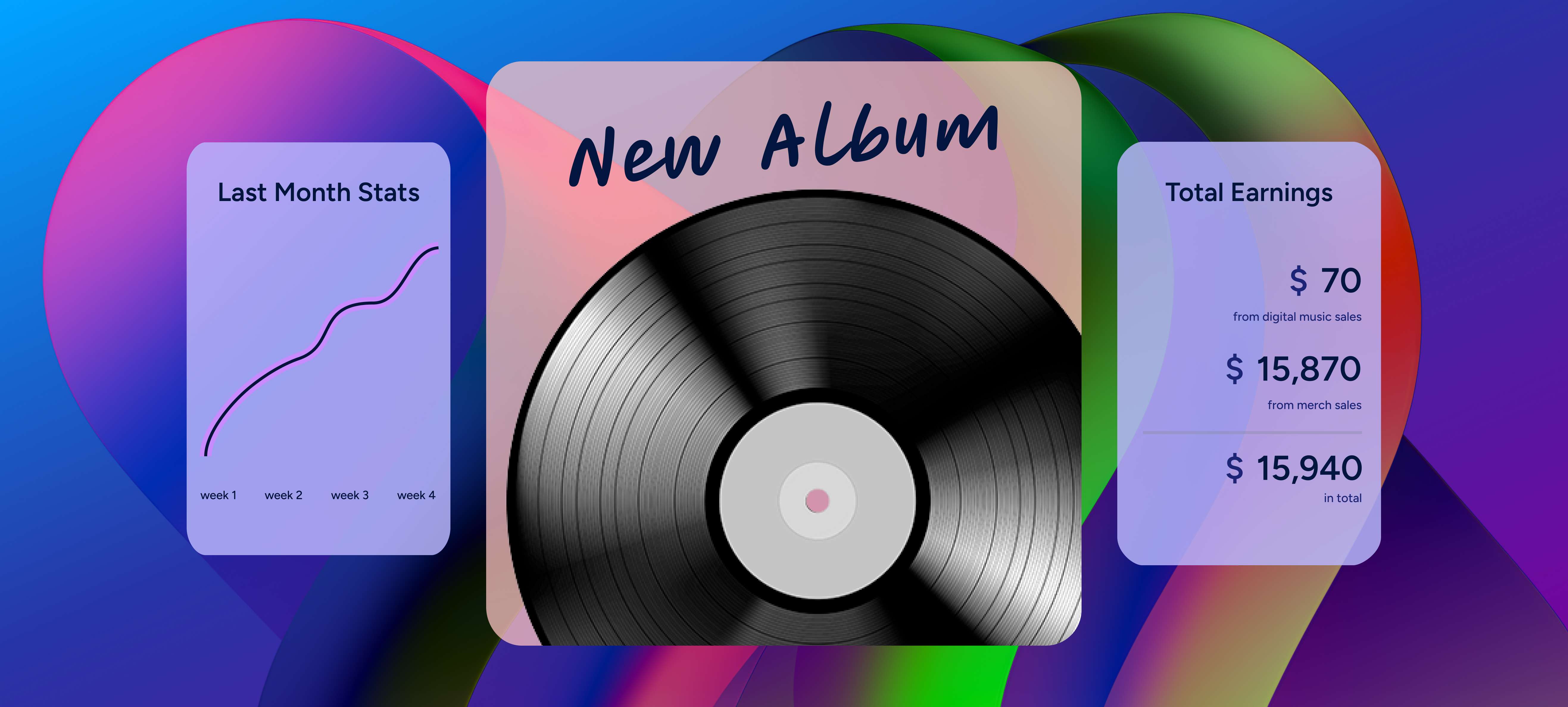
Streaming royalties alone rarely add up to an income, so build several smaller streams you control. Fans who care about your music will buy things, and every product gives them another reason to visit your site.
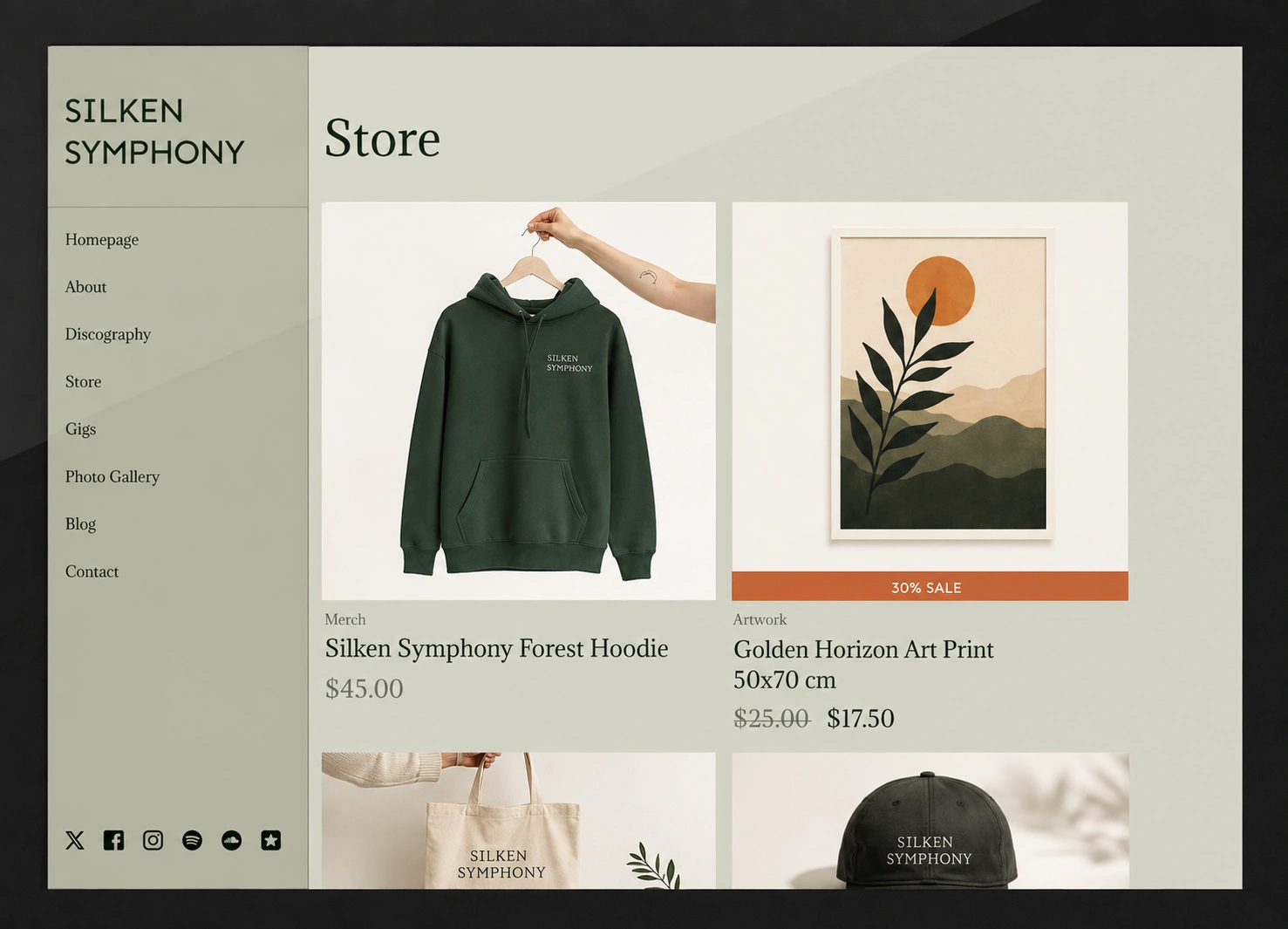
What you can sell as a musician:
-
Merch: T-shirts, hoodies, stickers, and posters that fans wear and spread for you.
-
Vinyl, CDs, and digital downloads: different ways for fans to own your music.
-
Exclusive content: special editions, alternate versions, or signed lyric books.
-
Custom services: mixing and mastering, session recording, songwriting, or lessons. If production work is part of your income, a music producer website turns that skill into inquiries.
For the full list of ideas and how to set the store up, see how to sell your music and merch online.
3. Use Email Marketing to Promote Your Music and Keep Fans Engaged
An email goes to everyone who signed up for it. That makes a mailing list the steadiest way to reach your fans, and it keeps working through every platform change. How to build an email list as a musician covers the whole system, and the short version fits in four steps.
How to grow your email list:
-
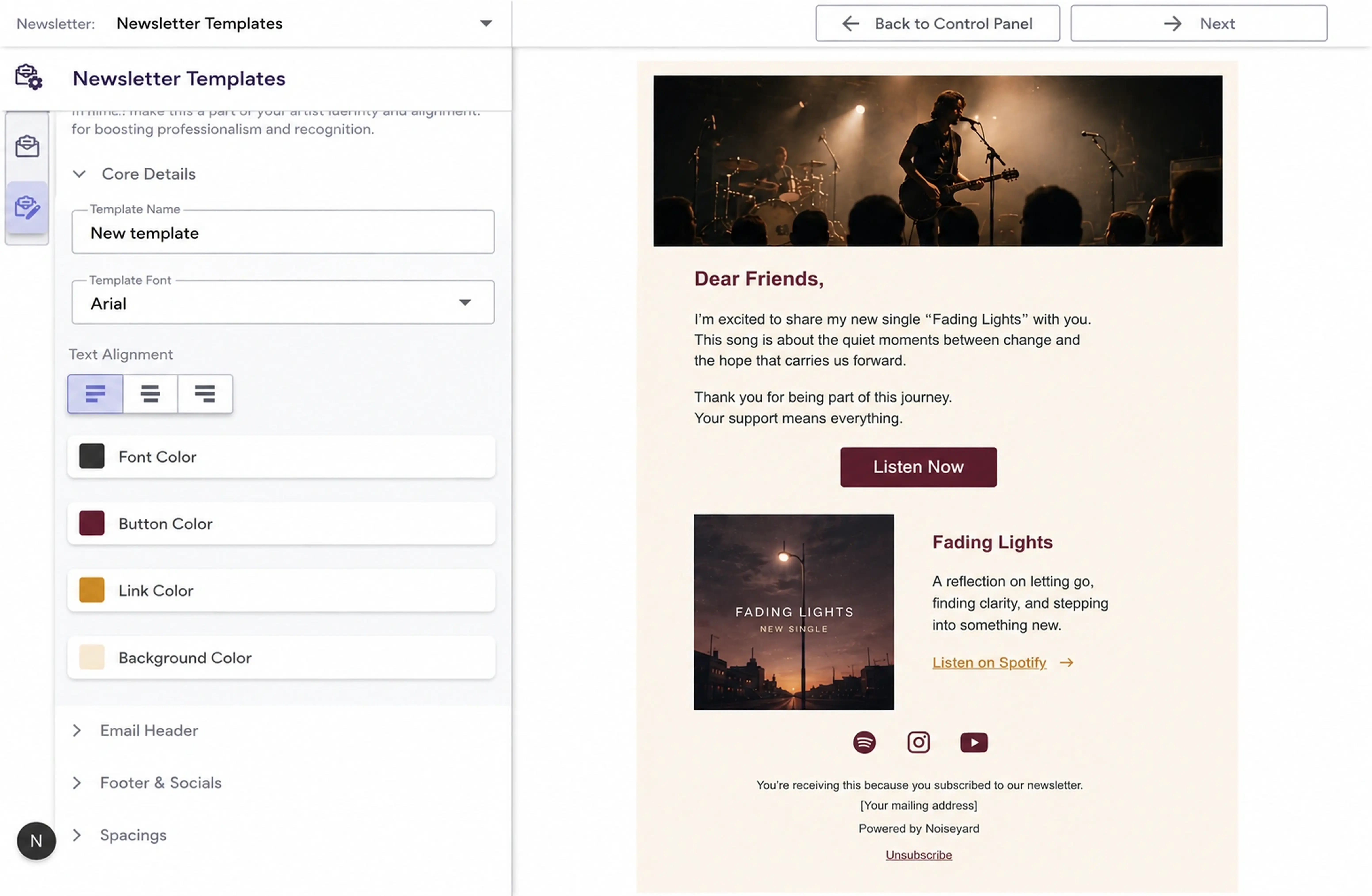
Offer a free song download or exclusive content in exchange for a signup. A Noiseyard newsletter can carry a download-code element that gives each subscriber their own unique code for a release you pick, so joining pays off in the first email.
-
Put a signup form on your website in the places people already visit: the homepage, the store, and your EPK.
-
Promote your mailing list at live shows with a QR code at the merch table, and offer early access or discounts for joining.
-
Send newsletters worth opening: personal stories, behind-the-scenes updates, and first listens, with six example emails you can copy.
Get our new guides by email

4. Get Your Music on Playlists to Reach More Listeners
Playlists introduce your music to listeners who would never have found you otherwise. There are three main types: editorial (curated by Spotify or Apple Music), algorithmic (such as Release Radar or Discover Weekly), and user-generated (curated by fans or independent curators). The step-by-step pitching process is in how to get your music on playlists.

Photo by Fath on Unsplash
How to get your music on playlists:
-
Submit through Spotify for Artists at least seven days before release, the window Spotify's guidance on pitching to playlist editors gives its editors to listen. A song pitched in time also goes into your followers' Release Radar, whether or not an editor picks it.
-
Pitch independent curators through platforms like SubmitHub, PlaylistPush, and Soundplate. Research each curator's taste and make sure your song fits the playlist's style before submitting.
-
Build your own Spotify playlists and place your music alongside similar artists, so listeners who like that sound keep meeting your tracks.
-
Encourage fans to save and share your song. Saves and repeat listens in the first few days are what the algorithm pays attention to, and real ways to trigger the Spotify algorithm breaks down which ones matter.
-
Network with other artists on playlist swaps: feature their songs on your playlist and they may return the favor.
5. Promote Your Music on Social Media
Post regularly, reply to people, and give newcomers one clear next step toward your site. If you get stuck on what to post, what to post as a musician lists more ideas than you'll use.

Photo by Frederick Medina on Unsplash
Best social media tactics for musicians:
-
Share behind-the-scenes content: songwriting, studio sessions, rehearsals, and tour life give fans an inside look that a release announcement can't.
-
Use short-form videos: TikTok, Instagram Reels, and YouTube Shorts suit song previews, performance snippets, and challenges. Clips disappear from feeds after a few days. YouTube uploads keep getting found through search for years, so cut short clips out of anything long you film.
-
Talk with fans through interactive content: polls, Q&As, and livestreams, plus replies to comments and messages, make people feel seen and keep them around.
-
Collaborate with creators and other musicians whose audiences fit your sound.
-
Join trends, sounds, and challenges that fit your music, and skip the ones that don't.
-
Post consistently and check your numbers, so you learn which content earns follows and which just fills the feed.
6. Get Featured on Music Blogs and Press
A feature or review introduces you to readers who already trust that outlet. Each piece of coverage also gives you something to point to in your next pitch. Independent blogs cover new artists constantly, and the full pitch process is in how to get press coverage.
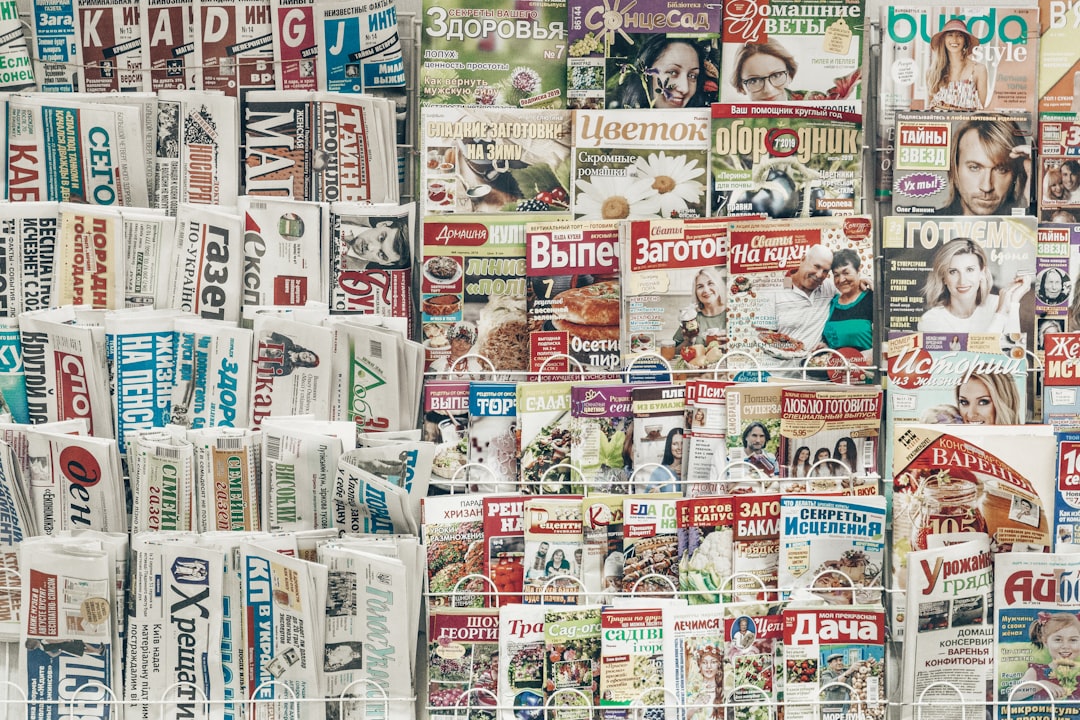
Photo by Marjan Blan on Unsplash
How to get press coverage:
-
Send a press release about your latest project with the details that make it a story: collaborations, an unusual recording, an upcoming tour.
-
Research bloggers, journalists, and industry writers who cover your genre, and pitch each one personally with why your music fits their readers.
-
Engage with media contacts before pitching formally. Commenting on and sharing their work makes your name familiar when your email arrives.
-
Offer exclusive content, like an early listen or an in-depth interview, to give the outlet a reason to say yes.
-
Have a press-friendly website with high-quality photos, a compelling bio, and an obvious way for journalists to contact you.
-
Follow up once, politely, about a week later, and then move on.
7. Play Live Shows to Build a Fanbase
A live show turns listeners into fans. It also gives you material for everything else: clips to post, emails to collect at the merch table, and people to meet. Getting the bookings themselves is covered in how to get gigs as a musician.

Photo by Keagan Henman on Unsplash
How to maximize your live shows:
-
Offer exclusive merch or discounts to attendees, so the night ends with a sale as well as applause.
-
Collect email signups at the merch table with a tablet or a QR code.
-
Encourage attendees to share videos of the performance, which promotes the next show for you.
-
Talk to the audience between songs. Short stories and a bit of crowd involvement make the night memorable.
-
Network with other artists and venue owners, since the people you meet at shows book the next ones.
-
Record and repurpose performances as social clips, live versions, and promo material.
8. Collaborate with Other Artists to Expand Your Reach
A collaboration puts your music in front of another artist's audience, and it arrives as a recommendation from someone those listeners already follow. How to collaborate with other musicians covers finding partners and splitting the work fairly.

Photo by Елизавета Крылова on Unsplash
Ways to collaborate:
-
Feature each other on songs, remixes, or live performances.
-
Host joint livestreams or social takeovers, so both fanbases meet both artists.
-
Swap guest posts and cross-promotion: write about each other's releases on your sites and socials.
-
Organize a joint tour or showcase to reach each other's cities.
-
Film behind-the-scenes content together, since the making of a collaboration is content for both audiences.
-
Offer bundled music or merch deals that give fans of either artist a reason to try the other.
9. Submit Your Music to Indie Radio & Podcasts
Indie radio stations and music podcasts are always looking for fresh music, and unlike mainstream radio, many independent and college stations take direct submissions from artists.
Airplay introduces your work to listeners who tune in specifically to find new music, and an interview or session lets you tell the story behind it.
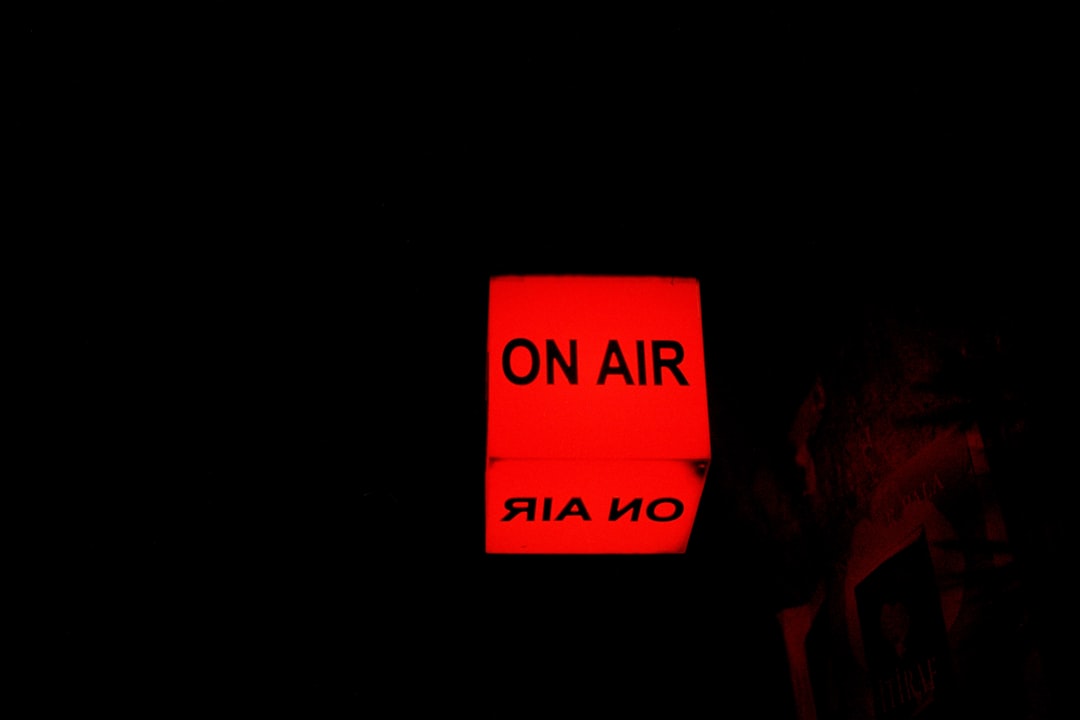
Photo by ONUR KURT on Unsplash
How to get your music played:
-
Research stations and podcasts in your genre: indie stations, college radio, and genre-specific shows that feature independent artists.
-
Send personalized submissions: why your music fits their show, plus links to your best tracks.
-
Offer an interview or an acoustic session to make your submission easier to say yes to.
-
Follow up politely if you hear nothing after a week or two.
-
Promote the feature once it airs, on your socials and your site, which thanks the host and doubles the reach.
10. Use Paid Ads If You Have a Budget
Ads work best when you already have something that converts. If nobody signs up on your page today, paid traffic will not change that. Before spending, read should you pay to promote your music for what's worth buying and what to avoid.
If you do run ads:
-
Facebook and Instagram ads suit release promotion, mailing list growth, and merch.
-
YouTube ads put your video in front of people who watch similar artists.
-
Spotify ads promote tracks inside the platform where listening happens.
-
Send every click to a page you own, start with a small daily budget, and stop anything that doesn't produce signups or sales within a couple of weeks.
Final thoughts
Promoting your music without a label comes down to steady work on channels you control. Pick two or three from this list and give them a few months of real effort. Send everyone they reach to your website and mailing list, so the attention turns into an audience you can contact again.
Then turn it into a monthly routine. A simple music marketing plan turns these channels into a monthly rhythm you can keep up alongside making music.
Common questions
Can you promote music without a label?
Yes. Independent artists have access to the same distribution, playlists, social platforms, and direct-to-fan tools that labels use. It takes more of your own time and organization, but none of these channels require a label.
What is the most effective way to promote music independently?
There isn't a single one. The channels you own, your website and your mailing list, tend to pay off the longest because no algorithm sits between you and your fans. Playlists and social media reach more people faster, but you don't control them, so combining both is the usual approach.
How do independent artists make money from their music?
Streaming royalties are usually small, so independent artists combine income from merch, direct music sales, live shows, and services like lessons, production, or mixing. Selling directly from your own store keeps more of that money with you.
How much does it cost to promote your music without a label?
You can start for free with social media, playlist pitching, and press outreach. The main cost is a website, which usually covers your store and mailing list in the same plan. Paid ads and submission tools are optional on top, and worth adding once the free work is already producing results.
Do I need a website to promote my music?
You can start without one, but a website gives you a home base you control, where fans can stream, buy, and join your mailing list in one place. Unlike social platforms, it won't change the rules on you or bury your posts.
How can I promote my music with no money?
Start with the channels that are free to use. Post regularly on the platforms you already have. Then pitch your tracks to Spotify's editorial playlists through Spotify for Artists, to user-run playlists in your genre, and to indie blogs and college radio that cover your style. Collaborating with other independent artists puts you in front of their fans at no cost too.
How do I promote my music if I have no fans yet?
Go to where listeners already gather. Post short clips consistently, pitch user-run playlists in your genre, and take any local support slot you can get. Put a mailing list signup on a simple site from day one, so your first hundred listeners have somewhere to go.
How can I promote my music on the radio without a budget?
Independent and college radio is the realistic starting point, since those shows actively look for new artists and take direct submissions. Find shows that play your genre, look up each one's submission page or the host's email, and send a short note with a streaming link and one line about the track. Community stations and online genre shows work the same way. Paid radio promotion and campaign services exist, but you can reach a lot of these stations yourself for free.