Photo by Maria Lupan on Unsplash


Plenty of musicians market in bursts. A release comes, you post every day for two weeks, you email your list once, and then you go quiet for four months until the next one. By the time you show up again, the audience you built has forgotten you, and you start from close to zero.
This post is for independent musicians, bands, and DJs who want a marketing routine they can keep up with year-round, without it eating the time they'd rather spend making music. It covers how to set a few goals, what to do each week and each month, how release months differ from quiet ones, and how to check whether any of it is paying off.
A steady monthly routine keeps you visible between releases. A small amount of work every month adds up, and it's easier to sustain than a sprint before every drop.
Pick three goals for the year, in numbers you can check, so you know what the work is for.
Weekly, spend about 30 minutes: post a couple of times, reply to people, add new contacts to your list.
Monthly, spend two to three hours: send one email, update your website, make one solid piece of content, and do one piece of outreach.
Release months follow a different plan, and quiet months are for building your list and your catalog.
Every three months, look at what's paying off and drop what isn't.
It's a simple, repeating schedule of what you'll do each week and month to reach listeners and keep the ones you have. For an independent artist, that usually means posting regularly, emailing your list once a month, keeping your website current, and doing one piece of outreach, with a bigger push around each release.
When all your effort goes into the two weeks around a release, everything you build in that window drains away in the months of silence that follow. People who discovered you in March have moved on by July, so each release starts by rebuilding the attention you already paid for once.
A steady routine changes the shape of it. A small amount of work every month compounds, because each release starts with an audience that already knows you and hears about it on day one. It's also easier to sustain: an hour here and there is realistic year-round, while a two-week sprint every few months is how people burn out and quit.
Without a target, marketing turns into posting for its own sake. Pick three goals you can check with a number, and keep them modest enough to be believable.
Some examples, sized for an artist building steadily:
Add 100 people to your mailing list.
Release two or three tracks.
Play four or five shows, or get one support slot in a bigger room.
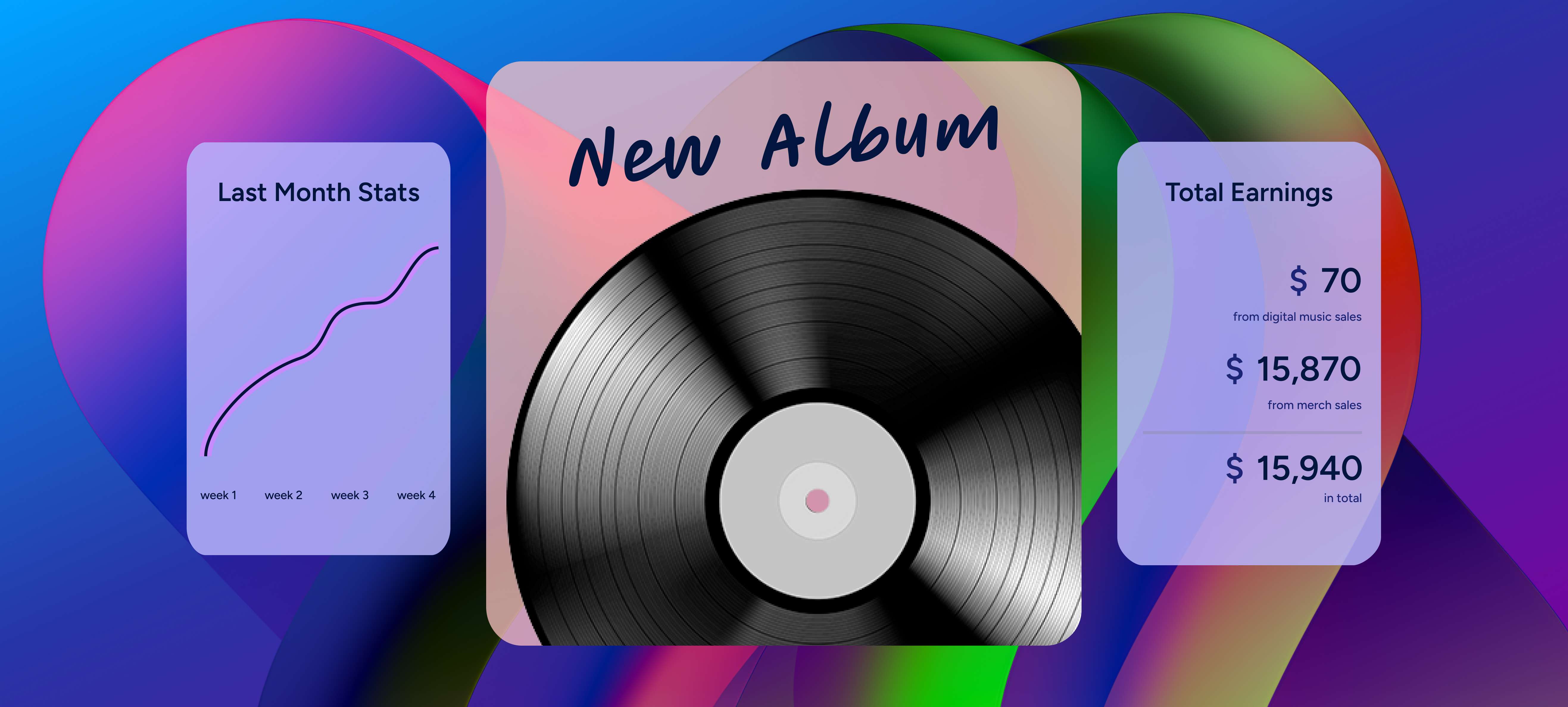
Make your first $300 from merch and music sales.
Set these at your own level. If you've never released anything, one track and your first 25 subscribers is a real year's progress. If you're already gigging monthly, aim higher. Pick a number you can check, so you know in June whether you're on track instead of guessing.
Three goals is enough. Write them somewhere you'll see them, and let them decide what goes into your months. If a task doesn't move one of the three, it can wait.
Get our new guides by email
The weekly layer is small on purpose. Aim for about 30 minutes a week, which is achievable in a busy month.
Post two or three times. Behind the scenes, a clip of you playing, a story about a song. If you're stuck for ideas, there's a long list in what to post as a musician.
Reply to people. Comments, DMs, and emails. This is the part that turns listeners into fans, and it takes minutes.
Add any new contacts to your list. Anyone you met at a show, a promoter you spoke to, a fan who emailed you.

The monthly layer is where the real progress happens. Budget two to three hours, split across four jobs.
Send one email to your list. Even in a quiet month, a short note keeps you familiar so you're not a stranger when you have something to sell. Setting the list up in the first place is covered in how to build an email list as a musician.
Update your website. Refresh your dates, swap in your latest release, add new photos, and check that your links and players still work.
Make one solid piece of content. A live take, a video, a mix, a studio clip. Something with more effort behind it than a story post, that you can cut into smaller pieces all month.
Do one piece of outreach. Pitch a playlist, email a venue, contact a blog, or message an artist about a collaboration. One a month adds up to twelve a year.
That's the whole plan. Four monthly jobs and a small weekly habit, repeated.
Copy this and run it every month:
[ ] One email to the mailing list
[ ] Website updated: dates, featured release, photos, links checked
[ ] One solid piece of content made
[ ] One piece of outreach sent
[ ] Posted two to three times a week
[ ] New contacts added to the list
[ ] Replied to comments, DMs, and emails

In a release month, the routine gives way to the release plan. Your email goes out earlier and more than once, your posting picks up, and your outreach concentrates on playlists, press, and anyone who might cover it.
The full week-by-week version is in the music release checklist, and if you're deciding what to put out in the first place, single, EP, or album covers the trade-offs. If you're touring at the same time, there's more on keeping your site current through it in running your website during a tour or release cycle.
Plan for two or three release months a year at most. Trying to release every month leaves no room for the work that gets each one heard.
Quiet months are the ones people waste, and they're where the groundwork gets done. With no release to promote, put the time into things that pay off later:
Grow your list. Add a signup offer, mention it at shows, and put it in front of the people who found you during the last release.
Build up your catalog of content. Film a few live takes in one session and use them across the next three months.
Book ahead. Venues and festivals plan months out, so quiet months are the right time to pitch. How to get gigs as a musician covers the approach.
Fix the boring things. Update your bio, replace old photos, tidy your store, and check your website reads well on a phone.
Once a quarter, spend half an hour looking at what the work produced. You're looking for patterns here, and rough numbers are enough.
How many people joined your mailing list, and where did they come from?
Which posts or videos brought people to your site?
Which outreach got replies, and which got silence?
What did you earn from sales, and from which items?

Then act on it. Do more of whatever produced results, and drop whatever produced nothing three quarters running. If playlist pitching has never once worked for you but your local shows fill every time, move your hours to the shows. There's more on which numbers deserve your attention in growing your fanbase beyond streams.
The plan you'll follow in November is the one that fits a bad week in February. A routine you keep for a year does more than an ambitious plan you drop in March, so start smaller than feels right.
If two to three hours a month is too much right now, cut it to one: send the email and update the site. Add the rest when there's room. And put the jobs in your calendar as appointments, since marketing is the work that quietly slides when nobody schedules it.
Build your own musician website
Music player, store, EPK, and mailing list, all built in. Start your 30-day free trial, cancel anytime.
Only marketing around releases. The silence between drops is what makes each release start from scratch. Keep a small routine running all year.
Setting goals you can't measure. "Grow my audience" gives you nothing to check. "100 new subscribers by December" tells you where you stand in June.
Doing everything on every platform. Two channels you keep up with will serve you better than five you abandon by spring.
Skipping the email because you have nothing to sell. A short update in a quiet month is what keeps people opening when you do have something.
Never checking results. Without a quarterly look, you keep pouring hours into whatever you're used to doing rather than what's producing.
Planning a routine that needs a free weekend every week. Build the plan around your worst month, and it will survive the year.
Three goals you can measure, a weekly habit (posting, replying, collecting contacts), a monthly rhythm (one email, a website update, one solid piece of content, one piece of outreach), a different plan for release months, and a quarterly check of what produced results.
A workable baseline is about 30 minutes a week plus two to three hours a month, so roughly five hours in a normal month. Release months take more. If that's beyond you right now, cut it to one hour a month for the email and a website update, and build from there.
Once a month is a good default, with more during a release or tour. The bigger risk is emailing too little, since a list that never hears from you goes cold and people forget they signed up.
Everything in this routine is free apart from your time: posting, emailing your list, updating your site, pitching playlists and venues, and playing shows. Paid ads are optional, and they work best once the free groundwork is in place and you know which of your songs converts.
Grow your mailing list, film content in batches you can use for months, pitch gigs and festivals that book far ahead, and fix the neglected parts of your website. Quiet months are when you build the audience that shows up for your next release.
A marketing plan isn't a strategy document. It's a short list of things you repeat, sized so you'll still be doing them in ten months.
Pick your three goals, put the weekly and monthly jobs in your calendar, follow the release checklist when a drop comes around, and look at the results every quarter. Do that for a year and each release starts in front of an audience that already knows you, which is the whole point of the work.
Get our new guides by email.
Practical advice on promoting your music, getting gigs and selling online. You can unsubscribe at any time.