Photo by Towfiqu barbhuiya on Unsplash


Your email list is the one audience you own outright. Followers belong to the platform they sit on, and a change to an algorithm can bury your posts overnight. An email list goes straight to people who asked to hear from you, and you keep it no matter what any platform does next.
This post is for musicians who want to start or grow a mailing list and put it to use. It covers why it matters, how to set the signup up, where the subscribers come from channel by channel, what to send and how often, and the mistakes that quietly kill a list.
An email list is the audience you keep. Social followers are rented, your list is yours, and it reaches people directly in their inbox.
Put a signup form on your own website, and turn on a join option at checkout so buyers become subscribers.
Give people a real reason to sign up, like a free track or a first look at new music, rather than "join my newsletter".
Point every channel back to the signup: your site, your live shows, your video descriptions, and your store.
Email regularly with something worth opening, a release, a show, a story, or an offer, and keep it short and personal.
Start with a signup form on your own website, offer a real reason to join like a free download, and point every channel back to it. Ask fans at shows, in your link in bio, and at checkout when they buy something. Then email them regularly with something worth opening, so the list stays warm.
It's easy to chase follower counts, but they can be misleading. A big number looks impressive and still leaves you at the mercy of whatever the platform decides to show. Email works differently. When you send a message, it goes to everyone who signed up, in an inbox they check, without a feed deciding who sees it.
The people on your list are also your most engaged fans. Someone who hands over their email is telling you they want more than a passing scroll. These are the people who buy the record, show up to the gig, and pick up a shirt. A short list of fans who care is worth more than a huge count of people who watched one clip and moved on, which is the same point behind growing a fanbase beyond streams.
You don't need much, and you don't need a separate marketing tool if your website already handles it.
A place to collect emails. A signup form on your own site is the cleanest option. Many music-focused builders put a form on every page and store the list for you, so there's nothing extra to wire up. If yours doesn't, a standalone tool like Mailchimp works too.
A way to send emails. The same builder, or your email tool, sends your newsletters. Look for simple templates so you're not formatting from scratch each time.
A home base to send people to. Every signup happens on a page somewhere. A music website gives you that page and holds the form, so the list grows on its own as people find you.
The point is to keep the setup light enough that you'll use it. One form, one place to send from, and a page to point people at is enough to begin.
Where and how you ask matters as much as asking at all.
Make it easy to find. Put the form on every page of your site, and don't bury it on a contact page. A visitor should never have to hunt for where to sign up.
Ask for the email only. Every extra field you add loses people. A single email box converts far better than a form asking for name, birthday, and location.
Say what they'll get. "Join for first access to new songs and shows" gives someone a reason. "Sign up for my newsletter" gives them nothing.
Turn on the checkout opt-in. When a fan buys a track or some merch, ask if they want to join the list as part of the checkout. Buyers are your warmest fans, so catching them at the sale grows your list with the right people.
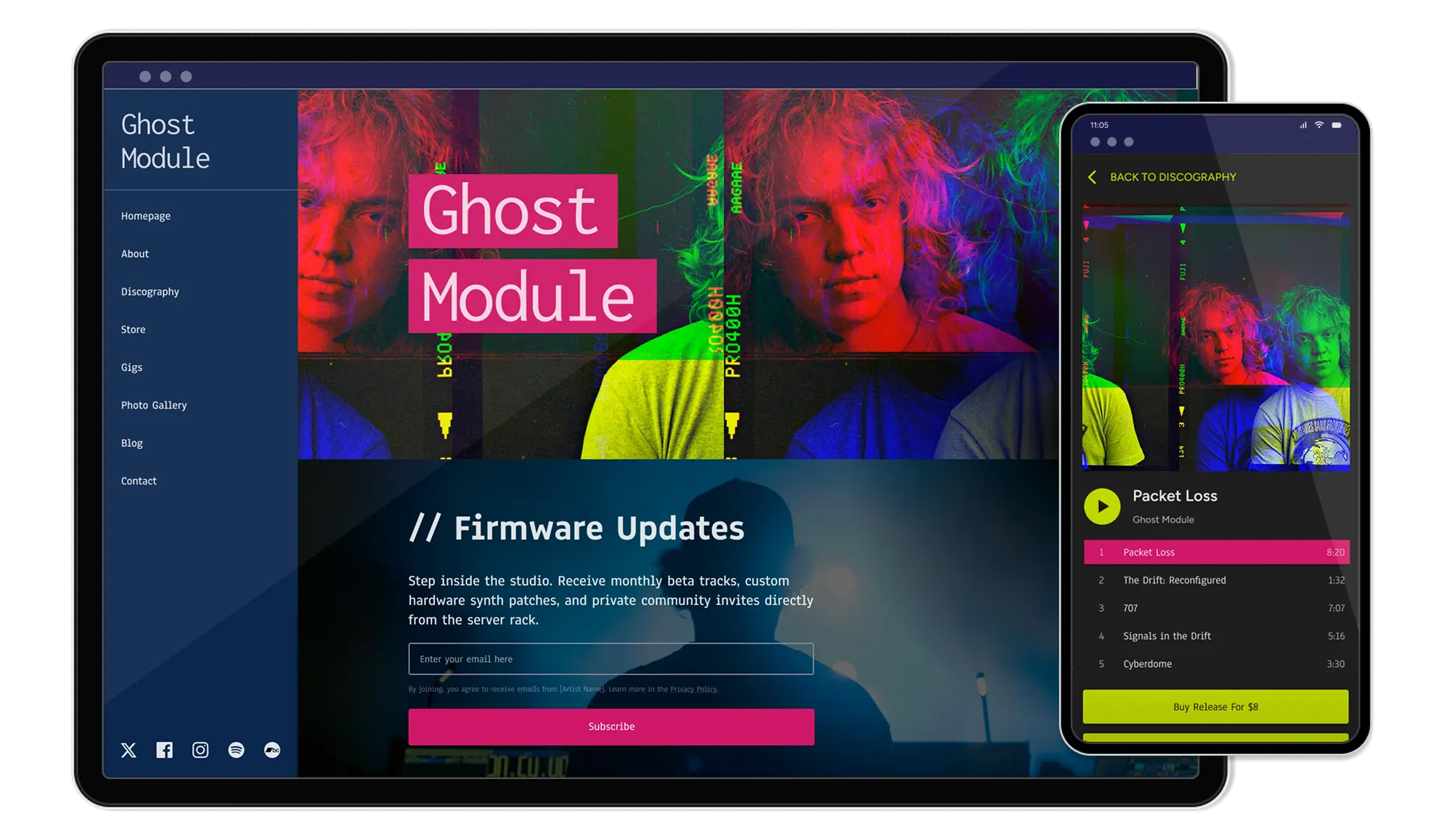
Nobody joins a list out of goodwill. Offer something in return, and the signups climb.
A free track or download. The most reliable incentive. Give away a song, a demo, an acoustic version, or an unreleased track in exchange for an email. Some tools let you send a unique download code to each new subscriber, so the reward is automatic.
First access. Early links to new releases, presale codes for tickets, or first pick of a limited merch run.
Something behind the scenes. A demo, a voice note about a song, or a look at how a track came together, sent only to the list.
Whatever you pick, name it right on the form, so people know exactly what they're getting when they type in their email.
A list grows when you send attention toward it from everywhere you already show up. Treat each platform as a way in, and your signup as the place people end up.
Your website: the home base, with a form on homepage. Everything else points here.
Instagram and TikTok: put your signup (or your site) as the link in your bio, and call it out in stories and videos when you've got a reason, like a free track on offer.
Live shows: the best place to grow a list. Put a QR code on the merch table and a slide, and invite people from the stage to join for a free download. People who just watched you play are ready to sign up.
Your store and Bandcamp: the checkout opt-in on your site, and Bandcamp gives you buyer emails you can add to your list.
YouTube: drop the signup link in your video descriptions and pinned comments.
Other artists: cross-promote with acts you share fans with, each pointing to the other's signup.

The pattern is the same everywhere: the post, the video, or the show catches someone's attention, and the link sends them to a page where they can join. For more on turning that attention into people who stick around, see how to turn social followers into fans.
A list only pays off if you email it. Plenty of musicians build one, never send anything, and then feel awkward showing up in the inbox a year later. Regular, low-key contact keeps the list warm.
Send when you have something real to say:
A new release. The reason most people joined. Tell them first, before the public post.
A show or tour. Dates, tickets, and a personal line about why you want them there.
Behind the scenes. The story of a song, a studio update, a rough demo.
An offer. A merch drop, a presale, a discount for the people on your list.
A plain check-in. A short, human note now and then keeps you familiar between releases.
On frequency, once or twice a month is a sensible rhythm for most artists, more during a release or a tour. Keep each email short, write like you're messaging one person, and lead with the one thing that matters. If your newsletter tool can greet each subscriber by name, turn that on, since an email that opens with someone's name feels personal even when it goes to your whole list. For the detail on subject lines and what a finished email looks like, there are six examples you can copy.
Keep this loose plan and copy it for each release or tour:
Between releases: one short email a month. A story, a demo, a small update, so you're not a stranger when you need something.
Release announced: email the list first, with the pre-save or pre-order link, before you post it anywhere else.
Release day: a short "it's out" email with one clear link to hear and buy it.
A week after: a follow-up with a live take, a video, or the story behind it, for anyone who missed the first one.
Show or tour: dates and tickets as soon as they're confirmed, then a reminder a few days out.
None of these have to go out live. If your newsletter tool lets you schedule sends, write them when you have time and set the date, so a release-day email goes out on schedule even when you're busy playing or away from a screen.

Never emailing the list. A list you don't use goes cold, and people forget they joined. Send something regularly, even when you're not selling.
Only ever selling. If every email is "buy this," people tune out. Mix in stories, demos, and updates so people stay with you for the times you do have something to sell.
Buying or scraping emails. Adding people who never signed up gets you marked as spam and hurts your delivery to the fans who did. Grow it honestly.
No reason to join. "Sign up for updates" converts poorly. Offer a free track or first access instead.
Renting your list instead of owning it. If your only "list" is your followers on a platform, you don't have a list. Collect emails on a page you control, somewhere you can export the list and take it with you.
Making the form hard to find. One buried signup on a contact page collects almost nothing. Put it everywhere.

Build your own musician website
Music player, store, EPK, and mailing list, all built in. Start your 30-day free trial, cancel anytime.
Put a signup form on your own website and offer a real reason to join, like a free track. Then point every channel at it: your link in bio, your video descriptions, your store checkout, and a QR code at your shows. Live gigs and checkout opt-ins tend to bring in the most engaged subscribers.
Once or twice a month works for most artists, with more during a release or a tour. The bigger risk is emailing too little, since a list that never hears from you goes cold. Send whenever you have something real to share, and keep each one short.
New releases first, show and tour dates, behind-the-scenes updates, and the occasional offer or presale. Mix stories and updates in with the asks, so people stay interested between the times you want them to buy something.
If your website builder includes a signup form and a way to send newsletters, you don't need a separate tool. Many music-focused builders collect the list and send from the same place. A standalone tool like Mailchimp is fine too if your site doesn't handle it.
Give them a fast way and a reason. A QR code on the merch table and a slide that goes to your signup, plus a line from the stage offering a free download to anyone who joins. People who just watched you play are the easiest fans you'll ever get on a list.
They do different jobs. Social media is where people discover you, and your email list is where you keep them. You don't own your followers, but you do own your list, so the smart move is to use social reach to grow an audience you can reach directly.
An email list is slow to build and hard to lose, which is what makes it worth the effort. Every subscriber is someone who chose to hear from you, and unlike a follower, they don't disappear when a platform changes its rules.
Set up a signup on a page you own, give people a real reason to join, and point everything you do back to it. Then send emails worth opening, often enough that people remember you. The list you build this year keeps working for every release after it.
Useful tips and tricks, delivered right to your inbox.
Join our newsletter to keep informed about Noiseyard updates and new blog articles. You can unsubscribe any time.