MARKETING & PROMOTION
Band Newsletter Examples: What a Musician Email Looks Like

Ozan

Aug 13, 2026
Getting people onto a mailing list is the part everyone talks about. Then you open the composer, look at the empty subject line, and close the tab again.
This post is for musicians who already have a list and want to see what a good email to it looks like. Below are six worked examples you can copy, the shape they all share, and what to take out of a draft before you send it.
TL;DR
-
Keep each email to one idea, one link, and one button. Five competing links mean fewer clicks on any of them.
-
Write the first line for the inbox preview, because it does as much work as the subject line.
-
Write to one person. "Hey Sam, the song I've been closing shows with is out" is the tone to aim for.
-
Three images at most, and never a wall of graphics with no text in between.
-
The six examples below cover signing up, a release, a show, a story, merch, and coming back after months of silence.
Table of contents
What does a band newsletter look like?
A short email written to one person. A subject line that says what it is, a first line that repeats it in plain words, two or three sentences of context, and one button. Two hundred words is plenty. The ones people read sound like a message from someone they know.
The shape they all share
Every example below is built the same way, and you can reuse the skeleton for anything you send.
-
Sender name. Your artist or band name. A fan scanning an inbox recognises that, and they will not recognise your legal name or the word "newsletter".
-
Subject line. Say the thing plainly. "New single out today" tells someone whether to open it, and a clever subject line leaves them guessing.
-
First line. Inbox apps show the opening words next to the subject, so this line gets read before the email is even opened. Put the news in it.
-
The middle. Two to four short paragraphs. One idea only.
-
One button. A single call to action gets far more clicks than five links competing with each other. Pick the one thing you want someone to do and cut the rest.
1. The welcome email
This one goes out the moment somebody joins, while they still remember signing up.
Subject: Thanks for signing up, here's the demo
Hey Sam,
Thanks for joining. Here's the acoustic version of "Ridgeway" I promised, and it's yours to keep.
I send something once or twice a month: a new song, a show, or whatever I'm working on. That's it.
Button: Download the track
It does two jobs. It hands over whatever you offered at signup, so nobody feels tricked, and it tells people what they have agreed to receive. If the reward is a track, a download code is the tidy way to hand it over, since everyone gets their own code and it stops working once it has been used. Saying "once or twice a month" up front stops the surprise that makes someone unsubscribe six weeks later.
2. The release email
This is the email a lot of people joined the list for.
Subject: The new single is out
Hey Sam,
"Ridgeway" is up. It's the one I've been closing shows with since March, and the first thing I've recorded with the full band.
You're getting this before I post it anywhere else.
Button: Listen to it
No bio, no press quotes, no list of every platform it's on. One link to one place. The line about getting it first is worth including only when it is true, which means sending this before the social posts go up. Where this email sits among everything else on release day is covered in the music release checklist.

Photo by Viktor SOLOMONIK on Unsplash
3. The show email
Subject: Playing Manchester on the 14th
Hey Sam,
We're at The Deaf Institute on Friday the 14th, doors at seven. Tickets are twelve pounds and there are about forty left.
Come and say hello after, I'll be at the merch table.
Button: Get a ticket
The city goes in the subject line so everyone who cannot come can skip it in a second. If your mailing list records where people signed up from, check that number before you write. Forty people in that city are worth a properly written email. Two thousand scattered across the country are a different job. Getting the dates on the calendar in the first place is its own subject, covered in the guide to getting gigs as a musician.

Photo by Jonathan Borba on Unsplash
4. The story email
This is the one to send when there is nothing to announce.
Subject: How "Ridgeway" started
Hey Sam,
This one started as a voice note in a car park outside a gig in Leeds. One in the morning, sung into a phone, because I was sure I'd forget it by the drive home.
The recorded version took four takes and a borrowed piano. The voice note is still better in places.
Button: Hear the original voice note
There is nothing to buy in this one on purpose. An email that asks for nothing keeps you familiar between releases, and these are the ones people hit reply to. The same raw material works on social, and there's a longer list of what to post as a musician if you are short of ideas.
5. The merch email
Subject: The vinyl is here
Hey Sam,
The record arrived this morning. Two hundred copies, hand numbered, twenty two pounds with the download included.
You get first go at it: the code RIDGEWAY takes the postage off until Sunday.
Button: Order a copy
There's one product in it, one price, and one deadline. The code matters as much as the discount, because it is proof that being on the list gets you something the public post does not. If your store lets you generate coupon codes, make a different one for your list each time so you can see how many orders came from the email. Settling on the number that goes in the email is a separate decision, and there's a full guide to pricing your music and merch.
6. The one you send after six months of silence
Nearly everyone needs this email at some point.
Subject: I know, it's been a while
Hey Sam,
It's been about six months. I stopped emailing because I had nothing to announce, and that turned out to be a bad reason.
Here's where things are: the record is finished, mixing runs through April, and there are two shows booked for May. Next email will have dates in it.
If you would rather not hear from me, the unsubscribe link is at the bottom and I won't take it personally.
Button: Hear what I've been working on
Name the gap in the first line and move on. Apologise once at most. Pointing at the unsubscribe link sounds like a strange thing to do, and it protects you. People who cannot find it hit the spam button instead, and that is what stops your future emails arriving at all.
What the inbox shows before anyone opens it
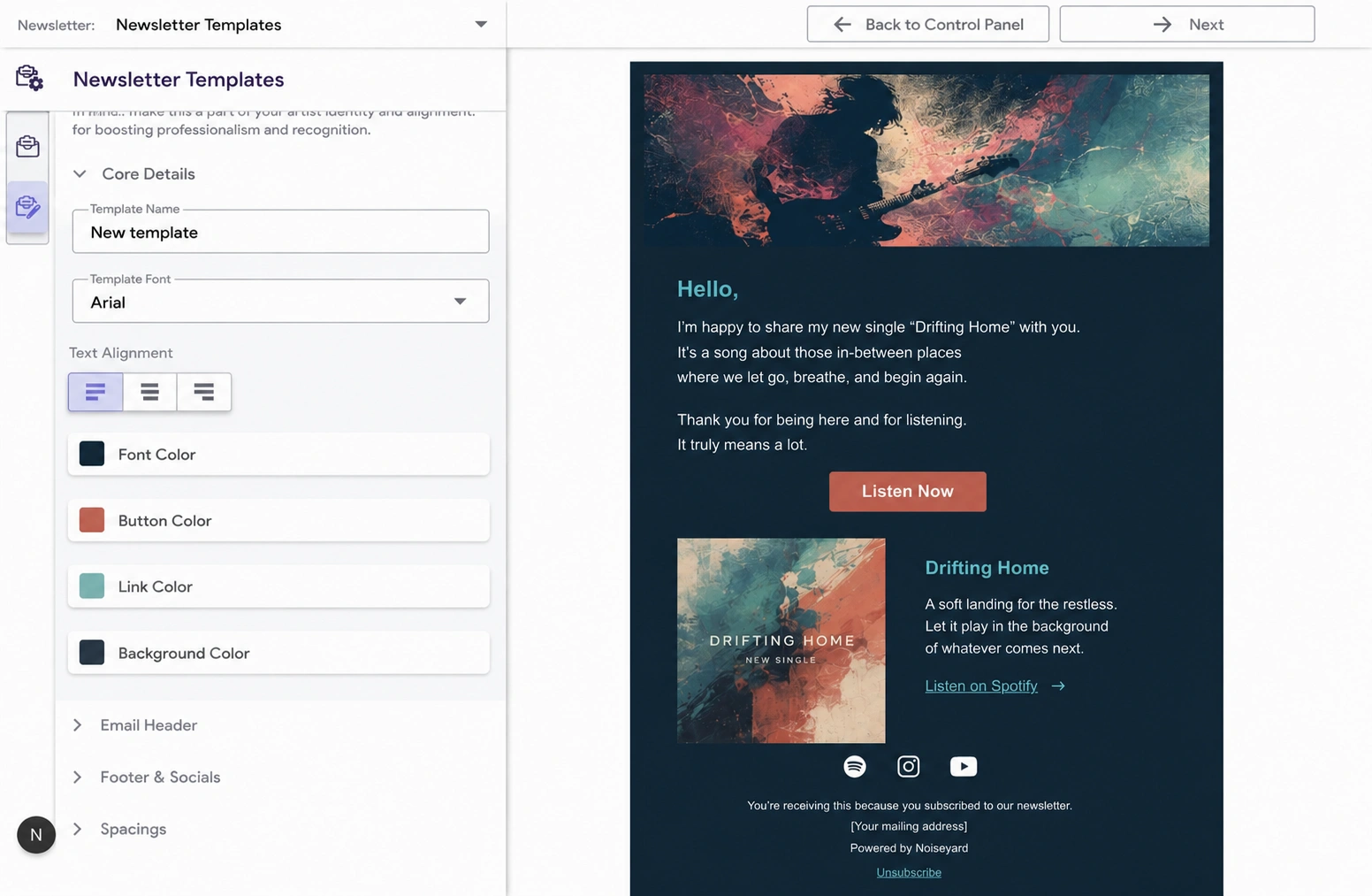
Before anyone reads a word of your email, they see three things stacked in a list: your sender name, your subject line, and the opening words of the first sentence. That stack decides whether it gets opened.
A phone shows much less of the subject than your laptop does, so put the useful words at the front. "New single out today, plus a show in Manchester" becomes "New single out today" on a narrow screen, which still works. Send yourself a test and look at it on your phone before the real send, because that is where it will be read.
One legal detail worth knowing: a bulk email needs a real postal address in the footer and a working unsubscribe link. Newsletter tools usually have a field for the address and add the unsubscribe link for you, so it is a setting you fill in once and forget.
What to cut before you send
Read the draft once with this list and take things out.
-
Every button except one. Pick the single thing you want someone to do.
-
Anything past the third image. Heavy graphics with little text is a pattern spam filters look for, and a slow email on mobile data gets closed.
-
Capitals in the subject line. "BUY TICKETS NOW" reads as shouting and gets flagged.
-
The words "free", "guaranteed", and "urgent". They are high risk in a subject line, and you rarely need them.
-
Extra exclamation marks. One is fine, three looks like a scam.
-
Your bio. They already signed up, so they know who you are.
-
Anything you wrote to sound professional. Read it aloud, and if you would not say it to someone at the merch table, cut it.

Photo by Matthew Moloney on Unsplash
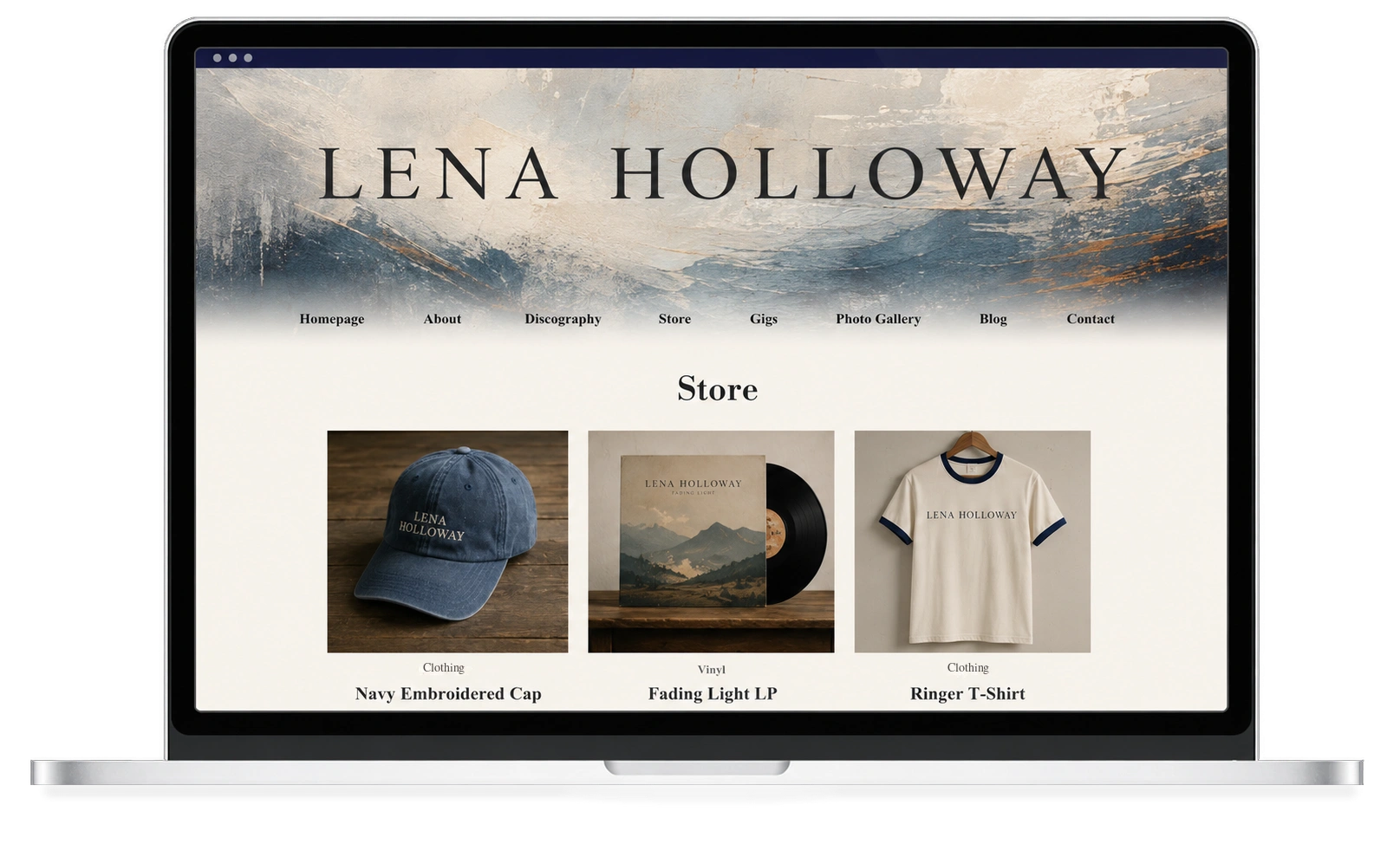
All six examples rest on the same thing: an email reaches everyone who asked for it, with no feed deciding who sees it. That is why the signup form belongs on your own website, and why the sending is worth keeping in the same place as the list. If you have not set the list up yet, there's a full walkthrough on building an email list as a musician.
Build your own musician website
Music player, store, EPK, and mailing list, all built in. Start your 30-day free trial, cancel anytime.
Common questions
How long should a band newsletter be?
Around 100 to 200 words for a normal send. Long enough to give the news and a line of context, short enough to read on a phone while waiting for a train. The story email can run longer because people opened it for the writing.
Should the sender name be my name or my band name?
The name a fan would recognise in a list of forty unread emails, which is almost always the artist or band name. Keep it the same every send, since changing it makes each email look like it came from a stranger.
What do I write when I have nothing to announce?
Send the story email. A voice note, a photo from the studio, the reason a song is called what it is called. Something with no ask in it still does the job, and it costs you ten minutes.
Do I need a separate email tool, or can my website send these?
Plenty of music-focused website builders include the mailing list and the sending. The signup form, the subscriber list, and the composer sit in the same place, with no second subscription to pay for. A standalone tool works too, and it means keeping two systems in step.
Is it worth emailing a list of 40 people?
Yes, and it is the best time to start. Forty people handed you their email address on purpose, and writing to a small list is how you find your voice before the number grows.
Final thoughts
None of these emails are hard to write once you stop treating them as marketing. Pick the situation you're in, copy the shape, change the details to yours, and send it.
The first few will feel awkward and that passes by about the fourth one. Keep them short, keep them regular, and give people something they could not have got from your social posts.