Photo by Leon Lønsetteig on Unsplash


A review, a blog feature, or an interview gives your music something you can't give it yourself: someone else vouching for it. Press coverage puts you in front of new audiences and builds the story people find when they look you up, the fans, the bookers, the labels, and the playlist curators deciding whether to take you seriously.
This post is for independent artists, bands, and DJs who want to get written about without hiring a PR firm. It covers who to pitch, what you need ready before you reach out, how to write a pitch that gets opened, and how to follow up without getting your name blacklisted.
Press coverage is credibility you can't buy or write yourself. Reviews, features, and interviews reach new people and build proof for bookers, labels, and fans.
You don't need a PR firm to start. You need a target list, a press-ready page, and a short, personal pitch.
Pitch the outlets likely to say yes first: local media and niche blogs that cover emerging artists in your genre.
Give journalists one link with everything: bio, high-resolution photos, music, and contact. A press page or EPK does this.
Pitch a few weeks ahead of a release, keep the email short and specific, and follow up once or twice before you move on.
Start by getting a press-ready page together, with your bio, photos, music, and contact in one link. Build a target list of blogs, local outlets, and podcasts that cover your genre at your level. Then send each one a short, personal pitch a few weeks before your release, and follow up once if you don't hear back.
Coverage does a few things at once. It reaches an audience that isn't yours yet, through a writer they already trust. It gives you quotes and logos you can put on your press page and in pitches to venues and labels. And it shapes what shows up when someone searches your name, so the next person who looks you up finds a story instead of a blank.
It's slow, relationship-driven work, and a single feature rarely changes everything. Steady coverage over time is what builds a reputation, so treat it as a habit you keep up around every release.
Press is broader than a review in a big magazine. Any of these builds your story:
Blog reviews and features in publications that cover your genre.
Premieres, where a blog debuts your single or video ahead of release.
Interviews and podcasts, which let people hear who you are.
Local press, your city paper, radio, and websites.
Playlist adds and roundups, which sit next to press and often come from the same outreach.
Aim realistically. A brand-new artist pitching a major national outlet gets ignored. Start with the places likely to write about someone at your level and build up from there, which the next section covers.
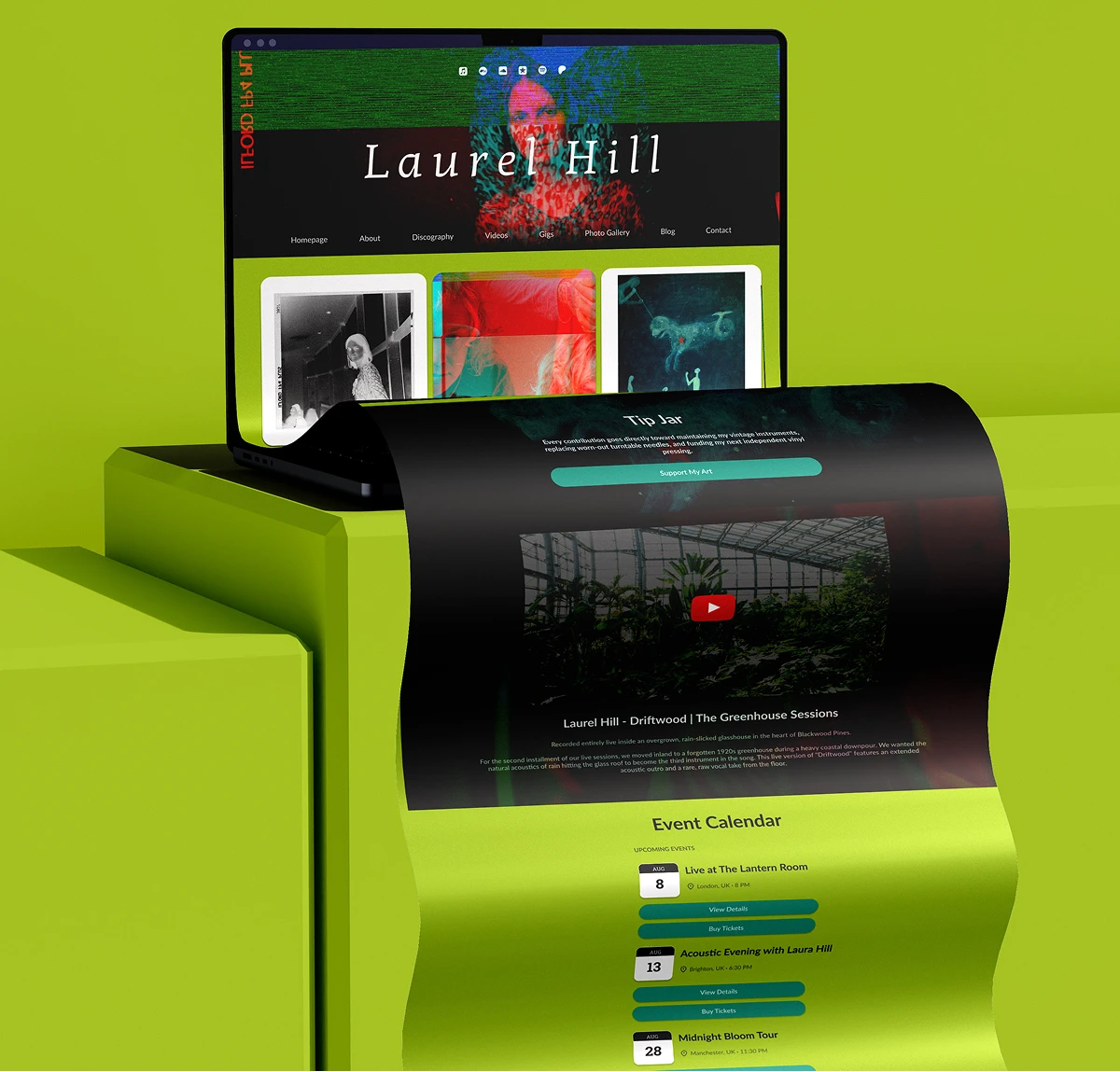
Before you pitch anyone, get one link ready that answers a journalist's questions in a couple of minutes: a bio in a short and a longer version, high-resolution photos they can print, your music embedded and easy to hear, streaming links, any past coverage, and a clear way to contact you. That page is your EPK or press page, and writers work straight from it.
Put it on your own site so everything lives in one place you control, and so it's findable when a journalist searches your name. A press page on your music website covers this, and the full section-by-section version is in how to make an EPK. Your bio does a lot of the work here, so it's worth getting right with these tips on writing an artist bio. (If your builder handles the technical side like page titles and image alt text, that page turns up in search on its own. If it doesn't, you'll want to cover those basics.)
Good coverage starts with a good list. Aim for 20 to 40 outlets that genuinely cover your genre at your level, and note who at each one writes about music like yours.
Where to look:
Niche and local outlets first. The music-manufacturing resource Disc Makers puts it plainly, that local media and genre blogs are a great place to start, since they often focus on emerging and independent artists. These are the ones likely to say yes.
Blogs that cover artists your size. Look at who writes about acts one or two steps ahead of you, and add those writers and sites.
Podcasts and radio shows in your genre, including local and college radio.
Playlist curators, who overlap with blog coverage and respond to the same kind of pitch.
For each outlet, write down the specific writer, what they cover, and how they take submissions. A short, researched list gets you further than a giant one you blast the same email to.
Journalists get a lot of pitches, so yours has to be quick to read and easy to say yes to. A good one is short, around 150 to 200 words, and personal.
The shape to follow:
A subject line that says what it is. The artist, the release, and the ask ("Premiere request: [artist] new single, out [date]").
A first line that shows you know them. Reference a recent piece they wrote, or why your music fits what they cover.
The hook. One or two sentences on what makes this release or story worth their readers' time. An angle beyond "new song out now."
One link to your press page or the track, and a clear ask: a review, a premiere, an interview.
A short sign-off with your contact and where you're based.
Keep it to that. No giant attachments, no ten links, no life story. Make it a two-minute yes.

Timing matters, because outlets plan their coverage ahead. For reviews and features, pitch roughly four to eight weeks before your release date. For a premiere, where the outlet posts the track first, three to four weeks ahead gives them time to schedule it.
Pitch the finished, mastered track, and have your press page live before you send anything. A writer who clicks through to an empty or half-built page moves on to the next email in the pile.

Silence is normal, and it isn't always a no. Writers are busy and your email might be sitting unread. Wait about a week, then send one short, friendly follow-up that bumps your original message.
Keep it to one, or at the very most two, spaced out. After that, leave it and try that outlet again next release. Sending five follow-ups is how you get a reputation you don't want and end up filtered straight to spam.
The artists who get covered again and again build real relationships with the writers who cover their scene. Follow the journalists who cover your genre, read and share their work, and reply when they post something good.
When your next release comes around, your pitch reaches someone who already recognizes your name and is far more likely to get a reply. Coverage compounds: one feature makes the next one easier, because now there's a quote and a link to point the next writer to.

Build your own musician website
Music player, store, EPK, and mailing list, all built in. Start your 30-day free trial, cancel anytime.
Mass-blasting a generic email. A writer can tell instantly when a pitch wasn't written for them, so send one tailored pitch instead of fifty copy-pasted ones.
Pitching the wrong outlets. Sending a folk single to a metal blog, or a first release to a national magazine, wastes everyone's time. Match the outlet to your genre and your level.
No press page. If your pitch links to a scattered set of social profiles, you've made the writer do the work. Give them one clean page.
Pitching too late. Email a writer the day your song drops and you've missed their planning window. Pitch weeks ahead.
Following up too much. One or two polite nudges are fine. More than that gets you blacklisted.
No angle. "New song out now" isn't a story. Give them a reason this release matters to their readers.
Get a press page ready with your bio, photos, music, and contact in one link, build a target list of blogs, local outlets, and podcasts that cover your genre at your level, then send each a short, personal pitch a few weeks before release. Start with niche and local outlets, since they're the likeliest to cover an emerging artist.
No, plenty of artists get their early coverage themselves. A PR firm has relationships and saves you time, but it's expensive. Do it yourself while you're starting out, and consider hiring help once you have a budget and a release big enough to justify it.
Find the specific writer who covers your genre, send a short email (around 150 to 200 words) that references their work, gives your hook, and includes one link to your press page or track. Make a clear ask, a review, a premiere, or an interview, and keep it easy to say yes to.
For reviews and features, pitch about four to eight weeks before your release. For a premiere, three to four weeks ahead. Always pitch a finished, mastered track with your press page already live, so a writer who clicks through sees a working page.
Target blogs and outlets that review artists at your level, send a personal pitch with your best track and a press page link, and give them a reason it's worth covering. Start local and niche, follow up once, and keep pitching around each release to build relationships over time.
Press coverage is relationship work, and it takes time. The artists who get written about make it easy: they have one clean link ready, they pitch the right people with a real angle, and they keep showing up release after release.
Start small and local, get your press page in order before you reach out, and treat every writer as someone you'll deal with again. A single feature won't change your career, but a steady drip of coverage, built over time, becomes part of the reason people take your music seriously.
Useful tips and tricks, delivered right to your inbox.
Join our newsletter to keep informed about Noiseyard updates and new blog articles. You can unsubscribe any time.