Photo by Szabo Viktor on Unsplash


Plenty of musicians avoid YouTube because they think it means becoming a content creator: weekly uploads, talking to camera, chasing a subscriber count. That's one way to use it, and it isn't the one that matters for your music.
This post is for musicians, bands, and DJs who want YouTube working for them without turning it into a second job. It covers why YouTube behaves differently from social feeds, how to set your channel up properly, what's worth uploading, how people find it, what monetization means in practice, and how to send viewers somewhere you keep.
YouTube is a search engine, so your uploads keep getting found for years. That's the opposite of a feed, where a post dies in a day.
Claim your Official Artist Channel. You can't apply directly, so it has to come through your distributor or label.
Upload a few durable things (live sessions, lyric videos, visualizers, covers) rather than posting constantly.
Write titles and descriptions the way people search, since that's how the videos get found.
Monetization is a bonus rather than the point. The point is reaching people and moving them to your own list.
Every description and pinned comment should send viewers to a page you own.
Yes, and you don't need to become a YouTuber to benefit. Set up your channel properly, upload a handful of durable videos like live sessions and lyric videos, write titles the way people search, and point viewers to your own site. A video uploaded once can keep finding listeners for years.
This is the thing worth understanding, because it changes what's worth your effort. An Instagram post is busy for a day and then gone. A YouTube video sits in search results and keeps being found by people typing in a song title, an artist name, or a genre.
That difference has a practical consequence. On YouTube, a small number of well-made videos outlast a large number of throwaway posts, so the effort you put in keeps paying rather than evaporating by Thursday. It also means you're competing on findability, which is a fairer fight for a small artist than competing for feed attention.
It's why covers do so well there: people search for songs they already know. If you're releasing one, how to release a cover song legally covers the rules, including the part specific to video.
Get our new guides by email
If you release music through a distributor, YouTube automatically creates a topic channel with your songs on it, separate from any channel you made yourself. That leaves your presence split in two, with subscribers in one place and your uploads in another.
An Official Artist Channel fixes that. YouTube describes it as a channel that brings together all your subscribers and content from your different YouTube channels into one place, merging your topic channel, your Vevo channel if you have one, and your existing channel. It also unlocks features aimed at artists, including ticketing, merch, and artist analytics.
Here's the part that catches people out: you can't apply for one yourself. YouTube's guidance is to contact your label or distributor to request it, or a Music Service Partner if you have neither, and it's requested as part of delivering your music. You'll also need at least one official release delivered through a distributor or label.
So the practical order is: release music through a distributor, make sure your artist name matches exactly across your metadata, then ask your distributor to request the Official Artist Channel. If distribution is new to you, how to release music independently walks through picking one.

You don't need a budget or a film crew. A few types of video do most of the work for a musician, and they're all things you can make in an afternoon.
Live sessions. One camera, a good audio recording, you playing a song properly. The single most useful video type for a musician, because it proves you can play and it works as a booking asset too.
Lyric videos. Cheap to make, and they catch everyone searching your song title plus the word lyrics.
Visualizers or static art tracks. A still image or simple loop over the audio. This gets your music on the platform with almost no effort.
Covers. Existing search demand, and a route to listeners who came looking for someone else.
Behind the scenes or how a song came together, if you enjoy making them. Optional.
What you can skip: a cinematic music video for every release, a weekly upload schedule, talking-head vlogs, and anything you'd dread making. Consistency in quality matters here more than frequency, since old videos keep working.
Because people search, the words around your video do a lot of the work.
Title it the way someone would search. "[Song name] (Live at [venue])" or "[Artist] - [Song] (Official Lyric Video)" gets found. A clever in-joke title gets found by nobody.
Write a real description. A few lines about the song, who played on it, and where to find you. This is text YouTube reads.
Put your links at the top of the description, above the fold, since that's the part people see without clicking "more."
Use a clear thumbnail, readable at a small size, ideally consistent with the rest of your visuals. There's more on keeping that coherent in how to brand yourself as a musician.
Pin a comment with your site link and a line about what to listen to next.
Use playlists to group your live sessions, covers, and releases, so one view leads to another.

Monetization is worth understanding and it's the wrong reason to be there.
Ad revenue on a modest channel is small, and it takes a while to qualify for the partner program in the first place. Meanwhile, YouTube's Content ID system means your recorded music can earn when other people use it in their videos, which arrives through your distributor rather than from your own channel.
Treat any ad income as a bonus. The valuable thing YouTube gives a musician is reach that keeps compounding, along with a place to send bookers and press. The money side of your career runs through your own store and your shows, which is covered in growing your fanbase beyond streams.
A view is worth very little on its own. Someone watches, enjoys it, and moves on to whatever autoplays next, and you have no way to reach them again.
So treat every video as a doorway. Put your website link at the top of the description, pin it in a comment, and mention it in the video itself when it fits. Send people to a page that plays your music, lists your dates, and has a mailing list signup, so a viewer becomes someone you can contact for the next release. How to build an email list as a musician covers making that signup convert, and what to put on your music website homepage covers what they should find when they arrive.
Subscribers are useful, and an email address is better, because you decide when it gets seen.
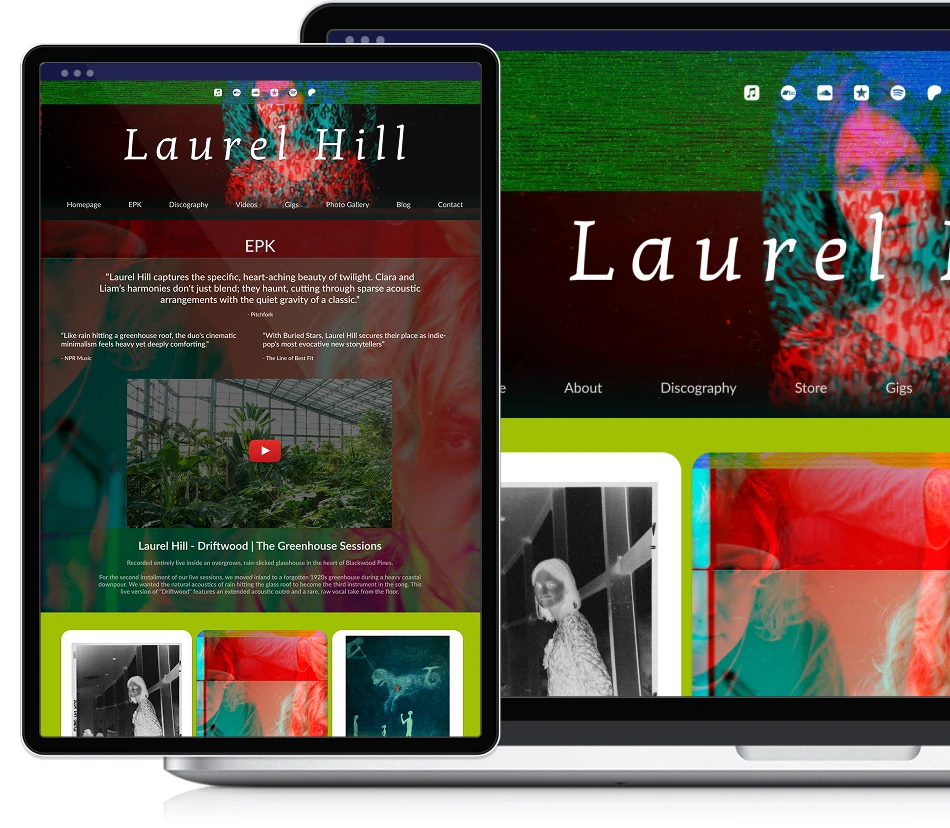
Build your own musician website
Music player, store, EPK, and mailing list, all built in. Start your 30-day free trial, cancel anytime.
Here's the realistic version, for someone who has no interest in becoming a creator.
Once: set up the channel properly, get your Official Artist Channel requested through your distributor, write a channel description with your links, and make playlists.
Per release: upload a lyric video or visualizer, and a live version if you can.
Every few months: film one live session. A single afternoon with a camera can produce three or four videos.

That's a handful of hours a quarter, and the videos keep working long after you upload them. If you want to go further with short-form clips, what to post as a musician has ideas that cut down from the same footage.
Leaving your topic channel and your own channel separate. Your subscribers and your uploads end up split. Ask your distributor about an Official Artist Channel.
Waiting until you can afford a proper music video. A one-camera live session with good audio does more for you than a video you never make.
Bad audio on live videos. People forgive rough picture and switch off instantly on poor sound. Record the audio separately if you can.
Titles nobody searches for. Include the song name, the artist name, and what the video is.
No links in the description. The view is wasted if there's no route back to you.
Treating it like a feed. Uploading constantly for the sake of it burns you out. A few durable videos serve you better.
It's worth having, since YouTube functions as a search engine and your videos keep getting found for years. You don't need to post frequently or make vlogs. A properly set-up channel with a few live sessions, lyric videos, and visualizers covers the basics.
You can't request one yourself. YouTube's guidance is to ask your label or distributor to request it, or a Music Service Partner if you have neither, and it happens as part of delivering your music. You'll need at least one official release distributed to YouTube, and your artist name should match your metadata exactly.
Live session videos, lyric videos, visualizers or art tracks, and covers cover most of it. Live sessions are the most useful, since they show you can play and double as something to send promoters. Skip the weekly upload schedule and the vlogs unless you enjoy making them.
Some, though ad revenue on a small channel is modest and qualifying for the partner program takes time. Your recorded music can also earn through Content ID when others use it, paid via your distributor. Treat it as a bonus and let your store and shows carry the income.
They do different jobs. Short-form video is built for discovery bursts that fade quickly, while YouTube keeps surfacing videos through search for years. Using both makes sense, and the clips you film for a live session can be cut down for short-form too.
Often enough to stay present, without forcing it. A video with each release, plus a live session every few months, is a workable rhythm. Quality and findability matter more here than frequency, since old uploads keep earning views.
YouTube pays back a specific kind of effort: a few well-made, well-titled videos that stay findable, rather than a constant stream of posts. That suits a musician far better than it suits a content creator.
Get the channel set up properly, ask your distributor about an Official Artist Channel, film a live session, title things the way people search, and put your website at the top of every description. Then leave it to work while you get back to the music.
Get our new guides by email.
Practical advice on promoting your music, getting gigs and selling online. You can unsubscribe at any time.