Photo by Isaiah McCarty on Unsplash



Booking every show yourself takes hours of emails, follow-ups and route planning. A booking agent does that work for a share of each show and pitches you to promoters and venues you don't know yet. Agents choose which acts they take on, though, and they check a few things before they reply.
This guide is for bands, solo artists and DJs who already play regular shows and want someone else to take over the booking.
An agent books your shows and tours for a commission, typically 10 to 20 percent of your gross income from each show.
Book your own shows until your local ones sell out, then start looking for an agent.
Agents want to see your draw numbers, show history, a live video and your music. Keep the music, video and dates on one EPK page of your own website, and put the numbers in your email.
Find agents through acts one step ahead of you and the promoters who book you, and check whether an agency takes unsolicited pitches before you write.
Before you sign, ask what the commission is taken from, which shows and territory it covers, and how either side can end it.
Sell out your local shows first, booking them yourself. Then look for agents who book acts a little bigger than you, and ask for introductions where you can. Send a short email with your ticket numbers and one link to a page with your music, a live video and your show dates.
A booking agent finds and books shows for you. Early on, that can mean club shows and support slots for bigger bands. Later, the agent plans whole tours, routed so you can get from each town to the next.
The agent pitches you to promoters and talent buyers, then negotiates the deal for each show. That might be a flat fee, or a share of the door after the venue's costs.
Agents are paid a commission on the shows they book. The usual range is 10 to 20 percent of the act's gross income per show, according to Berklee Online's 2019 guide to music business careers. Gross means everything the show pays you, before your travel and other costs come out of it. At 15 percent, the agent's share of an $800 show is $120, and your costs come out of the other $680.
These four roles are easy to mix up:
| Role | What they do | How they're paid |
|---|---|---|
| Booking agent | Pitches you to buyers, books the dates and negotiates each deal | A commission on each show |
| Manager | Guides your whole career and deals with agents, labels and promoters for you | A share of your earnings |
| Promoter | Pays for and puts on the show, and takes the financial risk | The show's profit, if there is any |
| Talent buyer | Picks the acts for a venue, festival or promoter | Paid by the venue or company they work for |
Get our new guides by email
Wait until your local shows sell out. TSE Entertainment, a booking agency in Austin, tells artists to book their own gigs and get to that point before they look for an agent. After that, watch for these signs:
You play often. You have a show every month or so and a few dates out of town each year.
Booking takes up your week. Emails and follow-ups eat into the time you'd spend writing and rehearsing.
More offers come in than you can handle. You're getting asked about support slots, festival spots and shows in new cities.
Until you see those signs, do the booking yourself. It takes hours, but you keep the whole fee and build the show history and promoter contacts an agent will ask about later.
Before an agent replies, they check whether they could sell you to promoters and talent buyers, whose shows lose money when tickets don't sell. They look at:
Your draw. How many people paid at recent shows, city by city, and how big each room was, like "40 paid in a 100-capacity room in Columbus". Keep the numbers exact. Exaggerating your fan base and draw is the first thing on TSE Entertainment's list of what artists should never do.
Your show history. Where you've played, when, and who you shared the bill with, plus what's already booked. A gigs page on your website that keeps past shows listed under the upcoming ones lets an agent see all of it without asking.
A live video. A full song or a short compilation from real shows, with clear sound.
Your music. A recent release that plays straight from the page you send.
How you fit their roster. An act or two they already book who play to a similar crowd.
How easy you are to reach. A booking email that someone answers within a day or two, ideally a custom band email address.
An EPK page puts nearly all of that behind one link, so an agent can check you quickly and pass the link on to a buyer. Build it around the sections bookers look for.
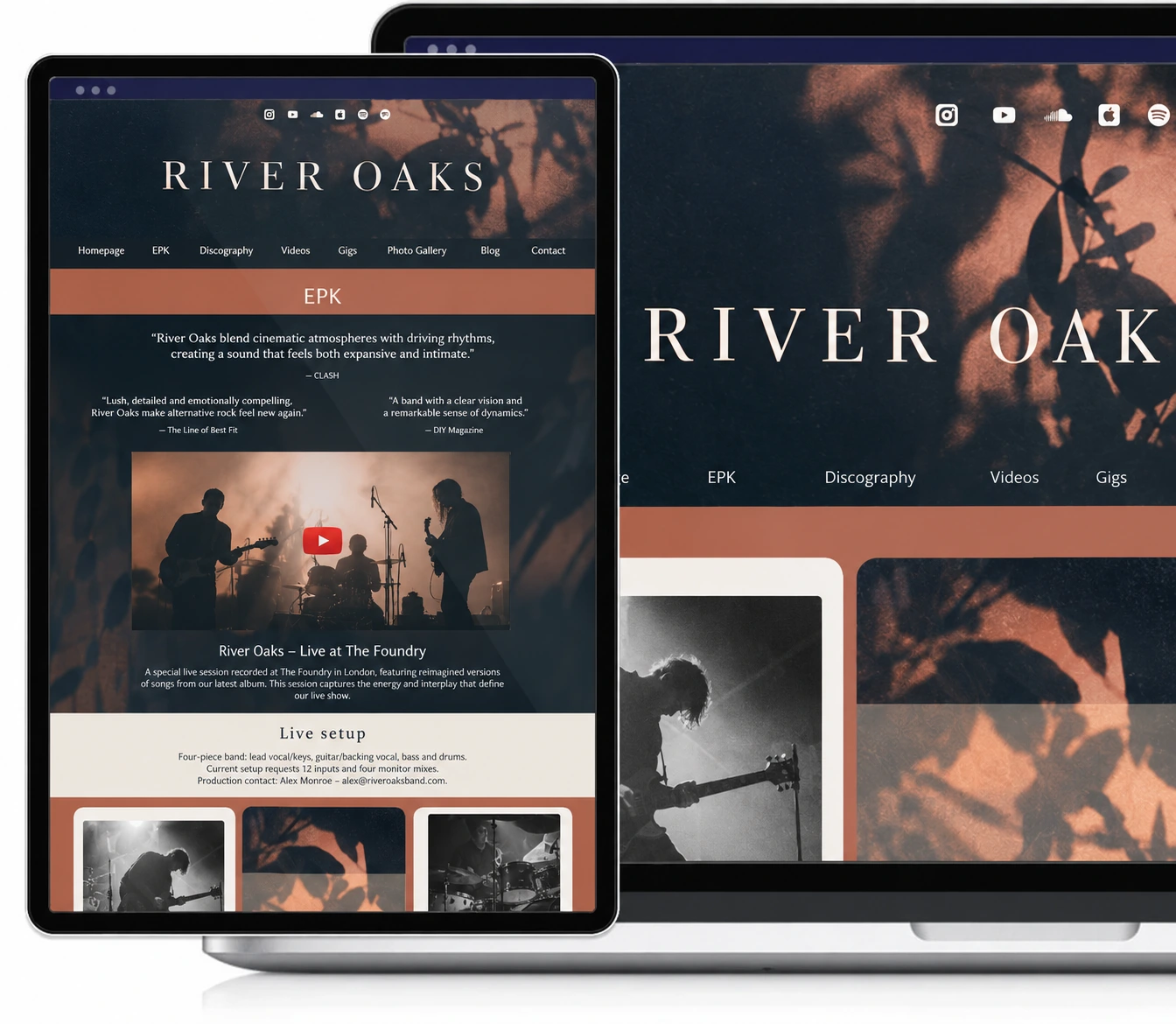
A good EPK and your own website are both on TSE's list of ways to get its attention. On Noiseyard, every plan includes an EPK page, and you can add a video section and an event calendar to it.
Build your own musician website
Music player, store, EPK, and mailing list, all built in. Start your 30-day free trial, cancel anytime.
Look for agents who already book acts like yours:
Check the acts one step ahead. Go through the listings and posters for venues about twice the size of the rooms you play, and note the bands in your genre. Then find a booking contact on their website, EPK or social profiles, and write down the agency if one is named.
Ask the people who book you. Promoters and talent buyers deal with agents as part of the job, so ask them which agents they'd recommend for an act your size.
Ask the bands you share bills with. Find out who books them, and whether they'd introduce you.
Read each agency's roster. You want acts at your level in your genre. If every act on it sells thousands of tickets, a band selling 50 may not get much of the agent's time.
Start close to home. Agents who book the clubs in your region already know the rooms you'll be playing next.

If you DJ, start with the routes in how to get booked as a DJ: promoters, residencies and private events. Wedding and function acts often work through entertainment agencies, so read how to get wedding and function gigs before you contact one.
Read the agency's website before you write. Some agencies don't accept unsolicited material. Fleming Artists, for example, says it's too busy with its roster to review incoming artist packages. When an agency says that, ask a band on its roster or a promoter who works with it to introduce you.
Write the email the way you'd pitch your EPK to a venue: keep it short, with one link and a clear ask, and follow up once. For an agent, change three things:
Lead with your numbers. Paid attendance by city, with the room sizes, goes in the first lines.
Show the fit. Name an act on their roster whose crowd is close to yours.
Invite them to a show. Offer a spot on the guest list at your next show near them. Agents often spend nights and weekends at shows with the acts they book and the ones they might take on, according to Berklee's career guide to music agents.
Be careful with anyone who pushes you to sign quickly, won't put the deal in writing, or charges you a fee for the service. Berklee Online lists all three among its red flags for signing with a manager, agent or A&R rep. Once the terms are on paper, ask these questions:
What's the commission, and what is it taken from: the full fee, what's left after costs, or an amount added on top of your fee?
Is there any fee besides the commission, and what is it for?
Does the commission apply only to the shows the agent books, or to every show you play?
Which territory does the deal include: your region, your country or everywhere?
How long does the deal last, does it renew by itself, and how can either side end it?
Who collects deposits and fees from venues, and when do you get your share and a statement?
What kind of shows, and roughly how many, do they plan to book for you in the first year?
What happens to shows already booked if you part ways?
In a 2017 legal column from Local 802, the musicians' union in New York City, the union's lawyer described the agent problems musicians brought to him. Some agents hadn't booked the work the musicians expected or hadn't properly accounted for the money from their shows. Others kept a share that didn't match the work. Sometimes the only fix was to wait for the contract to run out, then make it clear the deal was over. If you don't understand any part of the agreement, have a music lawyer read it before you sign.

Until then, keep working on what agents check:
Grow your crowd at home by building a reputation in your local music scene, both at your own shows and at other people's. The gigs guide covers getting more gigs once you're playing regularly.
Swap shows with bands in other cities. They get a show in your town, and you get one in theirs. How to book a DIY tour lays out the rest.
Apply to festivals yourself, starting with small and mid-size ones that have an application form on their own site.
Ask promoters about support slots. To open for an act that has an agent, go to the promoter or venue first. Two agencies, Fleming Artists and Mike Green and Associates, send bands who want to open there. If the promoter wants you, they ask the agency for approval.
Log every show. Write down tickets sold and the door count after each one, city by city, along with the other music marketing numbers worth tracking.
Booking agents usually take 10 to 20 percent of what each show pays you. For bigger-name acts, TSE Entertainment charges a 10 percent booking fee and typically adds it on top of the artist's asking price. Its rate may go higher when it also works with local artists and venues and handles logistics.
No. You can book your own shows, tours and festival slots. An agent starts to make sense once booking leaves you too little time for music and your shows pay enough to cover the commission. For a rock or pop act, an agent may be a good choice, according to a legal column from Local 802, New York's musicians' union. It may not suit a classical musician or a freelancer who isn't a star.
Some do. Fleming Artists says it wants both established and developing artists on its roster, though it doesn't take unsolicited material. TSE Entertainment says that in general it doesn't take on unsigned or emerging acts.
If booking shows takes all your time, look for an agent first. If you need help with releases, money and long-term plans, look for a manager first. A good manager already deals with agents and can introduce you to one.
Yes. You can paste links to your music and a live video straight into the email. A page on your own website is easier to keep current, though. When you add a show or a new video, the link in every email you've already sent shows it.
Start this week with a short list: three acts in your genre who play rooms about twice the size of yours. Add the agent named on each act's website or EPK. Then check how each agency takes new acts, and line up a show you can invite them to.
Get our new guides by email.
Practical advice on promoting your music, getting gigs and selling online. You can unsubscribe at any time.