Photo by Annie Spratt on Unsplash


Most independent artists assume festivals are out of reach until a label or a booking agent opens the door. A lot of the time, that is not true. Plenty of small and mid-size festivals book directly, take applications from unsigned acts, and fill whole stages with artists who applied themselves.
This guide is for solo artists, bands, and DJs who want to play festivals and have never been through the process. It covers where to find the right festivals, when to apply, what bookers look at before they reply, and how to set yourself up so you look like a working act instead of a hobby.
Festivals book on a calendar. Most summer events take applications in the autumn and winter before, so the work happens months ahead of the show.
Apply to festivals that fit your genre and your current draw. A small festival that matches your sound will reply more often than a huge one that does not.
Bookers check you before they reply. They open your links, listen for a few seconds, and look for proof you can pull a crowd.
The link you send does most of the work. Put your music, a short bio, photos, live dates, and a contact route on one clean page, instead of sending a pile of attachments.
Track every application like a spreadsheet job. Most need a polite follow-up before you hear anything.
Festivals run on a longer calendar than club shows. A summer festival usually locks most of its lineup in the months before, which means applications and pitches go out in the autumn and winter. If you wait until spring to start looking, the bills are mostly full and you are pitching for next year.
There are three common ways artists get on a festival bill:
Open applications. Many festivals run a public submission form, sometimes through a platform built for this. You fill in your details, paste your links, and wait. This is the most realistic route for newer acts.
Direct pitches. Smaller and independent festivals often book through a single promoter or curator. You email them directly with a short pitch and your links, the same way you would pitch a venue for a gig.
Through your scene. Promoters book people they have seen play, and artists already on a bill get asked who else should be on it. The reputation you build in your local music scene feeds directly into who gets recommended.
Most independent artists use all three at once. You apply where you can, pitch where you can, and stay visible so your name comes up when someone is filling a stage.
The process is not complicated, but it rewards artists who are organised and start early. Here is the order to follow.
Resist the urge to start with the biggest festivals you can name. Start with the ones you have a real chance of playing this year or next.
Make a simple list and sort festivals by fit:
Genre fit. Look at last year's lineup. If nothing on it sounds like you, you are probably not what they book.
Size fit. A festival that books a few hundred people across a weekend is far more likely to take a newer act than one selling out arenas. Aim where your current draw makes sense.
Location fit. Festivals near you are cheaper to play and easier to say yes to. Travel and accommodation eat into anything you get paid, so local and regional events are the practical place to start.
Slot fit. Early-day and side-stage slots are where independent acts get in. You are not pitching to headline. You are pitching to fill a slot well.
Twenty festivals that genuinely fit you are worth more than a hundred you picked because you have heard of them. For each one, note the festival name, the genre, who books it, how they take submissions, and the rough window when applications open.

You do not need an insider list to find these. A few reliable sources:
Festival submission platforms where events post open calls for artists.
The "apply" or "book" page on a festival's own website. Smaller events almost always have one.
Last year's lineups for festivals your size, then a quick search for how each one books.
Other independent artists in your genre. Ask who they applied through and what worked.
Get our new guides by email
Here is the part most artists skip, and it is the part that decides whether you get a reply.
Every application form and every pitch email ends the same way: paste your links. A booker clicks them, spends maybe thirty seconds, and decides whether to keep reading. If those links are scattered across a Spotify profile, an Instagram, and three different folders, you have made them do work, and most will not bother.
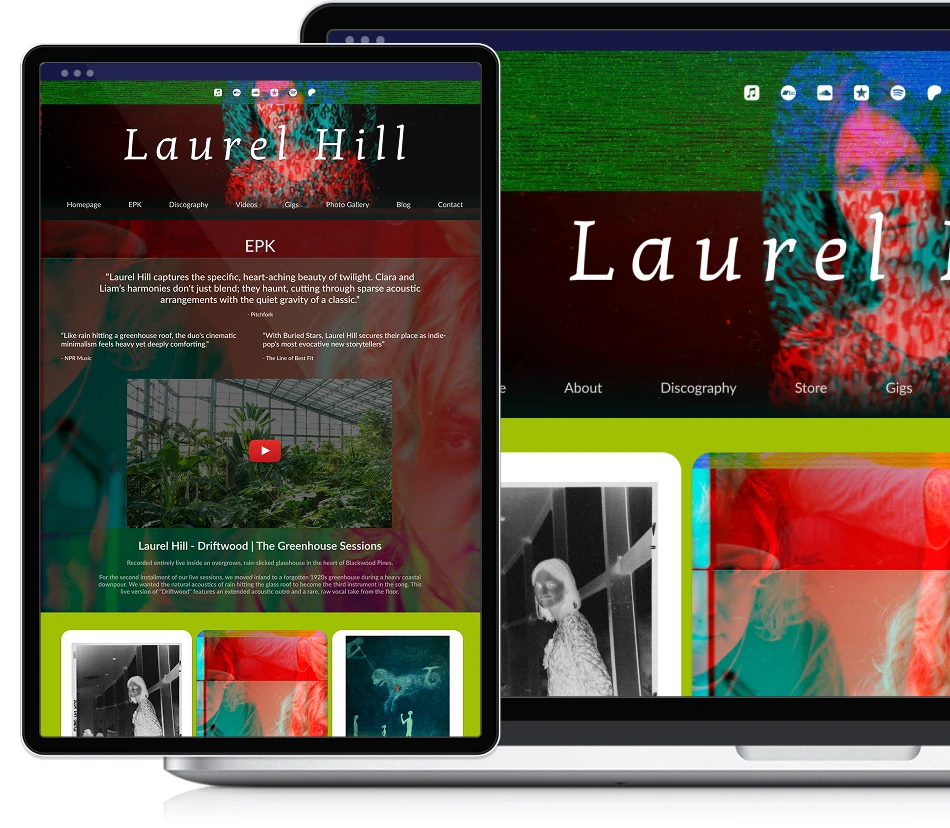
What they want is one link that answers their questions fast: who you are, what you sound like, whether you can draw a crowd, and how to reach you. That is what an electronic press kit (EPK) is for. A good one is a single page with:
A short bio, ideally written in a couple of lengths so you can drop the one-liner into a form and link the full version.
Your music, playable in one click. No download required.
A few press photos, in high resolution, that a festival can use to promote you.
Your live history and any numbers that show you can bring people out.
A contact route that goes straight to you.
If you already have a musician website, your EPK can live on it as a single page you keep updated. Some music-focused builders include an EPK page and a gigs section as part of the site, so the same place that sells your music and collects emails also holds the page you send to festivals. (If your builder handles the technical SEO side for you, that page is also findable when a curator searches your name. If it does not, you will want to cover those basics yourself.)
The detail of what goes on that page is its own topic, and we wrote a full breakdown of what to include in an EPK if you want the section-by-section version.
Once your list and your links are ready, the actual sending is quick.
For open applications: fill in every field. If there is a box for genre, influences, or a short description, use it. Vague applications get skimmed past. If the form asks for a single link, give the one to your EPK or website, not your Linktree.
For direct pitches: keep the email short. Bookers read a lot of these, so get to the point in the first two lines. A simple shape to follow:
Line one: who you are, what you play, and where you are based.
Line two: why you fit this festival specifically. Name something on last year's lineup or the stage you would suit.
Line three: one link, and one sentence on your draw (a recent sold-out local show, your monthly listeners, a release that did well).
A clear sign-off with your contact details.
Do not attach a 12-page PDF or a folder of files. Send the link. The whole point of a press-ready page is that they can open it in one click and find everything without digging.
Hi [name],
I'm [artist name], a [genre] act based in [city]. I think we'd be a good fit for [festival], somewhere around the kind of slot [a comparable act from last year] played.
Here's everything in one place: [EPK or website link]. We sold out [venue] in [month], and our last single picked up [a specific result].
Would love to be considered for [year]. Happy to send anything else you need.
Thanks,
[name and contact]
Keep it specific and keep it short. The more it reads like you know their festival, the better your odds.
Most applications and pitches get no reply the first time. That is normal, and it is not always a no. Bookers are busy, and yours might be sitting unread.
Wait about a week to ten days, then send one short, friendly follow-up that bumps your original message. One follow-up is enough. If you still hear nothing, leave it and try again next cycle.
Track all of it in a simple spreadsheet: festival, who you contacted, the date you applied, the date you followed up, and the response. After a full season you will see which kinds of festivals reply, which slots you are realistically getting, and where to aim next year. This is the same habit that pays off when you submit music to labels or pitch press, so it is worth building once.
Before a festival replies, someone almost always looks you up. Understanding what they check tells you where to put your effort.
They are looking for three things:
Does the music fit? They will play a few seconds of your strongest track. Lead with your best, not your newest.
Can you bring people? Festivals care about draw. Past shows, ticket sales, a real local following, and an engaged mailing list all signal that booking you puts bodies in front of a stage. A short list of live dates does a lot of quiet work here.
Are you easy to work with? A page that loads fast, photos they can use, clear contact details, and a tidy presentation all suggest you will not be a headache to deal with on the day.

This is also why the link you send matters more than the email around it. The email gets you opened. The page is what they judge. If it shows a working act with music ready to play, recent dates, and a way to get in touch, you have done your job. A page that is half-empty or out of date works against you.
One thing worth saying plainly: keep that page current. An EPK with photos from three years ago and no recent dates tells a booker you are not active. Update it before each application season, swap in your latest release, and add the shows you have played since.
Festivals are uneven on money, and it helps to go in clear-eyed.
Some pay a fee. Some offer exposure, a slot in front of a new crowd, and not much cash. Some smaller or first-year festivals ask you to play for the experience and the audience. None of these is automatically a bad deal, but you should know which one you are agreeing to before you say yes.
Run a simple check on every offer:
What you get paid, if anything.
What it costs you to be there: travel, accommodation, food, and any gear or crew you bring.
What you can earn on the day. This is where a festival can pay off even on a small fee. If you can sell merch and music at your stage or point people to your store, the audience in front of you becomes income. Print-on-demand merch lets you offer shirts without carrying boxes of stock to a field.
What it builds. A good slot, a new regional audience, photos and video for next year's pitches, and emails collected from a fresh crowd all have value beyond the fee.

A festival that pays little but puts you in front of the right new audience can be worth more than a better-paid show nobody remembers. Just make the trade on purpose, with the numbers in front of you, rather than saying yes to every slot and wondering later why touring lost you money.
A few things quietly sink festival applications:
Starting too late. By spring, most summer bills are full. Build your list and start applying in the autumn and winter before.
Aiming only at the biggest names. Huge festivals rarely book unproven acts off an open call. Your first festivals will be small and regional, and that is the right place to start.
Sending a generic blast. A booker can tell instantly when you have not looked at their festival, so send one tailored pitch instead of fifty copy-pasted ones.
Sending files instead of a link. Attachments and Drive folders make a busy booker work. A single page they can open is far more likely to get read.
A stale or scattered online presence. If your links lead to an abandoned profile or a page with old photos and no recent dates, you look inactive. Tidy it up before you apply.
No way to capture the audience. If you do play, and people discover you, give them somewhere to go. A mailing list signup and a store turn a one-time festival crowd into people you can reach again.
Build your own musician website
Music player, store, EPK, and mailing list, all built in. Start your 30-day free trial, cancel anytime.
Most get booked through open application forms, direct pitches to the promoter, or recommendations from their scene. The realistic path for newer acts is to apply to small and mid-size festivals that fit their genre, send one clean link to their music and live history, and follow up once. Bigger festivals usually come later, after you have a track record.
Earlier than you think. Many summer festivals book in the autumn and winter before, so applications often open six to nine months ahead of the event. Build your target list in late summer, note when each one opens submissions, and apply as early in their window as you can.
In practice, yes. Almost every application or pitch ends with "send your links," and a single press-ready page answers a booker's questions faster than a scattering of profiles. It does not have to be fancy. A bio, music they can play, a few good photos, your live dates, and a contact route are enough.
It varies widely. Some pay a real fee, some offer a slot and exposure with little cash, and some smaller events pay nothing. Always weigh the fee against your costs to get there, and factor in what you can earn from merch and music sales on the day plus the audience and material you gain for future pitches.
Yes. Plenty of festivals book directly from artists, especially smaller and independent ones. An agent helps at higher levels, but for your first festivals you can apply and pitch yourself. A tidy press kit and an organised, early application do most of what an agent would do at this stage.
Getting on a festival bill as an independent artist comes down to a few unglamorous habits: apply early, aim at festivals that fit you, send one clean link instead of a pile of files, and follow up without being a pest. None of it requires a label or an agent. It requires being organised in the months when nobody is thinking about summer yet.
The artists who get booked are usually the ones who made it easy to say yes. Their music plays in one click, their photos are ready to use, their dates are current, and a curator can find everything in one place. Put that page together once, keep it updated, and you can spend each application season pitching instead of scrambling.
Get our new guides by email.
Practical advice on promoting your music, getting gigs and selling online. You can unsubscribe at any time.