Photo by Natalie Parham on Unsplash


A DIY tour is a run of shows you book yourself, with no agent and no label doing it for you. It's how a lot of independent bands turn a fanbase scattered across a few cities into real rooms of people, and it's more doable than it looks once you break it into steps.
This post is for bands, solo artists, and DJs planning their first self-booked tour. It covers when to start, how to route it so you're not driving in circles, how to pitch venues and get a yes, and how to promote and budget the run so it doesn't cost you money.
A DIY tour is a run of shows you book yourself. Start four to six months out, since some venues book that far ahead.
Lock two or three anchor dates first (a hometown show, a festival, a city where you already draw), then route the other shows between them with short drives.
Pitch each venue a short email and one link: your music, dates, a line on your draw, and a way to book you.
Swap shows with bands in other towns. Each one can get you a slot and a built-in crowd.
Promote city by city, sell tickets in advance, and keep a tight budget so merch and door money cover the road.
Book it yourself, starting four to six months out. Lock two or three anchor dates first, a hometown show, a festival, or a city where you already draw, then route the other shows between them with short drives. Pitch each venue a short email with one link, promote every city in advance, and keep costs low so the run pays for itself.
Booking your own tour means you handle it all: choosing the cities, pitching the venues, setting the dates, and promoting each show. In return you keep the money and the control, and you build direct relationships with venues you can come back to.
A short run makes sense once you have a few signs of life outside your hometown: some streams or mailing-list subscribers in nearby cities, a release to support, or a band in another town who'll put you on. You don't need a big following. What you want is a tight run of three to five shows through cities within reach of each other, close enough to route and small enough to promote properly. A scattered handful of single shows across the map is harder to fill and harder to drive.
Be honest about the trade-off. A first DIY tour rarely makes much money, and the point is usually exposure, road experience, and new fans. The goal is to come home even, or close to it, with a bigger audience than you left with.
Give yourself four to six months. Some venues book that far ahead, and you'll want time to confirm the route and promote each show once it's locked.
Start with your anchor dates, the two or three shows the rest of the tour is built around:
A hometown or home-region show you know will draw.
A festival slot or a higher-paying show that helps cover the run's costs.
A city where you already have fans, a promoter you know, or a band who'll put you on.
Book these first. They become the fixed points on the map, and every other date fills the gaps between them.

Once your anchors are set, connect them with a sensible geographic line so you're moving in one direction rather than doubling back across the map. Bad routing burns fuel, time, and energy you need for the shows.
A few rules that keep a route sane:
Keep daily drives short. A good rule of thumb is to keep each day's drive to under about five hours, and to build in a buffer day when a longer haul is unavoidable, so you're rested going into the show.
Don't backtrack. Order the cities so each drive gets you closer to the next anchor rather than back the way you came.
Leave room to breathe. Back-to-back shows in far-apart cities wear you down. A day off on a long stretch keeps the performances good.
Match the day of the week. Weekend slots draw better in most towns, so give your bigger markets the Friday and Saturday dates where you can.
Map the whole thing before you lock the middle dates, so a tempting show in the wrong direction doesn't wreck your route.
For each city on the route, find a handful of venues that fit your genre and your realistic draw. A room that holds 400 will not book an act bringing 30, and a tiny bar can't handle a show that draws a real crowd.
Look for the right-size rooms:
Small clubs and bars that book live music in your genre.
DIY and all-ages spaces, community centers, and record shops.
Coffee shops and cafes for quieter or acoustic acts.
House shows, which are a real option for a first tour with a small draw.
For each venue, note who books it (a promoter, a talent buyer, or the owner) and how they take submissions. A short, researched list of rooms that fit you will get you further than a big blast to venues that were never a match.
Every venue you pitch will click one link before they reply, so it needs to answer their questions fast. A booker wants to hear you, see that you can draw, and know how to reach you, without digging through five profiles.
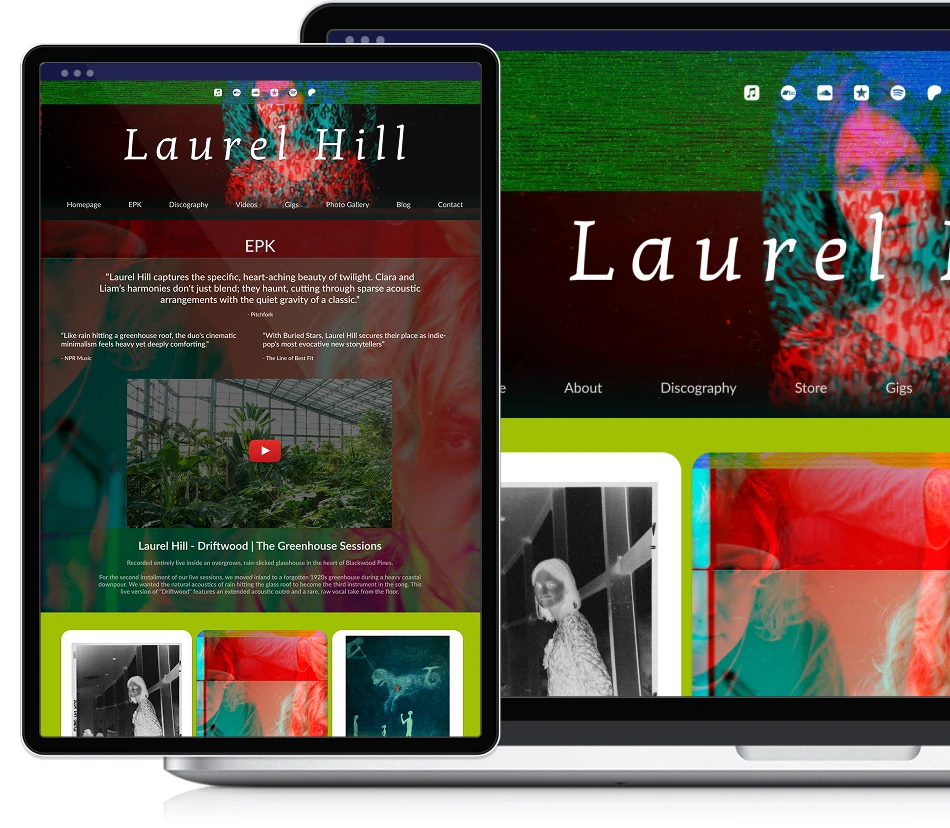
Put it all on one page: your music, a short bio, past dates and any draw numbers, press photos, and a contact route. A well-known touring guide says the same thing, that you send venues a basic website or EPK with links to your music, photos, and a one-sheet. A band website with a dates page, plus an EPK you can send in one click, covers this and stays a page you own. (If your builder handles the technical side like page titles and image alt text, a promoter searching your name finds you too. If it doesn't, you'll want to cover those basics.)
With your route and your link ready, the pitch is quick. Bookers read a lot of these, so keep it short.
A simple email to send:
Line one: who you are, your genre, and the specific date you want in their city.
Line two: why you fit the room, a similar act they've booked, or the scene you sit in.
Line three: one link, and a line of proof you can draw ("we sold out [venue] at home and have listeners in [city]").
Sign off with your contact and any other dates on the run.
Then use the strongest tool a DIY band has: other bands. A show swap is when you help a band get a show in your town in exchange for them getting you a slot in theirs. You gain a local act who knows the venue, brings their own crowd, and makes your out-of-town show feel less like a cold start. Treat those bands well, watch their set, thank them from the stage, and the relationship carries into the next tour.
A booked tour with no promotion plays to empty rooms. Every date needs its own small push, because a fan in one city doesn't care about a show three states away.
For each show:
Email your list first. The people on your mailing list are your warmest audience, so tell them the dates before you post anywhere, and segment by city if you can.
Put every date on your site. A tour page fans can check, share, and buy tickets from is the hub you point all your posts at. There's more on using your site through a run in this guide on running your website during a tour.
Lean on the local band. Your show-swap partner, the venue, and local promoters reach people you can't. Share each other's posts and tag the venue.
Sell tickets in advance. Advance sales tell you how a night is shaping up and give you time to push harder where it's slow.

The fastest way to sour on touring is to come home broke. Map the money before you leave.
Your costs on the road:
Travel, mostly fuel, which is why short drives and tight routing matter.
Accommodation, cheaper if you stay with the bands you swap shows with or with local friends.
Food for everyone, every day.
Merch stock you buy up front.
Where the money comes back:
The door or a guarantee. Some venues pay a set fee, others a cut of the door. Confirm which in writing before the show.
Merch. For a small tour, the table is often where the real money is. Bring shirts and music people can buy on the night, and print-on-demand merch lets you stock up without paying for a big batch in advance.
Advance tickets from your own promotion.
The trick is to let your anchor shows (the festival slot or the higher-paying date) carry the thin nights, keep the drives short so fuel doesn't eat the profit, and treat the merch table as a real part of the plan.

Booking too late. Rooms fill months out, so start four to six months ahead, well before they're gone.
Routing in circles. Long backtracking drives waste fuel and wreck your energy. Order the cities so every drive moves you forward.
Pitching the wrong-size rooms. A venue far bigger than your draw will pass, and an empty big room looks worse than a full small one. Aim where your numbers fit.
No promotion per city. One tour announcement isn't enough. Each date needs its own local push.
Forgetting merch. The merch table is often the difference between breaking even and losing money. Bring plenty.
Nothing in writing. Confirm the date, the pay, the load-in time, and the set length in an email, so there are no surprises at the door.
Build your own musician website
Music player, store, EPK, and mailing list, all built in. Start your 30-day free trial, cancel anytime.
Start four to six months out. Some venues are booked that far ahead, and you'll want time to confirm the route, lock the dates, and promote each show once it's set. A regional run can sometimes come together in three to four months, but earlier gives you more options.
You do it the way this guide lays out: set a few anchor dates, route the tour around them, build a venue list that fits your draw, and pitch each room with a short email and one link. Swapping shows with bands in other towns is the fastest way in without an agent.
For a small tour, merch is usually the biggest earner, followed by the door or a guarantee, and advance ticket sales. The other half is keeping costs down: short drives, cheap or free places to stay, and anchor shows that help cover the leaner nights.
Keep a first run short, roughly three to five shows through cities within reach of each other. A tight, well-routed run is easy to fill, cheap to drive, and simple to promote. Long stretches of far-apart dates tend to play to empty rooms and drain your budget.
A short, specific email and one link to a page with your music, a short bio, past dates, press photos, and a contact route. Name the exact date you want and give a line of proof you can draw. Skip the long life story and the pile of attachments.
Promote each city on its own. Email any fans you have there first, work with the local band you swapped shows with, tag the venue and local promoters, and sell advance tickets. A tour page on your site gives every post one place to send people.
A DIY tour is a project you build one piece at a time. Start early, lock your anchor dates, route it so you're not driving in circles, and pitch venues with one clean link that proves you.
Then promote every city like its own show, keep the budget tight, and treat the bands and venues you meet as people you'll see again on the next run. Do that, and a first tour of a few rooms becomes the start of a touring career you own outright.
Useful tips and tricks, delivered right to your inbox.
Join our newsletter to keep informed about Noiseyard updates and new blog articles. You can unsubscribe any time.
Marketing & Promotion
How to Promote Your Music Without a Label (10 Ways)