Photo by Baptiste MEREL on Unsplash


Getting booked as a DJ comes down to being easy to book: easy to find, easy to hear, easy to trust, and clearly able to bring or hold a crowd. Promoters keep rebooking the DJs they can rely on to show up, read the room, and fill a floor.
This post is for DJs who want more gigs, from your first club slot to a regular night and paid private events. It covers where bookings come from, what a promoter checks before they reply, the one link that gets you taken seriously, and how to turn a single gig into the next one.
Promoters book DJs they can trust and who help fill the room. Your job is to make both easy to see.
Start small. Open for other DJs, take the dead-time slots, or bring a night to a quiet room. First gigs come from saying yes and showing up.
Have one link that proves you: a mix or two, a short bio, past dates, and a way to book you. A page you own does this better than a scatter of socials.
Residencies go to DJs who bring a base crowd and pitch a night with its own identity.
Private events pay the most and rebook by word of mouth. Treat them as their own market, with clear pricing and a professional first impression.
DJs get booked by making it easy to trust them with a slot. That means mixes a promoter can hear, some proof you can bring or hold a crowd, and one clear way to reach you. You'll usually start small, opening for others or taking quiet slots, then build a track record that makes the next booking easier.
DJ gigs come from a few different worlds, and it helps to know which one you're pitching.
Club and bar nights. Booked by a promoter or the venue's talent buyer, usually for a support or warm-up slot at first. It's the usual starting point.
Residencies. A regular slot at one venue, weekly or monthly. More stability, and a promoter who wants to see you can help fill the room.
Private and corporate events. Weddings, parties, brand events, and corporate functions. These pay the most, often come through referrals or event agencies, and are a different job from a club set.
Your own scene. Other DJs, promoters you know, and the nights you show up to. A lot of bookings happen because someone already knows you and trusts you.
Over time, you'll pull from all four. You don't have to pick one, but each needs a slightly different pitch.
The hardest booking is the first one, because you have no track record yet. The way in is to make it low-risk for someone to give you a shot.
A few entry routes that consistently work:
Open for an established DJ. A warm-up slot is a common way in. Ask a DJ you know if you can open, sometimes for little more than the experience.
Take the dead slots. Offer to play the early hours or a normally quiet night the venue struggles to fill. You're solving a problem for them.
Bring a night to a quiet room. Pitch a small event in an off-peak room and bring your own people. A busy corner on a dead night gets a promoter's attention.
Help run someone else's night. Promoting, working the door, or handling the back office puts you next to the people who book, and your name comes up when a slot opens.
Experienced DJs say the same thing: before you worry about whether your demo is good enough, find a creative way to get a first shot, then be reliable enough to get asked back. That reliability, showing up early, prepared, and easy to deal with, is what turns one gig into a habit.

When you pitch, a promoter does a quick check before deciding whether to write back. They're looking for three things:
Can they hear you? A mix or two they can play in one click. No mixes, or a broken link, and you're out.
Can you bring or hold a crowd? Followers, a mailing list, past dates, a photo of a room you filled. Any sign you put bodies in front of the booth.
Are you easy to work with? A clean, professional presence, one clear contact, and a sense that you'll show up on time and read the room. Promoters remember the DJs who made their night easy.
The DJs who get booked make all three obvious in under a minute, and a lot of that is just how you present yourself.
Here's the part a lot of DJs skip. Every pitch and every promoter check ends the same way: they click your link. If that link is a scatter of an Instagram, a SoundCloud, and a Linktree, you've made them hunt for the basics, and a busy promoter usually won't bother.
What works is one link that answers their questions in one place:
Your mixes, embedded so they play on the page (a set from Mixcloud or SoundCloud, right there).
A short bio: who you are, your sound, and where you play.
Your upcoming and past dates, so you look active.
A clear way to book you, with one contact route.
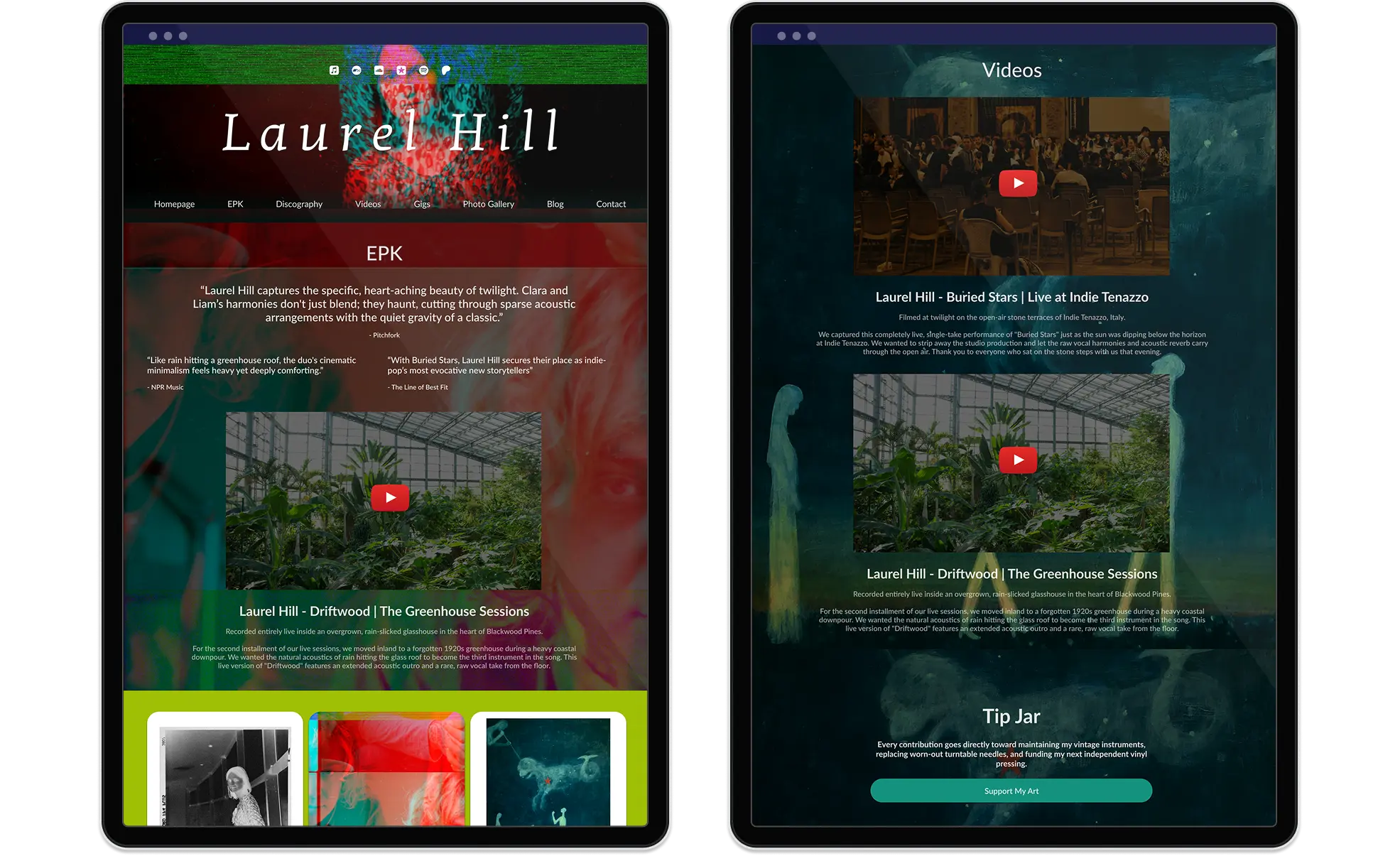
A DJ website that embeds your mixes, lists your dates, and gives promoters one place to book you does this better than a pile of links, and it's a page you own rather than rent. If you also pitch press or bigger nights, the same idea applies to an EPK, a press-ready page you can send in one click.
Once you have that link, the pitch itself is short. Promoters read a lot of these, so get to the point.
A simple shape to follow:
Line one: who you are, your sound, and where you're based ("I'm [name], a house DJ based in [city].").
Line two: why you fit this night specifically. Name the night or a resident whose sound you sit next to.
Line three: one mix link, and one line of proof you can draw ("I brought 40 people to my last night at [venue].").
Sign off with your dates and a clear contact.
Keep it to one link, never a pile of attachments or five different profiles. If you don't hear back, one short follow-up a week later is enough. Then leave it and try again next cycle.
A residency is a booking worth chasing, because it's steady and it builds your name at one venue. Promoters give them to DJs who do two things.
First, you help fill the room. A resident is expected to bring a base crowd, so pulling 20 or 30 of your own people in early can matter as much as your track selection. Show a promoter you can move people, through your socials, your mailing list, or a night you already draw to.
Second, you bring a concept. A night with an identity, a sound, a name, a reason for people to come, is far easier to say yes to than "can I have a regular spot?" Pitch the night you'd run, who it's for, and how you'll promote it.
Once you have the slot, keep it by being reliable and reading the room. Play for the crowd in front of you, stay flexible when the headliner or the night calls for a different energy, and treat the venue like a place you want to stay.

Weddings, corporate functions, and private parties are a different market, and usually the best-paying one. The skills that matter shift: reading a mixed-age crowd, taking requests gracefully, owning reliable gear, keeping things smooth, and looking professional from the first email.
These bookings run on trust and referrals. One well-run wedding leads to the next through word of mouth, so a calm, professional first impression carries real weight here. A clean, professional page with your sound, past events, and a clear enquiry route does a lot of the selling before you ever reply.
On pricing, private events vary widely by market, event length, and what you provide, so quote per event rather than pinning a public number. Be clear about hours, gear, and travel up front, and put it in a simple written confirmation so everyone knows the deal.
The DJs who stay booked treat every gig as the start of the next one.
Capture the night. With permission, record your set and grab a few photos or clips of a full room. That's your proof for the next pitch.
Collect contacts. Swap details with the promoter, the other DJs, and anyone who books events. Add fans to a mailing list so you can tell them where you're playing next.
Follow up. A short thank-you to the promoter, with your draw ("we had a great turnout, would love to come back"), keeps you on their list.
Be easy to rebook. Showed up early, played well, easy to deal with, packed the floor. That reputation is what fills your calendar without you chasing every booking.

Build your own musician website
Music player, store, EPK, and mailing list, all built in. Start your 30-day free trial, cancel anytime.
No way to hear you. If a promoter can't play a mix in one click, they move on. Lead with your strongest set.
A scattered online presence. Sending five different links makes people dig. Point everything at one page you control.
No proof you can draw. Talent alone rarely books a slot. Show any sign you can bring or hold a crowd.
Being flaky. Late, unprepared, or hard to reach loses the rebooking, no matter how good the set was, so treat reliability as part of the job.
Pitching every night the same way. A warm-up slot, a residency, and a wedding are different jobs. Tailor the pitch to the booking.
Never following up. Bookings often need a nudge, so a short, friendly follow-up is worth sending.
Make it low-risk for someone to give you a shot. Open for an established DJ, offer to play a dead-time slot the venue struggles to fill, or bring a small night to a quiet room and pull in your own people. At this stage, what gets you booked is getting through the door and proving you show up and deliver.
It helps a lot. Promoters and event clients look you up before they reply, and one page with your mixes, dates, and a booking contact is easier to trust than a scatter of social profiles. It's also a page you own, so it doesn't disappear when an app changes its rules.
Show you can help fill the room, and pitch a night with its own identity. Prove you can draw a base crowd through your socials, mailing list, or a night you already run. Once you have the slot, keep it by being reliable and reading the crowd.
It varies widely by market, event type, hours, and the gear you bring, so quote per event rather than a fixed public rate. Be clear about what's included (hours, setup, travel) and confirm it in writing, since private clients care most about a clear, professional deal.
A short message and one link. Say who you are, your sound, and where you're based, name why you fit their night, add one mix link and a line of proof you can draw, and sign off with your dates and contact. Skip the pile of attachments.
Beyond your own scene, look at electronic-event platforms like Resident Advisor, DJ-specific job boards, and local promoter pages and groups. Combine that with showing up in person at nights you'd want to play, since a lot of bookings still start with a face-to-face connection.
Staying booked as a DJ is mostly a set of habits. Be easy to find, easy to hear, easy to trust, and easy to rebook, and the bookings compound over time.
Put your mixes, your dates, and a booking contact in one place you own, start with the small gigs that get you in the door, and treat every set as the reason for the next one. Do that consistently, and the gigs get easier to come by.
Useful tips and tricks, delivered right to your inbox.
Join our newsletter to keep informed about Noiseyard updates and new blog articles. You can unsubscribe any time.
Marketing & Promotion
How to Promote Your Music Without a Label (10 Ways)