Photo by Quilia on Unsplash


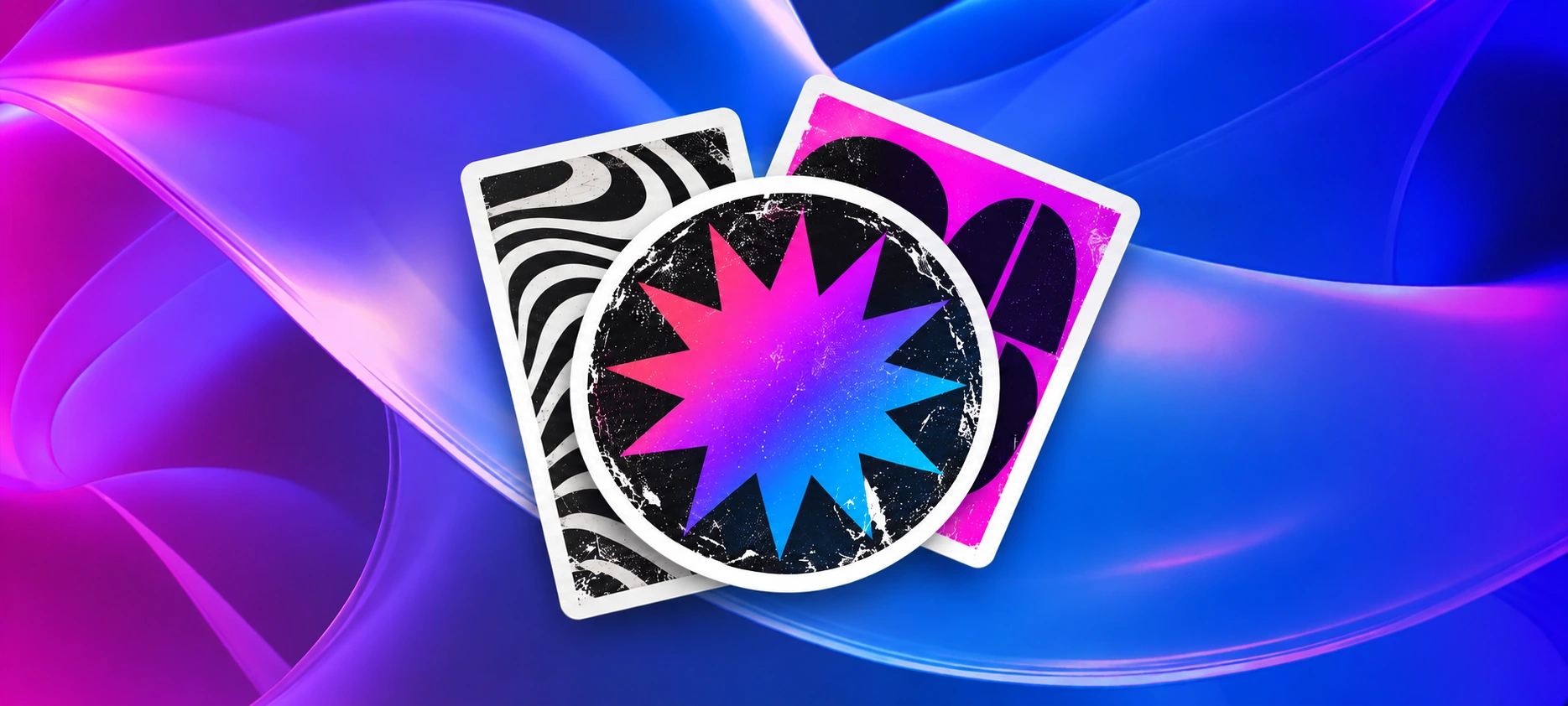
A sticker is the cheapest thing on a merch table and the one that travels furthest. A shirt gets worn on some days. A sticker goes on a laptop, a guitar case, a water bottle or a car, and it stays there for years, in front of people who never heard of you.
This post is for musicians, bands and DJs who want to add stickers to their merch. It is also for anyone with a box of them already who is not sure what to do with it. It covers what to put on one, which type and size to order, and where to print them. Then it covers what they cost, how to price them, and the ways to give them away that bring something back.
Put your name or logo on the sticker, big enough to read from a metre away, and your website address in small type underneath.
Order die-cut stickers in vinyl or clear waterproof stock for anything that will live outdoors or on a bottle. Paper stickers are for packaging and envelopes only.
Start with 50 to test the design, then 250 once you know it works. Three-inch (about 7.5 cm) is the size that fits laptops and cases.
Sell them for $2 to $3 alone, or give one free with any order, which is often the better use.
Every parcel you post and every merch-table conversation that does not end in a sale should still end with a sticker.
Yes, at almost any audience size. A small run of vinyl stickers costs about the same as one printed shirt, and they post in an envelope. Fans keep them on things they look at every day. Sell them for a couple of dollars, add one to every order, and hand one to anyone who stops at the table without buying.
Three things make stickers different from the rest of the merch table.
They are cheap to make and cheap to post. A sticker fits in a normal envelope with a normal stamp. Nothing else you sell can say that.
They are the easy yes. A fan who will not spend $25 on a shirt will spend $2 on a sticker, or take a free one. Either way they leave with your name on something. The merch table guide calls this the low-price option, and it is the item that keeps the table busy between shirt sales.
They keep advertising. A sticker on a laptop in a coffee shop is seen by strangers every day for years. No poster or post does that for the price.
None of that makes money on its own. What a sticker earns is the next thing. That might be the fan who looks you up because the name was on a friend's case. It might be the parcel that arrives with something extra in it, or the mailing list signup at the table.
Keep it to one thing. The stickers that get used are the ones a fan is happy to have on a laptop for two years. That is usually a name or a logo they like the look of. An advert for a release gets peeled off when the next one comes out.
Your name or logo, and nothing else, is the safe first sticker. If your look is settled, this is a quick job. If it is not, the guide to branding yourself as a musician covers the choices that come before the artwork.
One element from the album artwork works as a second sticker, especially a character, a shape or a title in big type. The full cover shrunk to seven centimetres does not.
A lyric line in your typeface, if you have a line people already quote back to you.
Your website address in small type along the bottom edge. Not a streaming link and not a social media username, because those change and a sticker does not. A fan who likes the sticker and types the address in finds your music, your dates and your store on one page.
A quick test: shrink the design to the size of a coin on your screen. If you can still tell what it is, it will read on a guitar case from across a room.
The printer will ask, so it helps to know the difference before you upload anything.
Die cut. The sticker and its backing paper are cut to the shape of your design, so a round logo arrives as a round sticker. This is the standard band sticker and the one to order for selling and handing out.
Kiss cut. The vinyl is cut to shape but the backing stays a square or rectangle. That makes the sticker easier to peel and gives you a border to print a name or address on. Good for anything going in a parcel or being handed out in the dark.
Sticker sheets. Several designs on one backing sheet. These are a product in their own right, a $5 sheet with your logo, a lyric and two bits of artwork. They suit the online store better than the table.
Buttons and pins sit in the same family and cost about the same. A 25 mm button next to the stickers gives a second cheap item without a second design job.
Get our new guides by email
Three inches, about 7.5 cm, is the size to start with. It fits a laptop lid, a guitar case and a bottle, and it is big enough for a name to read from across a table. Two inches (5 cm) is the size for a logo-only sticker that goes on a phone case or a pedal. Go bigger only for a car or a case.
Material decides where the sticker survives.
Laminated vinyl is the one for anything a fan will carry around. The laminate protects the print from scratches, rain and sunlight, and a good vinyl sticker survives a dishwasher. This is what "weatherproof" means on a printer's site.
Paper is cheaper and fine for the inside of a parcel, an envelope seal or a jar at the merch table. Outdoors it fades and peels in weeks. Do not sell paper stickers as merch.
Clear is waterproof too, and a clear sticker with white ink looks good on a bottle.
Holographic and foil are extras for a second run once the plain one sells. A holographic sticker photographs well for a release post.
On quantity, order 50 of a new design first. That is enough to see whether people pick it up at a show and whether the colours came out as you expected. It also costs little if the answer is no. Once a design has proven itself, reorder in 250s, where the price per sticker drops sharply. A thousand stickers of an untested design is the usual mistake, and the box lives under a bed for years.
You have three routes: an online printer for a first run, a local print shop for bigger or unusual jobs, and print-on-demand for the online store.
MOO is a good place to order the first run. On its US site, die-cut stickers in any shape start at 10, from $21.50 at the time of writing, in clear, coated, matte or metallic stock. For anything a fan will carry, pick clear, which MOO rates to last six years outdoors, and keep the other stocks for packaging and envelopes. The downside is price. Ten die-cut stickers work out at about $2 each, so treat the first order as a test and go bigger once a design sells.
MOO's vinyl stickers come as circles and rectangles on sheets, from 52 for $16, with a gloss or matte finish. It can print a different design on every vinyl sticker in a pack at no extra cost, so one pack can mix your logo, a lyric and some artwork. The UK site sells round and rectangular stickers from 50, including a 76 mm round, close to the three-inch size above.
A local print shop is the next option. It is often the best one for patches, embroidered badges and large runs, because you can see a sample in your hand and there is no shipping. Ask whether the vinyl is laminated. If the answer is a blank look, order online.
Print-on-demand works differently from both. There is no minimum and no box to buy, because each sticker is made after someone orders it. If your store already sells print-on-demand shirts, the stickers can sit next to them. The cost per sticker is far higher than a bulk run, so it suits the online store, while a bulk run still makes more sense for the table. The guide to print-on-demand merch covers how that side works.
Sticker disappointment usually starts with the file, not the printer. Four checks before you upload:
Resolution. Any photo or texture needs to be 300 dots per inch at the printed size. A logo drawn in a vector program (Illustrator, Affinity Designer, Inkscape) has no resolution to worry about and is the best starting file.
Bleed. Extend the background 3 mm (one eighth of an inch) past the cut line on every side. The blade falls slightly differently on every sticker, and bleed is what stops a thin white edge appearing on some of them.
Colour. Set the file to CMYK. Bright screen colours, especially neon greens and pure blues, print duller than they look, so check the proof.
Line weight. Thin lines and small text soften on vinyl. Anything under about 1 mm thick or 7 point in size is a risk at three inches, and a smaller risk on a five-inch sticker.
The printer's online proof shows the cut line over your design. Look at where it falls on curves and points, because a very spiky shape gets simplified by the cutter. Round off anything you would not want to catch on a bag.

Stickers are an impulse item, so the price has to be one a fan can say yes to without thinking.
Alone: $2 to $3 for a three-inch vinyl sticker, or three for $5. Under a dollar looks like a freebie and people treat it as one.
As a pack: a set of three or four designs for $5 to $8 sells well online. It is a real product with a real price, and it still posts in an envelope.
In a bundle: the record plus a shirt plus a sticker, priced a little under the three added together. The sticker is the part that makes the bundle feel generous and costs you almost nothing.
Free with any order. The strongest use of the cheapest item. A sticker in every parcel is a fan who opens the box and gets something extra, and it costs less than the tape.
Where you sell them decides what you keep. In your own store the whole price is yours, minus the card fee, and a sticker pack makes a good cheapest product for a first-time buyer. The guide to selling your music and merch online covers what else belongs in that store. Pricing your music and merch covers the margin on everything bigger than a sticker.
One practical note on postage. A sticker pack goes as a large letter, so set its shipping price to match, or offer free shipping on stickers and build the stamp into the price. Charging parcel rates on a $5 sticker pack is how you lose the sale at checkout. The guide to shipping band merch has the letter and parcel bands.
A sticker you give away is the cheapest way you have of putting your name in front of someone who was on the fence. Give them away like this:
At the table, to everyone who stops. Someone who picks up a shirt and puts it down again still leaves with a sticker and your website address. Some come back next time, and some order the shirt from home.
In every parcel. A sticker, a thank-you and a card with a download code, as the shipping guide suggests. If you sell physical copies, the download-code card is the sticker's natural partner, and how download codes work covers setting up a batch.
For a mailing list signup. A sign at the table that says "join the list, take a sticker" turns a free item into an email address. That address is worth more to you than $2. The QR code on the sign goes to the signup form on your site. How to grow the list from there is in the guide to building an email list as a musician.
To the other bands on the bill. Swap a handful with the acts you play with. Their cases go to rooms yours do not.
On things you are allowed to sticker. Venue toilets and sticker walls are a tradition in a lot of scenes, and plenty of venues are fine with it. Lampposts, bus shelters and other people's property are not, and in many cities that is a fine you do not want. When in doubt, ask the venue, and never sticker somewhere you would like to be booked again.
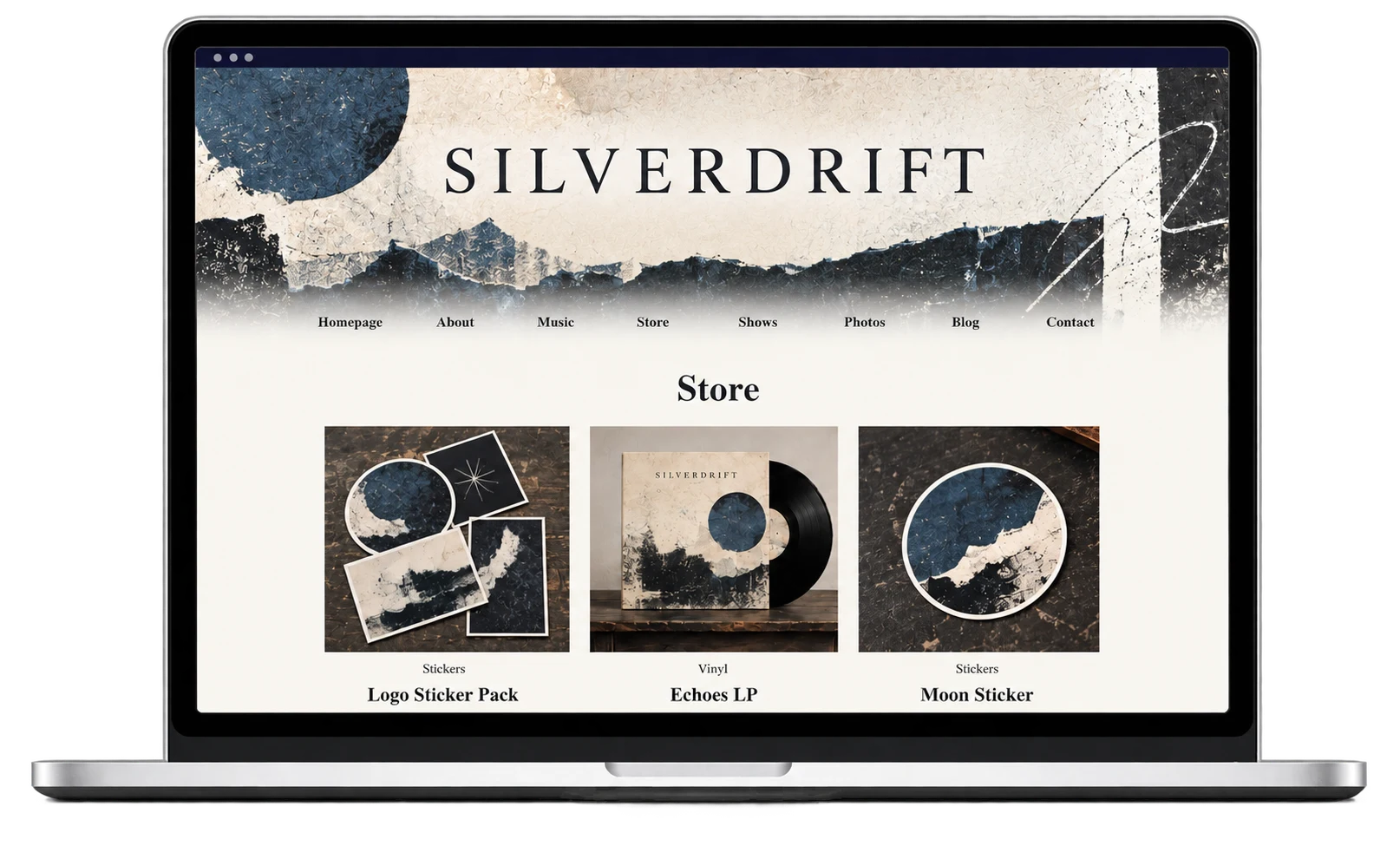
The sticker carries your website address for a reason. A fan who finds you through a sticker on a friend's laptop should arrive at a page with your music, your dates and a way to hear from you again. A music website with the store and mailing list built in does that without anything extra to set up. The selling tools breakdown covers the store side of that.
Build your own musician website
Music player, store, EPK, and mailing list, all built in. Start your 30-day free trial, cancel anytime.
Printing the whole album cover at three inches. Nobody can tell what it is. Use one element or the title.
Putting a streaming link or a social media username on the sticker. Both can change. Your website address does not.
Ordering a thousand of an untested design. Fifty first, then 250.
Buying paper stickers for outdoor use. They fade and peel within weeks. Laminated vinyl or nothing.
Skipping the proof. The cut line and the colours are both visible before anything prints. Look at them.
Charging parcel postage on a sticker. Set a letter rate or build the stamp into the price.
Selling every sticker and giving none away. The free ones are the ones that bring people back.
How much do band stickers cost to make?
At the time of writing, MOO's US site lists 10 die-cut stickers from $21.50 and 52 vinyl stickers on sheets from $16. Larger runs bring the price per sticker down, so test the design with a small run and reorder in bulk once it sells.
What size should a band sticker be?
Three inches, about 7.5 cm, for the main design. It fits laptops, guitar cases and bottles and reads from across a merch table. Two inches suits a logo-only sticker for phone cases and pedals. Larger sizes are for cars and flight cases.
How much should I charge for a sticker at a show?
$2 to $3 for one, or three for $5. Many bands do better giving them away with any purchase or in exchange for a mailing list signup. The sticker's job is to bring the fan back, and $2 does not change your night.
Vinyl or paper stickers for a band?
Laminated vinyl for anything a fan will carry: it survives rain, sun, scratches and a dishwasher. Paper is only for packaging, envelope seals and things that stay indoors. Selling paper stickers as merch leads to peeling stickers and unhappy fans.
What should I put on a band sticker?
Your name or logo, big enough to read from a metre away, with your website address in small type. Keep it to one element. A lyric line or one piece of the album artwork works as a second design once the first one sells.
A sticker costs less than a stamp and outlasts most of the merch you will ever sell. Order 50 of a plain name-or-logo design on laminated vinyl, check the proof, and put your website address on it. Sell them for a couple of dollars, put one in every parcel, and hand one to everyone who stops at the table.
Then keep an eye out for where they turn up. A sticker on a stranger's case is a fan you did not know you had, and the address on it is how they find the rest of your music.
Get our new guides by email.
Practical advice on promoting your music, getting gigs and selling online. You can unsubscribe at any time.