Photo by Bench Accounting on Unsplash



Someone bought a record. Now it has to reach them in one piece, and the postage has to come out of the sale without swallowing it.
This is for musicians and bands who sell physical things they made themselves: vinyl, tapes, CDs, shirts, and anything else that goes in a box. It covers whether to pack orders yourself, what a parcel costs to send, and what to charge for shipping. It also covers how to pack the awkward items and what to do when one goes missing.
Weigh a packed parcel before you set any shipping price, because a guessed price is usually too low.
Inside the US, a vinyl parcel runs about $6 to $8 once you count the mailer, and a shirt costs more than that, because clothing cannot go on the cheap media rate.
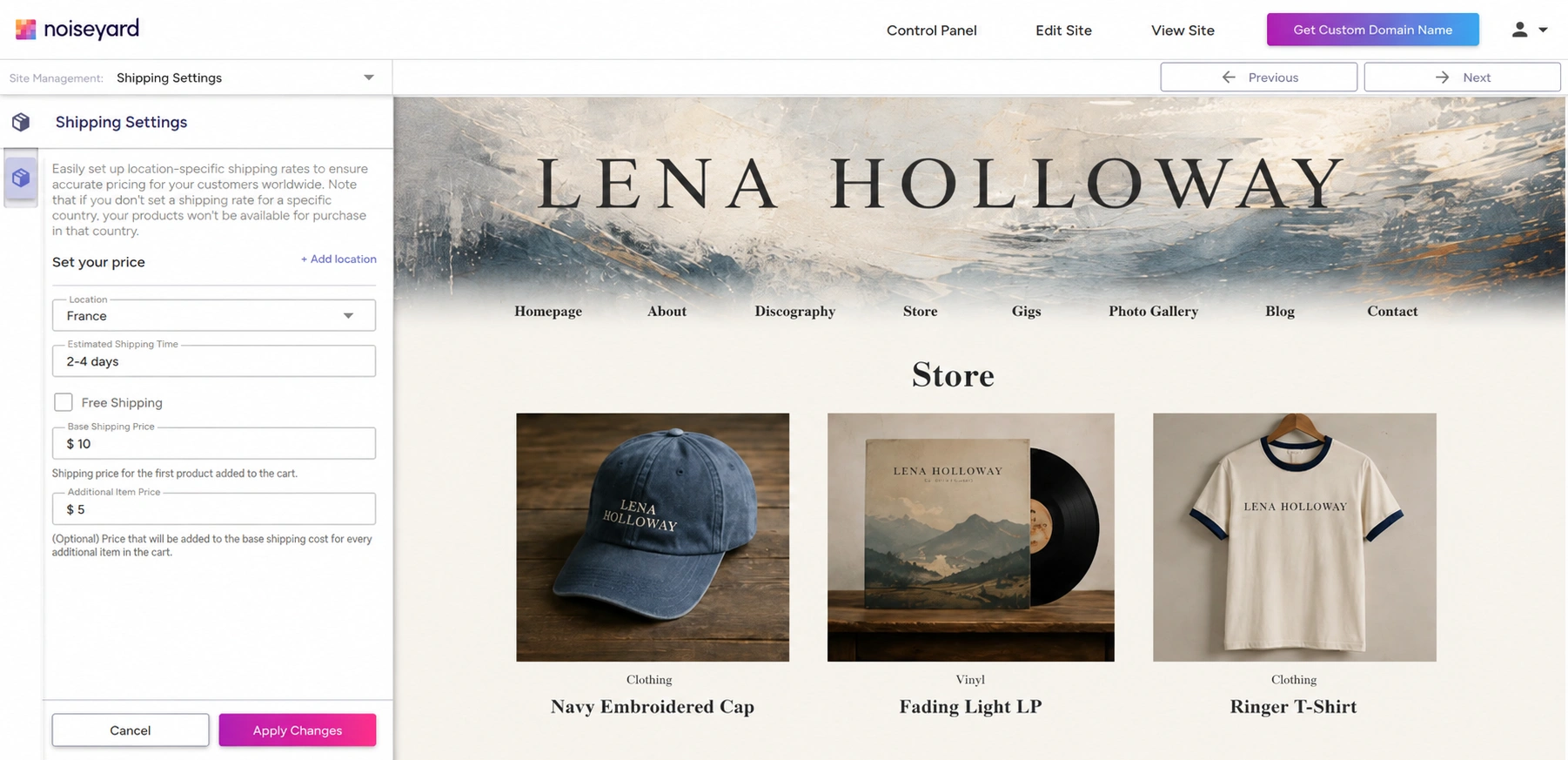
Charge a first-item price that covers one parcel, then a smaller price for each extra item in the same order.
Set a shipping price for every country you sell to, plus a catch-all for everywhere else, or those buyers cannot check out.
Send vinyl in a proper record mailer with stiffeners. A padded envelope is how corners get crushed.
Batch orders into one packing session and one post office run a week.
Pack the item so it cannot move inside the box, weigh the finished parcel, and buy the postage online rather than at the counter. Send the buyer the tracking number yourself. Charge a shipping price close to what the parcel costs you, and keep mailers in stock so orders leave in one weekly run.
For a first pressing or a box of shirts, doing it yourself is the sensible answer. You keep the margin, you control how the package looks, and the volume is small enough to handle on a kitchen table. The trade is time: budget about five minutes per parcel once you have a system, and closer to fifteen while you are working it out.
That maths turns at around twenty parcels a week. At that point packing is eating an evening, and a fulfilment partner or a print-on-demand setup starts to make sense even with the thinner margin. Our guide to print-on-demand merch for musicians covers that side, where a partner prints and posts the item and you never touch it.
Two things push the decision toward doing it yourself. Vinyl, tapes, and CDs cannot be made on demand, so somebody has to post them, and that somebody is you. And a signed sleeve or a handwritten note is worth more to a fan than anything a warehouse sends. If you are still working out what to stock, what to sell as a musician online runs through the options and what each one involves.
The postage is only part of it. A parcel costs you the mailer, the stiffeners or filler, the tape, the label, the payment processing on the sale, and the time it takes to pack. People price the postage and forget the rest, then wonder why a $25 record leaves so little behind.
Here is the shape of it for the three things musicians post most, sending inside the US and buying labels online instead of at the counter:
| Item | Mailer | US postage | Rough total |
|---|---|---|---|
| 12" vinyl | $1.50 to $2.50 | Media Mail, about $4 | $6 to $8 |
| CD or cassette | under $1 | Media Mail, about $4 | about $5 |
| T-shirt | about $0.20 | Ground Advantage, $6 to $8 | $6 to $9 |
The shirt costing more than the record surprises people. Music can travel on the cheaper media rate in the US, and clothing cannot, so a light parcel with a shirt in it costs more to send than a heavier one with a record.
Rates change and every country is different, so treat those as a starting point. Then get your own numbers: pack a real parcel, weigh it on a kitchen scale, and look up the rate for that weight and size. That takes five minutes and it replaces every figure you read online, including this one.
Two costs are easy to miss. Payment processing takes roughly 3% plus a small fixed fee from every order, so a $30 sale is nearer $28.80 before anything ships. Packing time is the other one, and it is worth counting when you price the item itself. Our guide to pricing your music, merch, and shows covers where to set the number on the product.
Charge what the parcel costs you, or a little under if you want shipping to feel fair. Undercharging is the common error, and it is worst on international orders, where the gap between what you charged and what you paid can easily be ten dollars or more.
Split it into two numbers:
A first-item price that covers a whole parcel: postage, mailer, tape, label. This is what one record or one shirt costs to send.
An additional-item price for each extra thing in the same order. A second shirt adds almost nothing to the postage. A second record adds weight, so it costs more. Set each one to what the extra item adds to the parcel.
Leaving the additional-item price empty is where money goes missing. A fan who buys three records is then charged for one parcel, and you cover the weight of the other two.
Free shipping is fine as long as it is built into the price of the item, and it does read better at checkout. A common middle ground is free shipping at home and a charged rate abroad, since domestic postage is predictable enough to absorb.
Wherever you sell, find the shipping settings before you list anything physical. On your own website, the selling tools set a price per country, a lower price for each extra item, and an estimated delivery time. The buyer sees all three at checkout. Add a catch-all price for everywhere else while you are in there. If a buyer's country has no price and no catch-all, a cart of physical items cannot go through checkout, and you never find out about the order you lost.
Build your own musician website
Music player, store, EPK, and mailing list, all built in. Start your 30-day free trial, cancel anytime.
Each format breaks in its own way, so the packing changes with it.
Vinyl splits at the seams and crushes at the corners. Use a proper record mailer, the stiff cardboard kind that folds around the sleeve, with corner protection built in or added. Take the record out of the jacket, leave it in its inner sleeve, and lay the two side by side inside the mailer. That way a dropped parcel cannot push the disc through the seam. Fill any gap so nothing slides around. A padded envelope is the classic mistake here, since the corners make the whole journey unprotected.
Tapes and CDs crack. The jewel case is the weak point, so a small box or a padded mailer with a little filler does the job. Cassettes travel well in a bubble mailer.
Shirts and soft goods are the easy ones. A poly mailer is cheap, light, and waterproof enough. Fold the shirt so the print is on the inside.
Whatever goes in the box, write the address clearly, keep the receipt, and mark anything fragile as fragile.

International orders are worth taking, and they come with more paperwork, so set them up deliberately.
Every parcel leaving the country needs a customs declaration, usually a CN22 for a small one and a CN23 for something bigger or more valuable. You fill in what is inside, in plain words, along with a value and a weight. Write "vinyl record, music" rather than "merch", because a vague description is what gets a parcel held up. Declare the real price. Marking an order as a gift to dodge duty is fraud, and the buyer is the one who deals with the consequences.
Say on the product page that duty and import tax may be charged on arrival and are paid by the buyer. It is a short line, and it prevents the message that starts with "I was charged twenty euros to collect this".
If international shipping feels like a lot at first, open the two or three countries your orders already come from, price those properly, and add more as you go.
Get our new guides by email
Orders arriving one at a time will eat your week if you let each one interrupt you. Pick one or two days, and do all of it in a block.
Keep supplies in stock. Mailers, tape, a marker, stiffeners, a cheap kitchen scale. Running out is what turns a fifteen-minute job into a trip across town.
Pull the addresses in one go. Your sales page lists each order with the buyer's shipping address and what they paid for postage, which is all you need to write labels in one sitting.
Buy postage online. Counter rates are usually higher, and printing labels at home saves queueing with a stack of parcels.
Email the tracking number. A store will rarely send this for you, and it is the one message that stops the "has it shipped yet" emails.
Put something in the box. A handwritten thank-you, a sticker, or a card with a download code so they can hear the record while the parcel is in transit. A line inviting them to join your mailing list gets read on paper, because there is nothing else competing with it.
If a release is coming, sort the supplies out before the files are even delivered. Pressing delays are normal, and a release checklist is the place to work out how the physical side lines up with the date.

Some parcels go missing and some turn up damaged. Sort both out quickly, because the fan has paid and has nothing to show for it until you do.
For a parcel that has not arrived, check the tracking, then give it a little longer than feels comfortable. Domestic post runs from a few days to a couple of weeks depending on the service, and international can take a month. Two to three weeks past the estimate is a fair point to send a replacement or refund, and to file a claim if the service was insured.
For something that arrived damaged, ask for a photo and replace it without much discussion. A $25 record is not worth the goodwill you spend arguing about it. If the release has a digital version, send that straight away so they have something while the replacement is in the post.
Keep a small buffer of stock back for this. Ten percent of a pressing set aside for replacements, promos, and the copies that come back bent is a cost of selling physical things.
Guessing the postage. Weigh a packed parcel once and you will never have to guess again.
Leaving the additional-item price blank. Every extra item in that order then ships at your expense.
Only pricing your own country. Everyone else either gets blocked at checkout or pays a rate that costs you money.
Putting a record in a padded envelope. It arrives with crushed corners, and you pay for a replacement plus the postage twice.
Skipping tracking on anything valuable. Without it you cannot prove a parcel moved, and you carry the loss.
Promising a delivery date the pressing plant controls. Give a window, and update people when it slips.
How much should I charge for shipping band merch?
Charge what a packed parcel costs you. Inside the US that is around $6 to $8 for a record sent Media Mail, and $6 to $9 for a shirt, which cannot use that rate. Set a lower price for each additional item in the same order, and check your own rates by weight, since they vary by country and change most years.
Should I offer free shipping?
Only when the cost is already inside the price of the item. Free shipping at home and a charged rate abroad is a reasonable middle ground, because domestic postage is predictable and international is not.
What is the cheapest way to ship vinyl and CDs in the US?
Media Mail. USPS Media Mail covers sound recordings, including albums, tapes, and CDs, and takes 2 to 8 days. Two catches: shirts and other merch do not qualify, and every Media Mail parcel can be opened and inspected.
Do I need my own website to sell and ship merch?
You can sell through a marketplace, or take orders directly and post them yourself. A store on your own website gives you three things for the work: shipping settings per country, every buyer's address in one place, and their email address. That last one is how you tell them about the next release.
How do I handle merch on tour?
Take stock with you and sell in person, then post the online orders in batches before you leave and when you get back. Our guide to booking a DIY tour covers the planning around the shows themselves.
What if a fan gives the wrong address?
Ask them to confirm it before you post anything that looks off, and keep the order open until they reply. Once a parcel is gone, a wrong address usually means paying twice, so a two-minute message is worth sending.
Shipping is the least glamorous part of selling your own music, and it is where a good chunk of the money quietly goes. Weigh a parcel, set the two prices, buy a box of mailers, and pick one day a week to pack.
Do that and a new order takes about five minutes to get out the door. The setup costs you a couple of hours once, and after that it is the same short job every week.
Get our new guides by email.
Practical advice on promoting your music, getting gigs and selling online. You can unsubscribe at any time.

Marketing & Promotion
How to Promote Your Music Without a Label (10 Ways)