Photo by Eric Krull on Unsplash



Merch sells in the half hour after you come off stage. The room is still full, people have just watched you play, and the table is where that turns into money.
This post is for bands and solo acts selling at gigs, from a pub back room to a support tour. It covers what to bring, how to lay the table out, and how to take money when nobody carries cash. It also covers what to do with the crowd that stops but doesn't buy.
Bring two or three items in a few sizes, priced in round numbers, with the prices on a sign people can read from a queue.
Take cards. A reader from Square, Zettle, or SumUp costs little, and a QR code to your own store covers the people whose card is behind the bar.
Put download-code cards on the table so there is something physical to sell for the music itself.
Have someone mind the table during the set, and stand at it yourself afterwards, because that is when people come over.
Ask the venue whether they take a cut of merch sales before the show. Bigger rooms often do, and it changes your prices.
Collect emails from the people who stop without buying. They tend to buy at the next show.
Set up a visible table with two or three items, clear prices in round numbers, and a way to pay by card. Have someone mind it during the set, then stand at it yourself afterwards, when buying a shirt comes with a chat and a photo. Collect emails from everyone who stops without buying.
You keep everything from a table sale. Nothing goes on postage or packaging or a platform fee, and the money is in the tin before you load out.
It also puts you in front of a particular kind of buyer. Someone who hands over cash for a shirt minutes after hearing you play tends to come back with friends. They join the mailing list, and they buy the next record on the day it comes out.
And there is a chunk of every room that will never visit your website on their own, so for them the table is the only shop you have.
A working table does not need much.
The stock. Two or three items at most. A shirt in a few sizes, the record or tape, and something cheap like stickers or badges so there is a low-price option. If you use print-on-demand for online orders, bulk-print your best seller for shows, since the per-item cost drops when you order a run. The print-on-demand guide covers that route.
A price sign. Big letters, round numbers, readable from the back of a queue.
A cash tub with a float. Enough change to break the largest note you expect, counted before doors.
A card reader, charged, with the app logged in before you leave the house.
A cloth or backdrop with your name on it, so the table reads as yours from across the room.
A light. Merch corners are dark, and a battery lamp makes the table findable after the set.
Tape, pens, a bin bag, and a spare phone battery.
Get there early enough to claim a spot people walk past. Near the exit is good because everyone leaves through it, and so is anywhere by the bar. A corner behind a pillar will have plenty of room and no traffic.
Lay the table out so it can be read in five seconds. Shirts facing out with one of each design pinned up or on a small stand so the artwork shows, records upright, and prices next to the things they price. If the venue allows it, tape a shirt to the wall behind you at eye level.
Keep the table half empty. A packed table reads as a jumble sale, and a queue cannot see past whoever is at the front. Keep the stock in boxes underneath and show one of each thing.
Use round numbers, no coins, and a few repeated price points so bundles are easy to work out in your head. What those numbers should be is its own decision, covered in the guide to pricing your music, merch, and shows.
Get our new guides by email
Plenty of people at any gig carry no cash at all now, so take both.
The float handles cash. For cards, a reader from Square, Zettle, or SumUp pairs with a phone and takes a small percentage per tap. Log in and run a test payment at home, because venue wifi is unreliable and a dead patch of signal can take the reader down mid-queue.
Put a QR code to your own store on the price sign as well. It covers the person whose card is behind the bar and the size you just sold out of. It also catches anyone who decides on the way home that they want the record. The sale goes through the same store as your online orders, and the buyer's email comes with it. The online selling setup covers how that store side works.
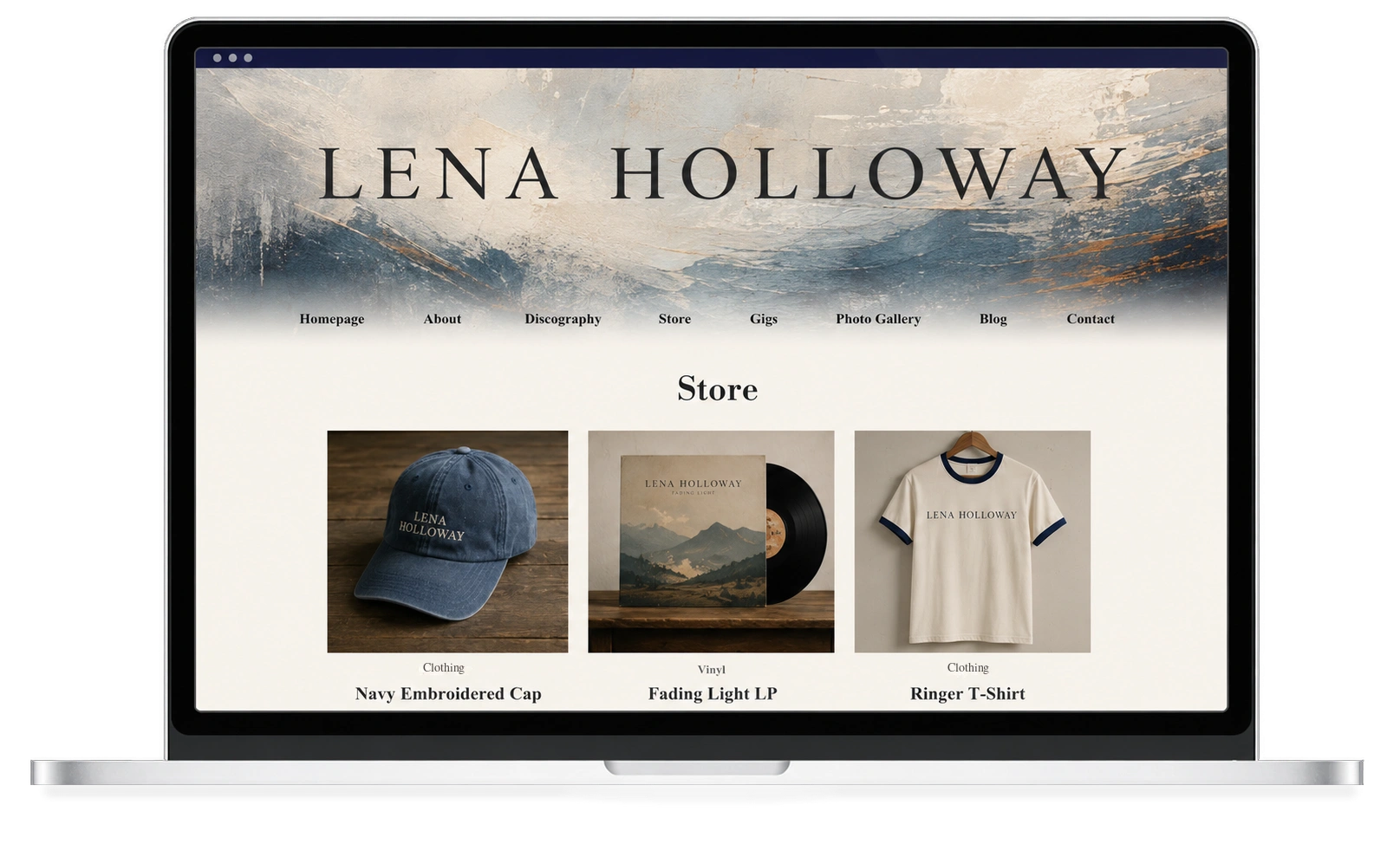
People reach for the shirts first, so the music needs a physical form of its own on the table. A download code on a printed card is the cheapest way to give it one.
A small card with your artwork and a code sells the album to people who stopped buying CDs years ago. It also gives you a five-pound item for the fan who wants to support you without wearing a band shirt. Each code is used once and redeemed with an email address, so you know who took one. The download codes guide covers printing them and what to check before a print run.
Tuck a code card into every record and shirt sale as well, so the buyer walks away with the music and the object.
During the set, someone who is not on stage minds the table: a partner, a friend, the promoter's mate, whoever owes you a favour. They need the float, the reader, the price list, and one sentence about what sizes are in the boxes.
After the set, the table is your job. The queue that forms is mostly people wanting to say something to whoever just played, and buying a shirt gives them a reason to stand there. Sign things, take photos, and learn a few names, because the buying happens around that conversation.

A good share of the people who pause at the table will not buy anything tonight. They stopped because they liked the set, and what they need is a way to keep in touch that costs them nothing.
A signup sheet on the table will do the job, though a QR code straight to your signup form saves you deciphering handwriting the next day. Offer something for joining on the night, and a download code for the album is the obvious one, since the cards are already on the table. The guide to building an email list as a musician covers what to send them once they have joined.
Some venues take a percentage of merch sales, and settlement is a bad time to discover it.
Grassroots rooms mostly take nothing. Bigger venues and chains commonly take 10 to 25%, and higher cuts exist, especially where the venue insists on its own seller handling your stock. In the UK the Featured Artists Coalition runs a 100% Venues directory listing rooms that have pledged to take nothing, which is worth checking before you agree to a show.
Ask when the booking is confirmed, in the same email as the load-in time. If there is a cut, treat it as a cost of the night like fuel, factor it into your prices, and let it inform which shows you chase next.
Ten minutes of admin while it is fresh keeps the table improving.
Count what sold, by item and size. Three shows of notes will tell you what to restock and what to drop.
Bank the cash and check the reader's total against your count.
Message the new signups within a couple of days, while they still remember stopping.
Point the people who missed out at the store. A size that sold out is an order waiting to be placed, and the shipping guide covers getting it to them without losing the margin to postage.
Build your own musician website
Music player, store, EPK, and mailing list, all built in. Start your 30-day free trial, cancel anytime.
Bringing your whole catalogue. Ten items split the same money ten ways and make the table harder to read. Stick to two or three.
No prices on display. Very few people will ask a busy table what something costs.
Cash only. Everyone who came out without cash on them walks away.
The band hiding backstage after the set. People come over to talk to you, and that is when the shirts sell.
Ordering hundreds of shirts for your first show. Start small, learn your sizes from a few nights of notes, and reorder what sold.
Never asking about the venue cut. It can be a fifth of the night's takings, and nobody will bring it up for you.
How much merch should I bring to a show?
For a small show, a handful of each size in one or two designs, plus records and a cheap item, covers it. Track what sells for a few shows and let the notes set the numbers. If you run out of a size, a mail order fixes it, and unsold boxes will sit in a hallway for years.
Do I need a card reader to sell merch at gigs?
In practice, yes. A large share of any crowd carries no cash, and a basic reader from Square, Zettle, or SumUp costs little and pairs with a phone. Back it up with a QR code to your own store for the moments the signal or the stock runs out.
Where should the merch table go?
Where people already walk, which usually means near the exit or the bar, with sight of the stage if you can get it. Ask the promoter when you load in, because the spot left over after soundcheck tends to be the one nobody passes.
Do venues take a cut of merch sales?
Smaller independent rooms mostly take nothing. Larger venues commonly take 10 to 25% of merch sales, sometimes more where their own staff must run the table. Ask when the booking is confirmed, so the night's prices and your expectations are set before you arrive.
What if I don't have merch yet?
Start with download-code cards for your release and one print-on-demand design ordered as a small bulk run. Both cost little up front, and the sales notes from your first few shows will tell you what deserves a proper print run.
A folding table, three items, a light, a card reader, and you standing at it after the set will cover almost every show you play. Everything past that can wait until the notes tell you what to add.
Get into the habit of the ten-minute setup and the ten-minute teardown, keep a record of what sold, and send the new signups something within the week.
Get our new guides by email.
Practical advice on promoting your music, getting gigs and selling online. You can unsubscribe at any time.