Photo by Motoculturel on Unsplash


Pricing is the part of the music business a lot of artists guess at, and guessing usually means charging too little. Price your work too low and you leave money on the table and quietly signal that it isn't worth much. Price it too high for where you are and nothing sells. Somewhere in between is a number that respects your work, covers your costs, and still feels fair to your fans.
This post is for independent artists, bands, and DJs who sell their music, merch, shows, or services and want a simple way to set prices they're comfortable with. It covers each one, with rough numbers to start from and a framework you can reuse whenever you add something new.
Underpricing is the common mistake. Set prices that cover your costs with a healthy margin, then adjust to what your audience will pay.
Digital music: singles around a dollar, albums seven to ten, or pay-what-you-want with a minimum.
Merch: a common rule is to roughly double what an item costs you to make, so a shirt that costs you $10 sells for $20 or more.
Shows: know your options (a flat guarantee, a door split, or a private-event fee), and get the deal in writing before you play.
Services like lessons and session work: charge a rate that values your time, and raise it as you book up.
Your own store lets you set any price and keep 100%, so the margin is yours to control instead of a marketplace's.
There's no fixed rate, but a good starting point is to cover your costs with a healthy margin, then match the price to what your audience will pay. Digital singles tend to go for around a dollar, albums seven to ten, shirts twenty to thirty, and shows anywhere from a door split to a flat fee. Start there and adjust to what sells.
Almost every independent artist prices too low, usually out of a quiet worry that fans won't pay more. It feels safer to charge a little. The trouble is that underpricing does two things at once: it leaves real money behind on every sale, and it tells buyers your work is worth less than it is.
Fans who love your music are rarely put off by a fair price. They want to support you, and a shirt or a record priced like it matters gives them a way to do it. If you're nervous, it's easier to set a fair price and run the occasional discount than to start low and try to raise everything later.
You don't need a spreadsheet for every item. Run anything you sell through the same five questions and you'll settle on a sensible number.
What does it cost you? The unit cost of a shirt or a record, or the value of an hour of your time for a service. This is your floor.
What margin do you want on top? Set a price that covers the cost and leaves a genuinely healthy profit on top.
What do comparable artists charge? Look at acts at your own level, since they share your audience. Their prices tell you what those fans already expect to pay.
What is your audience willing to pay? A local following supports higher merch prices than a cold online crowd. Price to the people most likely to buy.
Does it leave room to move? Set the price so you can still run a sale or a bundle without dropping below your floor.
The trade-off underneath all of this is price against volume. A higher price earns more per sale but sells to fewer people; a lower one sells more but earns less each time. There's no universally right answer, so pick the balance that fits your goal and adjust it once you see what sells.

You don't set the price on streaming, so this is about what you sell directly. Rough starting points:
A single: around $1, sometimes a little more for an extended or special version.
An EP: roughly $4 to $6.
An album: around $7 to $10 for a download.
Pay-what-you-want: set a minimum rather than leaving it fully open. Fans often pay above the floor when they choose the number, so a minimum protects you while giving generous fans room.
Selling downloads straight from your own site means you keep the full price, so a direct sale is worth far more to you than the same track sitting on streaming. Point fans to your store from every platform, and treat streaming as the thing that sends them there.
Physical formats carry a real unit cost, so price to cover it with room to spare. Vinyl is the clear example: pressing is expensive, so a record often needs to sell for $25 to $35 or more just to make the run worthwhile. CDs and cassettes cost far less to make and usually sell for $8 to $15.
Two things push physical prices up in a good way. A limited run (a colored vinyl variant, a numbered edition) can command more because it's scarce. And a physical item bought at a show, where the fan is already excited and holding cash, sells more easily than the same item online. Work out your cost per unit first, then set a price that clears it with a margin you're happy with.

Merch is one of your best earners, so the margin matters. A common rule of thumb is to roughly double what an item costs you to make. As one band-merch guide puts it, the standard retail markup is around 100%, so a shirt that costs you around $10 to print sells for $20, and often $25 to $35 at a show.
It helps to think in three tiers:
Impulse items under $10: stickers, pins, buttons. Cheap to make, easy to add to any order.
Core items, roughly $20 to $40: t-shirts, hoodies, hats, tote bags. This is where the bulk of merch money comes from.
Premium items above $45: hoodies, bundles, limited runs, signed pieces for your most dedicated fans.
Print-on-demand changes the math a little: the per-item cost is higher, so your margin is thinner, but you carry no inventory and no upfront risk. If you're not sure a design will sell, that's a fair trade. There's a full breakdown in print-on-demand merch for musicians, and more on the range of things worth selling in how to sell your music and merch online.
Show pay comes in a few shapes, and knowing them helps you ask for the right thing:
A guarantee: a flat fee the venue pays you regardless of turnout. Good when you're unsure of the draw.
A door split: a percentage of ticket sales, sometimes after the venue takes costs. Good when you can pack the room.
A door deal: the higher of a guarantee or a percentage, which protects you either way.
A private-event fee: a flat rate for weddings, corporate events, and parties, usually the best-paying shows of all.
Base your ask on your realistic draw, and remember the merch table is income on top of whatever the show pays. Whatever you agree, get it in writing (the fee, the date, the set length, the load-in time) before you play. For the booking side of this, see how to get gigs as a musician.

If you teach or take session work, you're selling your time, so price it to value that time properly. Set an hourly rate for lessons, or a per-project rate for session work, mixing, or production. Beginners often start too low here as well, then feel stuck when they're busy but not earning enough.
Raise your rate as you book up. When you're turning work away, that's the signal to charge more. Package deals also work well, a block of lessons paid up front, or a full-song production rate, both give the buyer a deal and give you steadier income. You can list and sell these straight from your site, which is worth doing well, as covered in showcasing your music-related services.
The same shirt or download earns you different amounts depending on where you sell it, so the platform is part of your pricing.
On a marketplace, you're often boxed into their price points and pay a commission on every sale, so a chunk of the price you set never reaches you. On your own store you set any price you like and keep the full amount, minus the standard payment fee any checkout has. That's the difference between controlling your margin and renting it.
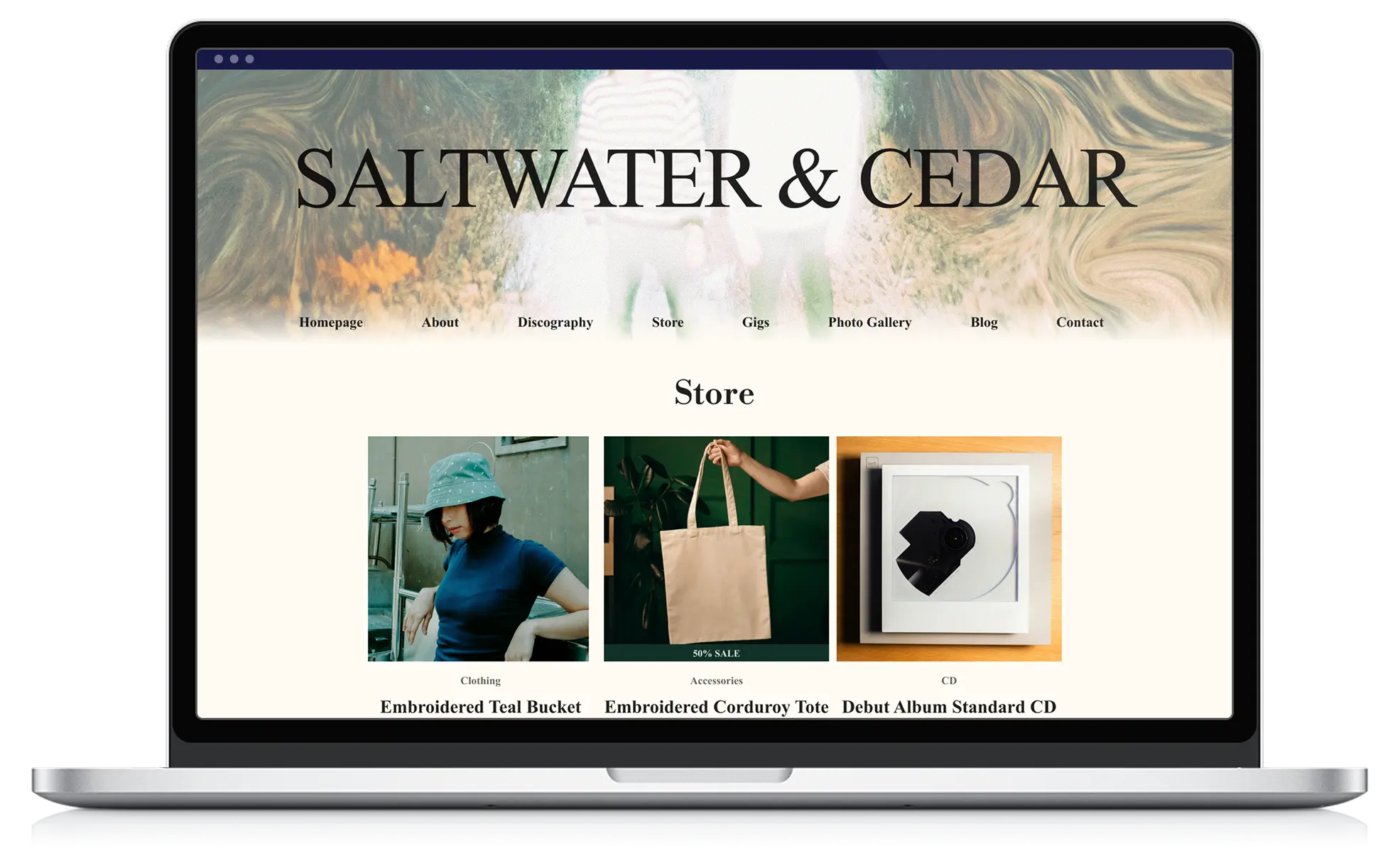
A store on your own music website lets you price freely, run your own discounts and bundles, and keep 100% of what you charge. It's the same idea behind selling your music and merch directly: the fewer cuts between you and the fan, the more your prices are worth.
Treat your first price as a starting point you'll revisit. Set something sensible, then watch what happens and adjust.
Watch what sells. If an item flies off the table, you may have room to raise it. If it never moves, the price, the design, or the audience is off.
Use discounts and bundles. A bundle (record plus shirt) or a limited sale lifts the average order without permanently lowering your prices.
Raise prices as demand grows. A bigger following, a sold-out run, or a new release are all good moments to nudge prices up.
Test one thing at a time. Change a single price and see what happens, so you know what caused the shift.
Build your own musician website
Music player, store, EPK, and mailing list, all built in. Start your 30-day free trial, cancel anytime.
Underpricing across the board. The most common and most expensive mistake. Price fairly and discount when you want to, rather than starting low.
Pricing on a hunch. Guessing a number without knowing your unit cost or your hourly value leaves you earning far less than you think. Start from the cost.
Forgetting the hidden costs. Payment fees, shipping, and your time all eat into a price. Count them before you set the number.
Never raising prices. Charging the same for years while your following and costs grow quietly shrinks your income. Revisit prices with each release.
Racing other artists to the bottom. Undercutting everyone teaches your audience your work is cheap. Compete on the music and the merch rather than on being the cheapest.
For direct sales, singles usually go for around a dollar, EPs four to six, and albums seven to ten as a download. Pay-what-you-want with a set minimum works well too, since fans often pay above the floor. You keep the most when you sell straight from your own site rather than through a platform that takes a cut.
A common rule is to roughly double your production cost, so a shirt that costs about $10 to print sells for $20, and often $25 to $35 at a show. Aim for a healthy margin rather than the lowest price, since fans who want to support you will happily pay a fair amount.
It depends on your draw and the type of show. Options include a flat guarantee, a percentage of the door, or a set fee for private events like weddings, which usually pay the most. Base your ask on how many people you can realistically bring, and always confirm the deal in writing.
Set an hourly rate that values your time and experience, and check what other teachers in your area or genre charge. Start at a rate you're comfortable with, then raise it as you fill up. Blocks of lessons paid in advance give students a small discount and give you steadier income.
It can work well, especially for digital music and dedicated fanbases, because people often pay above a fixed price when they choose the number themselves. Set a minimum rather than leaving it fully open, so you protect your floor while giving generous fans room to give more.
Pricing gets easier once you stop guessing and start from two things: what your work costs you, and what your audience will happily pay. Set a fair price on top of that, leave yourself room to run a sale, and revisit it as you grow.
Then sell where you keep the most of it. The more of each price that reaches you instead of a platform, the more every sale is worth, which is the whole point of setting a good price in the first place.
Useful tips and tricks, delivered right to your inbox.
Join our newsletter to keep informed about Noiseyard updates and new blog articles. You can unsubscribe any time.