MUSIC CAREER ADVICE
Why Every Musician, Band, or DJ Needs a Website

Nida

Sep 8, 2026

If you already share music on Spotify, Instagram or Bandcamp, paying for a website can feel like another expense and another thing to update. It's worth asking what you'd use it for before adding it to your week.
A website becomes useful when people want more after hearing you: your next show, a copy of the record, or a way to book you. This guide explains what it adds for musicians, bands and DJs, and how to decide when you're ready for one.
TL;DR
-
Use your own website to give listeners, buyers and bookers a clear place to find what they need.
-
Keep using the social and streaming platforms where people discover your music.
-
Give fans a way to hear from you again, with a mailing list they choose to join.
-
Check the ongoing cost and upkeep, including payment-processing fees if you sell through your site.
-
If you're still practicing and have nothing to share or book, you can wait.
Table of contents
Why is a music website important?
A musician website puts your music, show dates, contact details and ways to support you at one address. You decide what visitors see first and can update it as your work changes. It gives someone who enjoyed a song a place to listen further, buy a release or ask about booking you.
A site needs a purpose and some upkeep. Think about the questions people already ask you. If you're repeatedly sending your bio, explaining where to buy your music, or sharing separate links for booking, a website could help. You'll still need to keep those details current and bring people to it.
Building your brand identity
Your artwork, photos and choice of words give people a sense of your music. On your website, you can use them together: a press photo beside your bio, the new cover beside the record, and colors that suit both.
Use images that reflect your current work, so someone arriving from a recent release recognizes the artist they're looking for.
If you've already settled on your look, our guide to choosing your musician website's theme and aesthetic covers applying it to the site.
Connecting with your fans
Someone might enjoy a clip and then miss the next thing you post. A mailing list gives them a way to ask for future updates. Your band website can hold the signup alongside your music, where a listener has a reason to join.
Noiseyard includes mailing list signup and newsletter tools, so you can collect subscriptions and write emails from the same account.
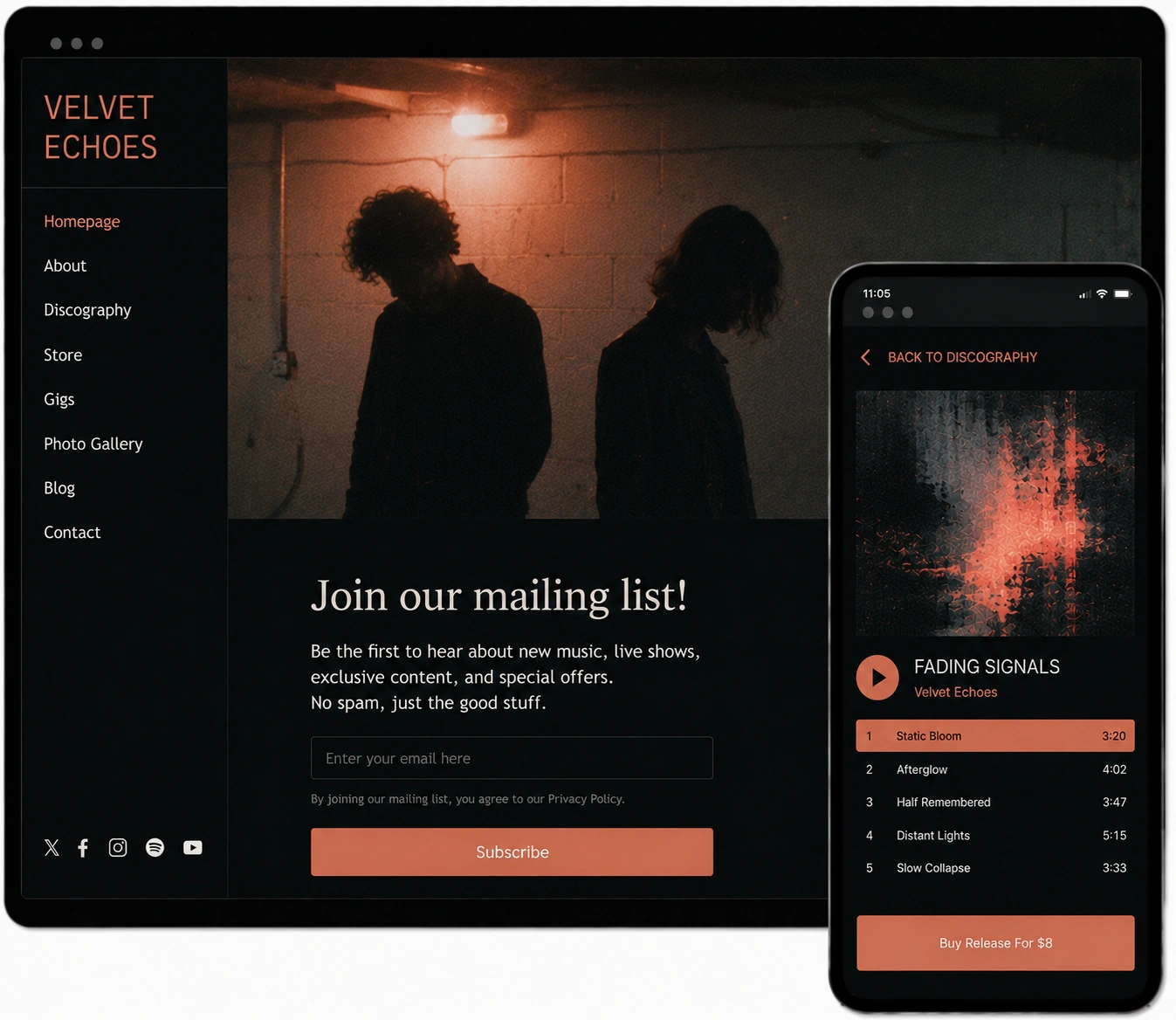
When you're building an email list, say what people will receive, such as new releases and local show announcements. Then send those updates when you have news. Joining the list should be a clear choice for the listener.
Promoting and selling your music
Imagine someone hears your single and wants the vinyl. Your release page can show the artwork, let them listen, and link to the record in your store. Streaming links can sit there too, so fans can choose where to listen.

You can also give a show announcement a page with the date, venue and ticket link. Make the next action easy to find, so someone interested in a release or show can check what's available and buy it.
For the sales options themselves, read our guide to selling your music and merch online.
Selling without platform commissions
Selling directly can change what you keep from an order. Noiseyard takes no platform commission on store sales. Payment-processing fees still apply, along with your website subscription and any costs of making and delivering the product.
When pricing your music and merch, include the record or shirt itself, packaging and any postage you pay. Check those costs before deciding what a direct sale earns you.
A store also gives you order records to review. Look at what people buy and what each sale leaves after costs. That helps you judge whether the store is worth the expense and time you're putting into it.
A professional introduction
A promoter considering you for a show needs to hear your music and find out how to reach you. A journalist may need a short bio and a press photo. Your website can make those checks straightforward.
Keep your contact details and recent work current. If you have a good live clip, make it easy to find. If you're a DJ, include a mix that reflects the kind of booking you want.
The site gives someone information they can use when considering you. Getting gigs as a musician also involves finding suitable venues, approaching them and showing what you can bring to a bill.
Keeping your music and press information together
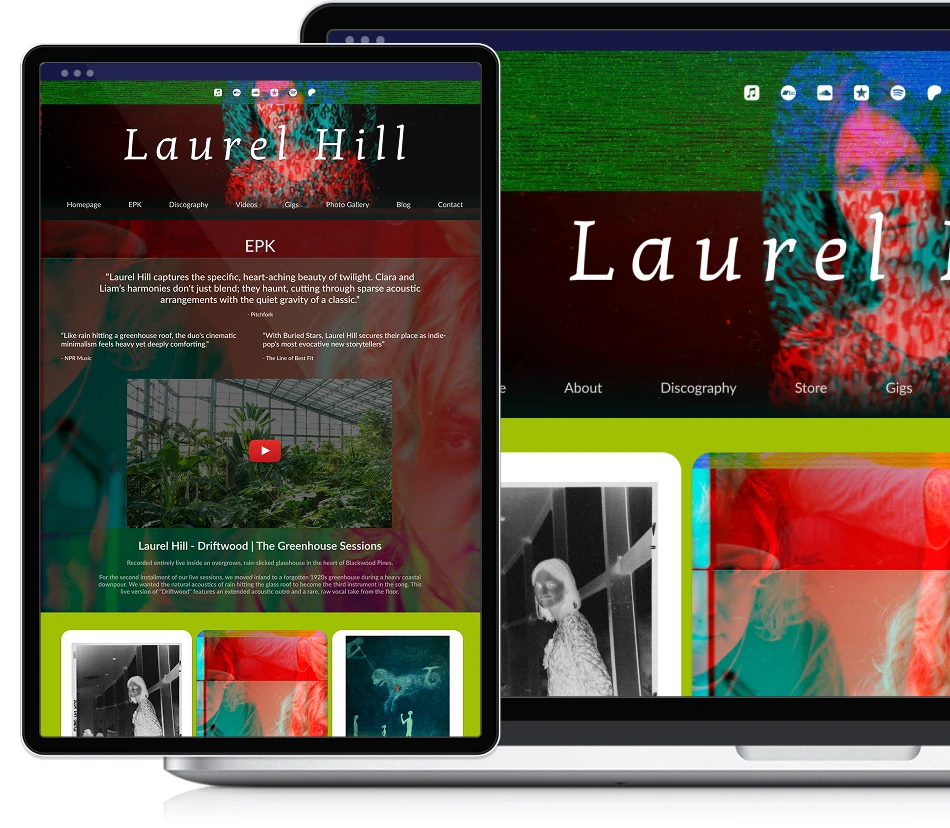
A press page, or electronic press kit, can hold the materials you'd otherwise attach to emails: your bio, music, photos and contact information. When a release changes or you get new photos, you can update that page and keep sending the same link.
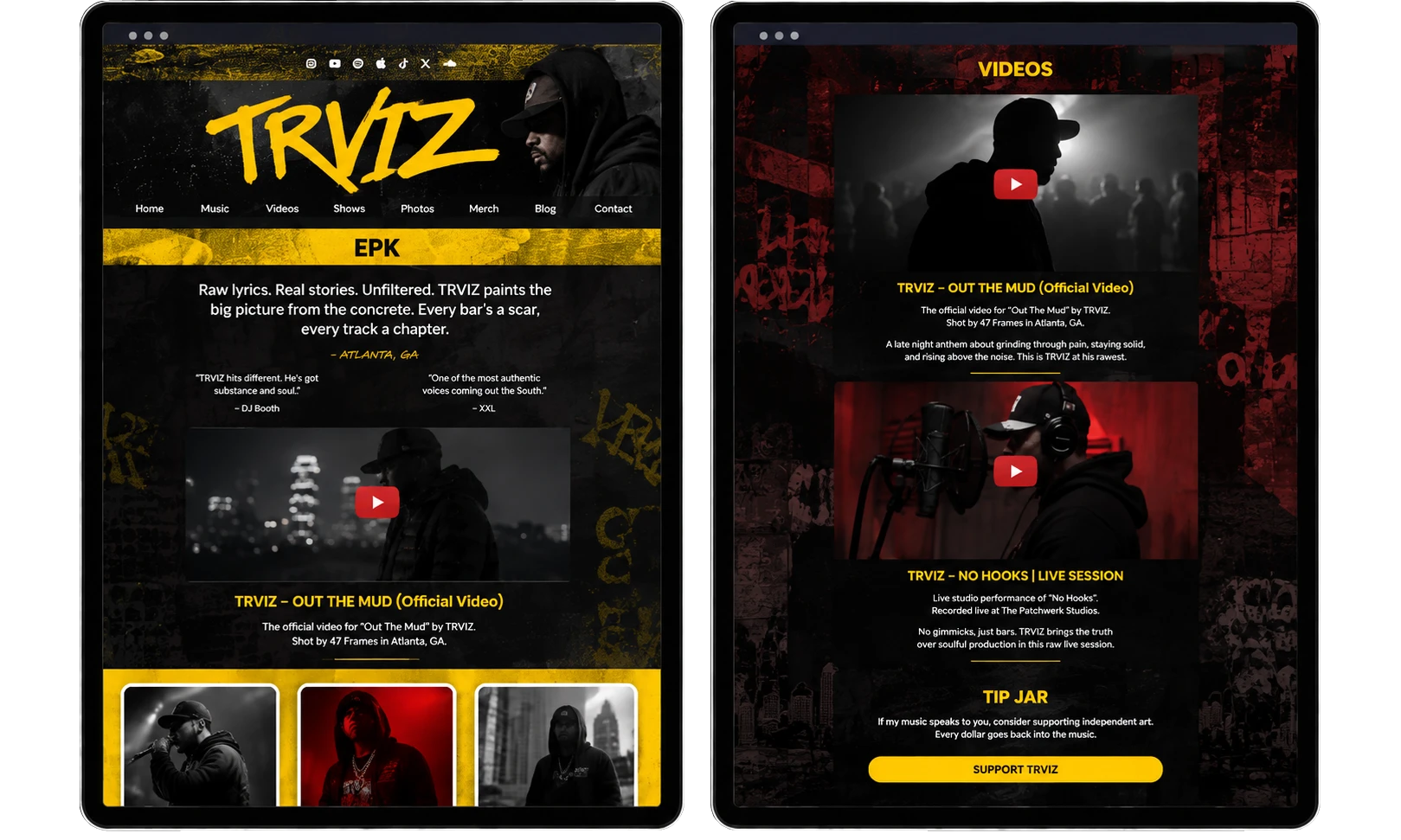
Give each visitor a clear route to what they need. Fans can browse releases and shows, and industry contacts can go to the press page to find materials they can use.
SEO and security for your music website
Someone who remembers your artist name may search for it after a show. A website gives you room to describe your music and publish accurate details about your releases and gigs.
Noiseyard handles technical basics including a generated sitemap, image alt text and HTTPS for encrypted connections. Keep your bio and release details accurate, and use our SEO guide for musicians for the fuller explanation.
Google doesn't guarantee that a page will appear in search results, even when its technical setup is correct.
Using Noiseyard for your music website
Noiseyard brings your music player, store, mailing list and press page into the same website. You add your content to prepared pages, with options to change the theme, colors and fonts.
Choose what you can keep up to date. You might begin with your music, bio and contact details, then add a store when you have something to sell. Our article on using your website to promote, sell and connect covers what you can do with it once it's running.
Before you share your own musician website, test the music player and contact link on your phone.
Build your own musician website
Music player, store, EPK, and mailing list, all built in. Start your 30-day free trial, cancel anytime.
Common questions
Do I need a website if I already have social media?
You can start with social profiles. A website can support them when you're receiving booking enquiries or directing people to shows and releases. Our online-presence guide for musicians covers how to use the channels together.
When is it too early to pay for a musician website?
If you're still practicing, have nothing to share and aren't seeking bookings, you can wait. Consider it when you have music or services to present and time to keep the site current.
Do I need a full website if I already have an EPK?
An EPK may cover your immediate booking needs. A broader site becomes useful when you also want to serve fans with release pages, a store, show information and a mailing list.
Will a website bring me fans on its own?
You'll need to give people reasons to visit through your music, shows and other channels. Once they're there, check that they can hear a track, find what interests them and choose how to stay in touch.