Photo by Austin Distel on Unsplash



You can promote an older song months or years after its release. If there's a recording you'd still like people to hear, start by listening to it again and deciding who you'd share it with.
This guide is for musicians returning to a single, EP or album after its original promotion has finished. It includes a worked example, from choosing a song to reviewing the response.
Choose one older recording that still represents your music and that you can give some time to.
Introduce it to people who may have missed it, with enough context to understand what they're hearing.
Use the original release page on your website so listeners can find the recording and explore your other music.
Try one manageable activity, such as recording a performance of the song, before planning more.
Review whether people listened, asked about the song or wanted to hear more. Use the response to decide whether to do more.
Choose a past recording you still want new listeners to hear. Introduce it through a performance, an email or a story about the song, and link to the existing release. Decide how much time to spend, then check for plays and replies before committing to more promotion.
If you're still in the first weeks of a release, the music release checklist covers that initial campaign. Here, we're returning to music you've already moved on from promoting.
Pick two or three songs from your past releases and listen to each in full. Think about whether you'd be happy for someone to hear it as their first introduction to your music today. Your sound may have changed, or you may hear something you overlooked when you were busy finishing the record.
Then consider what you know about each song:
Has anyone asked about it after a show, mentioned it in a message or requested it again?
Does it suit the people you want to reach now?
Do you have a usable performance, recording photo or memory you could share with it?
Can you promote it without taking on work you don't have time for?
Choose a song you can explain your interest in. That could be a track you enjoy playing, a recording that captures your current sound, or an album song you barely mentioned when it came out.
You can make this choice with very little listener data. Try a recording you're happy to share and see how people respond. A song's lifetime stream total alone won't tell you which one to promote now, especially if you promoted the songs very differently.
If you want people to hear an old album, choose one song to introduce it. Give listeners a way to hear the album too, once they've found something they like.
Write down who may have missed the original release. You might have subscribers who joined afterwards, people discovering you through recent videos, or an audience at a support show where you've never played before.
Someone hearing you for the first time needs the song's name, a chance to hear it and somewhere to find the recording. They won't know what you mean by “remember this one?” or why you're talking about a tour from three years ago.
For people who already know the song, explain why you're returning to it. Perhaps you've started playing it again, changed the live arrangement or found a photo from the session.
You can also say you wanted to share a song from an earlier record. That gives a new listener enough background without turning the introduction into a history of the band.
Get our new guides by email
Choose something you can finish with the time and material available. If the song is in your rehearsal set, film a performance of it. Let people hear enough of the melody, vocal or arrangement to understand what you like about the song.

If you're sharing a newly filmed performance, identify the original recording separately. For example: “We recorded this version of ‘Harbour Road’ at rehearsal yesterday. The studio version is on our 2024 EP.”
You can use material you already have too. A photo from the session can accompany a short account of how the song was recorded, with a link to hear it. Check that you have permission to reuse a photographer's work.
For other formats, the musician content ideas guide includes ways to revisit earlier work. Pick one that suits this recording. You can decide whether to make another after you've shared the first.
Use the release's existing address when you share it again. If the song is part of an album, name the song and album together so someone can find it in the track list. Make the distinction clear if your clip is an acoustic performance but the link opens a full-band recording.
Your website can keep that release available alongside everything you've put out since. Someone who enjoys it can listen to another record or find your mailing list, even when your homepage is promoting something else. For page setup, follow the music landing page guide.
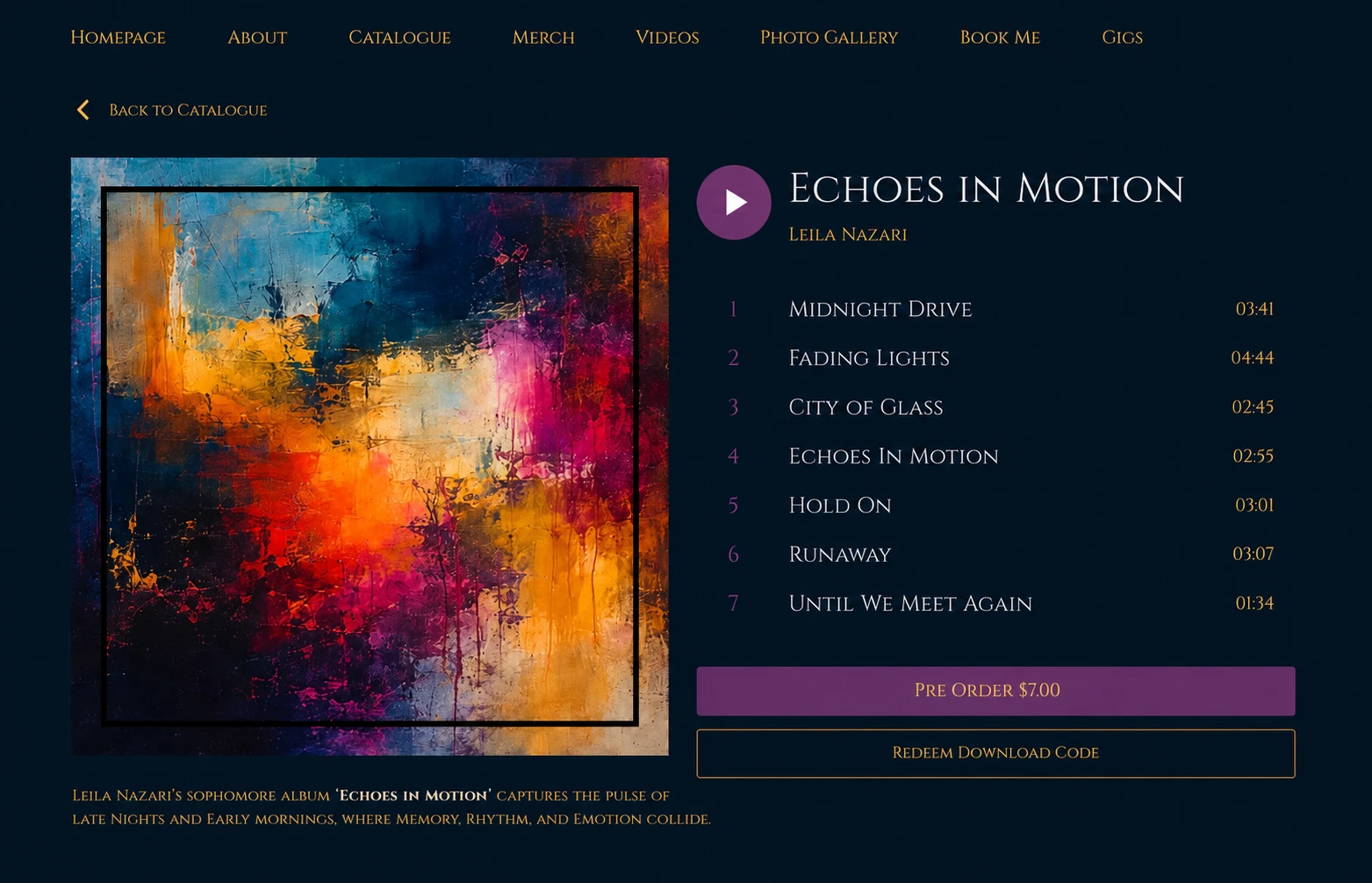
On Noiseyard, you can choose an older release from your discography for the homepage's Featured section. When you move on to promoting another record, keep this release's own page available so older posts and emails can still send listeners to it.
Make your mailing-list signup easy to find from the site, and explain what you'll send. The guide to building an email list as a musician covers the invitation and signup process.
Here's a fictional example. A duo released an EP two years ago. They want people finding their rehearsal videos to hear an original recording, and they've set aside one afternoon to prepare something. They also have a small support show coming up.
They compare three songs:
| Song | What they know | Work involved now |
|---|---|---|
| Harbour Road | Still in their acoustic set | Film it at rehearsal |
| Open Window | More streams at release | Relearn the arrangement |
| Borrowed Coat | Rarely mentioned at release | Prepare a new live version |
They choose Harbour Road because they're happy with the recording and can perform it now. Open Window's higher play count doesn't settle the choice; it had more promotion at release. Borrowed Coat may be worth returning to when they have time to rehearse it.
They film a rehearsal take of Harbour Road and choose a passage that includes the chorus. Their post names the song and the EP, explains that this is a new performance of an older song, and tells listeners where to hear the studio version.
They link to the existing EP page on their website and name Harbour Road in its introduction.
They already play Harbour Road in their set. Before playing it, they tell the audience its name and which EP it's on. Afterwards, if someone asks about that song, they can give them the release link.

If you aren't playing live, you can still share the rehearsal performance. A collaborator who played on the original recording might also like to pass it on.
If the duo sends a regular newsletter, the new performance can be part of it. They explain that the song comes from an earlier EP and link to it. The band newsletter examples cover how to put that email together.
They decide in advance to review what happened after the show. For now, they're committing to one afternoon of preparation and an email if it fits their usual schedule.
Before you share the song, note what you can already see: recent plays, visits to its page if available, and any messages about it. After your chosen period, check those same things again. Write down what people responded to, including questions about the recording or requests to hear it live.
If listeners ask for another song from the EP, the duo could choose one for a later rehearsal video. If people ask about the guitar sound, they could answer with a short demonstration using the same song.
A view or link click doesn't establish that someone listened to the full song. A change in streams doesn't prove your post caused it, either. For help interpreting the figures you have, see the guide to music marketing metrics.
If only a few people saw the post, it's hard to judge the song from their response. You could try another passage or a different group of listeners if you have time. If you're running out of useful material or spending more time than you planned, pause the extra promotion. The recording can stay available on your website for someone to discover later.
Build your own musician website
Music player, store, EPK, and mailing list, all built in. Start your 30-day free trial, cancel anytime.
How old does a song have to be for this approach?
There isn't a fixed age. This is for music whose first round of promotion has finished, whether that was months or years ago. Choose a recording you still want to introduce people to, and keep its original release date accurate.
Can I pitch an older song to Spotify playlists?
Spotify's song-pitching guidance says a song is no longer eligible for that submission route once it goes live, though editors may still discover it later. Independent curators have their own submission rules; the guide to getting your music on playlists covers that process.
Should I delete and re-upload the song as a new release?
Keep the existing release available while you promote it. You can introduce listeners to that recording through new performances and posts. If you're considering a different recording or a remaster, discuss the release details with your distributor separately.
Do I need a website to promote an older song?
You can start by sharing its streaming link. A website gives the recording a place alongside your other releases and mailing list. That's useful when someone hears an older song first and wants to find out what you're doing now.
Should I promote a whole older album or one song?
Choose a song as the introduction, and tell listeners which album it's from. If they ask about other tracks, you have a reason to share more from that record. You can decide how much time to give it within your wider music marketing plan.
Get our new guides by email.
Practical advice on promoting your music, getting gigs and selling online. You can unsubscribe at any time.