Photo by Nick Hillier on Unsplash


When you're building a music career, it's easy to believe that more streams, more followers, and more likes add up to success. Platforms encourage that belief, because bigger listening numbers mean bigger ad revenue and catalog value for them. Streams don't pay rent, though, and they don't guarantee that anyone turns up to your gig.
This post is for independent musicians, bands, and DJs who want to turn passive listeners into people who buy tickets, order merch, and open your emails. It covers why the big numbers mislead, and seven practical things you can do to build an audience you can reach directly.
Streams and follower counts measure attention, and attention on its own doesn't fill a room or pay for a recording.
Your mailing list and your website are the audience you own. Everything else is rented from a platform that can change the rules.
Start a mailing list and give people a real reason to join: a demo, early access to tickets, or a download code.
Point every platform back to one home base that holds your music, dates, merch, and signup form.
Proof of a small, reliable crowd gets you booked, so track who turns up and tell promoters honestly.
Stay in touch every month, and sell merch to the people who already care.
Move listeners onto channels you control. Get them onto your mailing list, send them to your own website, and give them something to buy or attend. A listener you can email is worth far more than an anonymous stream, because you can reach them again whenever you release, tour, or need support.
Only a small share of the people who hear your music ever become the kind of fan who buys a ticket or a shirt. They catch a song on a playlist or in a shop, enjoy it, and move on without ever learning your name.
That's why follower counts and monthly listeners can be misleading. They look impressive on a screen while telling you almost nothing about who would show up on a Friday night. 50 people who save your songs, come to your shows, and buy a hoodie will do more for your career than 5,000 casual listeners who stream you once.
Plenty of artists with modest playlist numbers quietly sell out small rooms, because they built a circle of committed supporters instead of chasing reach. Digital metrics and real-world turnout are two different things, and only one of them pays.
Get our new guides by email
The connections you own are the ones that hold up: your email list, your website visitors, your merch buyers, your ticket holders. These are people you can reach directly, without an algorithm deciding whether your message gets seen.

Here's how to turn streams into support you can count on.
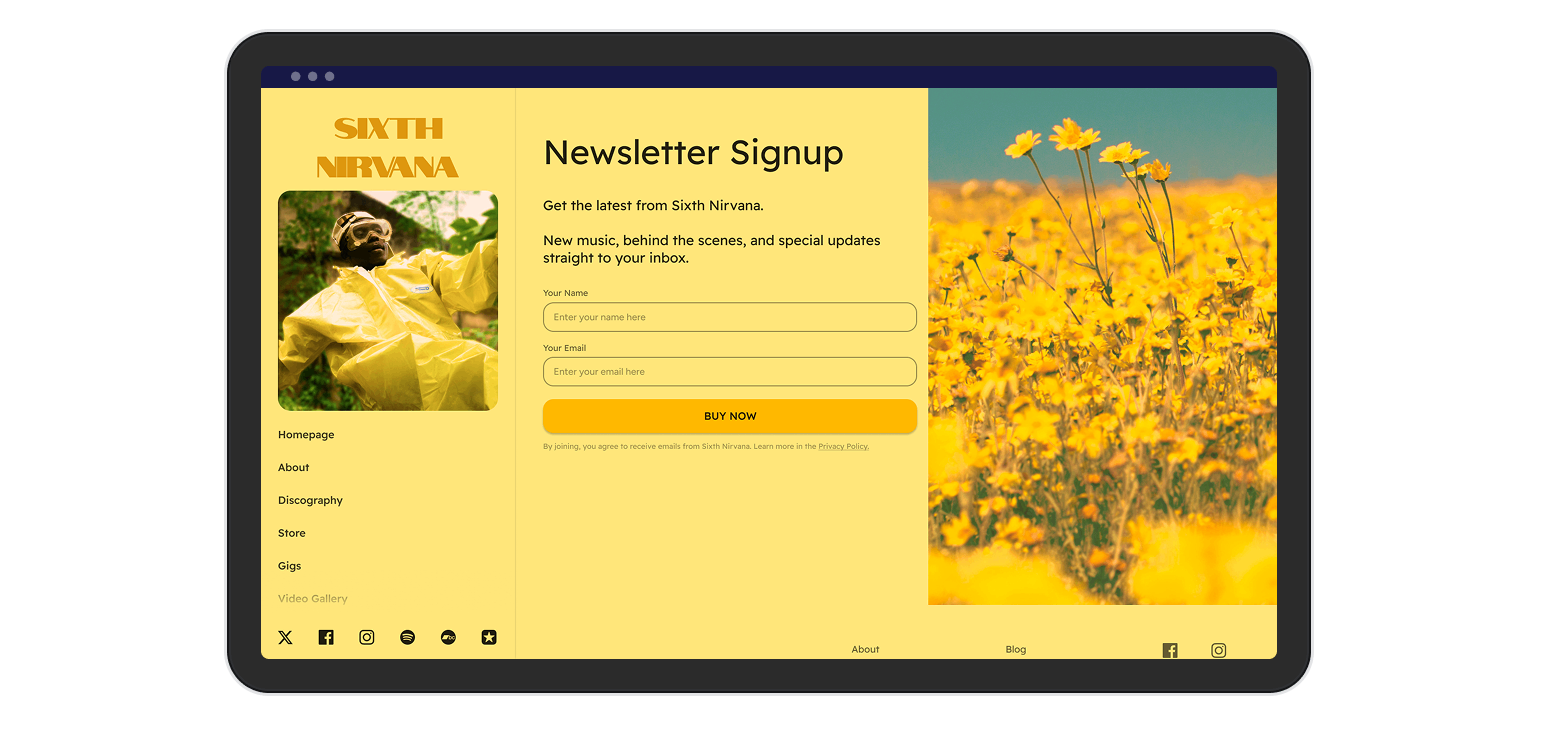
Put an email signup form on your music website and plug it everywhere: at gigs, on social media, and in your streaming profiles.
Offer something small in return: a demo, early access to tickets, exclusive behind-the-scenes content, a download code, or a discount.
A mailing list is also proof to venues and promoters that you can bring people to a show. It's a reliable way to reach fans, rather than hoping a social post gets seen. There's a full walkthrough in how to build an email list as a musician.

A professional music website is where your story, tracks, gig calendar, and merch live in one place.
Promoters, blogs, and fans all appreciate not having to chase scattered links across five platforms. A site built for your genre and city also helps the right people find you in search, which matters when a local promoter is looking for an act like yours.
Using a builder made for musicians keeps this quick to launch and easy to update, which is the part that decides whether your site stays current.

Even if you can only bring 30 people to a local show, that's worth sharing.
Include a specific line in your pitches, like "I have 50 subscribers in Chicago who regularly come to shows." Promoters value reliable numbers they can trust, and a mailing list gives you something concrete to point at.
This is one of the simplest ways to get more gigs.

Streams and follows are a starting point, and your job is to move those listeners onto channels you control.
Use clear calls to action: "Get the full tracklist on my site" or "Sign up for early access to the next release."
One fan joining your list is worth more to you than a hundred anonymous streams, because you can reach that person again.

Consistency is what keeps a small audience engaged.
A short monthly email, a thank-you after a show, or a rehearsal photo all keep fans connected between releases. That steady contact is what turns into ticket sales, merch orders, and word of mouth when you need it.
A blog or news section on your site gives you somewhere to post updates fans can come back to.

Print-on-demand merch is a low-risk way to turn fans into supporters who wear your name in public. Each item is made only after someone buys it, so there's no box of unsold shirts in your hallway.
Promote drops directly to your mailing list, since that's where your most committed fans already are. Merch buyers tend to become your most loyal fans, and there's more on what to offer in how to sell your music and merch online.

Algorithms change, platforms rise and fall, but your site and your list stay assets you control.
Every fan you bring into that circle is part of a career that doesn't depend on someone else's product decisions.
Build your own musician website
Music player, store, EPK, and mailing list, all built in. Start your 30-day free trial, cancel anytime.
Use your genre and your city in your website copy and blog posts, in phrases like "folk duo in Portland" or "techno DJ in Berlin." These are the searches local fans and promoters type, and they turn your website into a discovery tool rather than a business card.
Longer, more specific phrases work too, like "mastering services for techno." If your builder handles the technical side like page titles and image alt text, this mostly takes care of itself. If it doesn't, there's a full guide on SEO for musicians to work through.
Streaming is built for passive listening. Someone hears you on a playlist, enjoys the track, and never learns your name or how to find you again. Unless you give listeners a clear next step, like joining your list or visiting your site, that attention disappears the moment the next song plays.
There's no fixed number, and it depends on what you sell and what you charge. The useful shift is to stop counting streams and start counting people who buy: ticket holders, merch buyers, and subscribers. A few hundred committed fans who buy regularly can support a small operation, while tens of thousands of passive listeners might not.
Consistency and direct contact. Release regularly, play locally, collect emails at every show and on every page of your site, and stay in touch between releases. Growth built this way is slower and far more durable, because you're not depending on a platform deciding to show you to people.
Yes. Streaming is where people discover you, and being everywhere costs you little through a distributor. Treat it as the top of the funnel, then give every listener a reason to move to your site and your mailing list, where you can reach them directly.
Use real numbers you can stand behind: mailing list subscribers in that city, turnout at recent shows, ticket presales, or a photo of a full room. Promoters would rather see a modest number they can trust than a big follower count that may not translate into anyone walking through the door.
The industry will keep measuring success in big numbers, because that's what serves its business model. As an independent musician or band, you don't have to use the same math.
Focus on the community that shows up for you: the fans who buy tickets, order merch, and open your emails. Every step that strengthens that circle, from adding an email signup to your site to sending a short monthly update, builds a career you can control and keep.
Get our new guides by email.
Practical advice on promoting your music, getting gigs and selling online. You can unsubscribe at any time.