Photo by Dominik Kempf on Unsplash


Covers are one of the few reliable ways to get discovered. People search for songs they already love, so a good cover puts you in front of listeners who would never have found your original music. The catch is that a cover uses someone else's song, and the rules around that confuse a lot of artists into either doing it wrong or never doing it at all.
This post is for independent musicians, bands, and DJs who want to release a cover and do it properly. It covers whether you need permission, what changes depending on where you put it, when you need to ask directly, and how to turn the listeners a cover brings into your own audience.
Everything below is general guidance rather than legal advice, and the specifics vary by country. If a lot of money is involved, talk to someone who does this for a living.
You don't need the original artist's permission to record and release a cover of a song that's already been commercially released. There's a licensing system for exactly this.
What you need depends on where the cover goes: streaming, downloads and physical copies, video, and live performance all work differently.
Video is the one people get wrong. A cover on YouTube needs sync rights, which the copyright owner can refuse.
Changing the lyrics, the melody, or the language turns it into something else, and that does need direct permission.
Pick a song people search for but that isn't saturated, and make it sound like you.
Send the new listeners somewhere you own, so a cover becomes an audience rather than a one-time spike.
Yes. Once a song has been commercially released, you can record and release your own version without asking the original artist, as long as the right licensing is in place for where you're putting it. Streaming, downloads, physical copies, and video each work slightly differently, and video is the one that catches people out.
This is the myth worth clearing up first. Once a song has been commercially released, you don't need the songwriter's or the original artist's permission to record your own version. The law provides a compulsory licensing route precisely so they can't refuse, as long as you go through the proper process and they get paid.
As Songtrust puts it plainly in its guidance on getting permission to record and release a cover song, you don't need it, and you can secure a compulsory mechanical license instead.
Two things follow from that. You don't have to write a polite email to a songwriter you'll never hear back from. And crediting them isn't enough on its own, since credit and licensing are separate things.
Get our new guides by email
This is the part that trips people up, because a cover is treated differently on each platform.
Streaming services. For a cover going only to services like Spotify and Apple Music, the platforms themselves handle the publishing side. Songtrust notes that these services license songs and pay royalties to publishers through the Mechanical Licensing Collective, so you're generally covered by releasing through a distributor in the normal way.
Downloads and physical copies. Selling your cover as a download, on CD, or on vinyl needs a mechanical license, and there's a set statutory rate per copy sold. Plenty of services will handle this for a fee, and some distributors offer it as an add-on.
Video, including YouTube. This is the different one. Putting a song with video needs sync rights, and unlike a mechanical license, sync isn't compulsory, so the copyright owner can say no. In practice YouTube's system often detects the song and runs ads with the revenue going to the publisher, which is why so many cover videos stay up. Worth knowing, though: that arrangement is at the rightsholder's discretion, and they can still request a takedown.
Playing it live. Covers at a venue are normally handled by the venue's license with the local performing rights organization, so this rarely falls on you.

The specifics above describe how it works in the United States, with its compulsory mechanical licensing and statutory rate. The broad shape is similar in a lot of countries, and the details are not.
Elsewhere, mechanical licensing usually runs through a national collecting society, and some territories don't offer a compulsory route at all, meaning permission can be refused. Rates and paperwork differ too.
So use this as the map rather than the territory: check what your own country's collecting society requires, and if you're releasing worldwide through a distributor, ask them what their cover song process covers.
The compulsory route only covers a faithful version of the song. Step outside that and you need the rightsholder's blessing.
You'll need direct permission when you:
Change the lyrics, including parody versions and translations into another language.
Change the melody or the structure enough that it becomes a new arrangement rather than a rendition of the song.
Sample the original recording instead of playing the parts yourself, which involves the recording as well as the song.
Put it in an advert or a film, which is sync again, and negotiated.
If your idea is "the same song, our sound," you're fine. If it's "the same song, rewritten," ask first.
Check the song has been commercially released. The compulsory route applies to songs already put out. An unreleased song is a different conversation.
Record your version. Play the parts yourself rather than using the original recording underneath.
Sort the licensing for where it's going. For streaming-only, releasing through your distributor in the normal way usually covers it. For downloads or physical, arrange the mechanical license. For video, understand you're relying on the rightsholder's tolerance unless you've cleared sync.
Credit the writers properly in your metadata. List the original songwriters as the writers and yourself as the performer. Getting this wrong is what causes royalties to go astray and releases to get rejected.
Release it like any other track. The promotion side is no different, and the music release checklist works the same way. If distribution is new to you, how to release music independently covers picking a distributor.

The licensing is the easy part. Choosing well is what decides whether the cover does anything for you.
Pick something people search for. The whole advantage of a cover is existing demand, so a song nobody looks up gives you none of it.
Avoid the most saturated choices. A song with two thousand covers means you're competing with two thousand versions, most by artists bigger than you.
Look slightly sideways. A well-known song from a genre next to yours, or an older track due a revival, gives you demand without the pile-up.
Make it sound like you. A faithful karaoke version gives someone no reason to pick yours. Rearranging it into your own style is what turns a listener into a fan of you rather than the song.
Choose something you can sing or play convincingly. Covers invite direct comparison with a version people already love.

Here's where a lot of artists leave the value on the table. A cover brings people who searched for someone else's song, and unless you give them a reason and a route, they listen once and leave.
So plan the follow-through before you release:
Pair it with your own music. Put your original tracks next to the cover, so the obvious next click is yours.
Say who you are in the video description, the track notes, and the pinned comment. New listeners often have no idea.
Send them somewhere you own. A link to your website, where your music plays and there's a mailing list signup, turns a passing listener into someone you can reach again. That's the difference between a spike and an audience, and there's more on it in how to build an email list as a musician.
Feature it, then move them on. Put the cover on your homepage while it's working, with your latest original release right beside it.
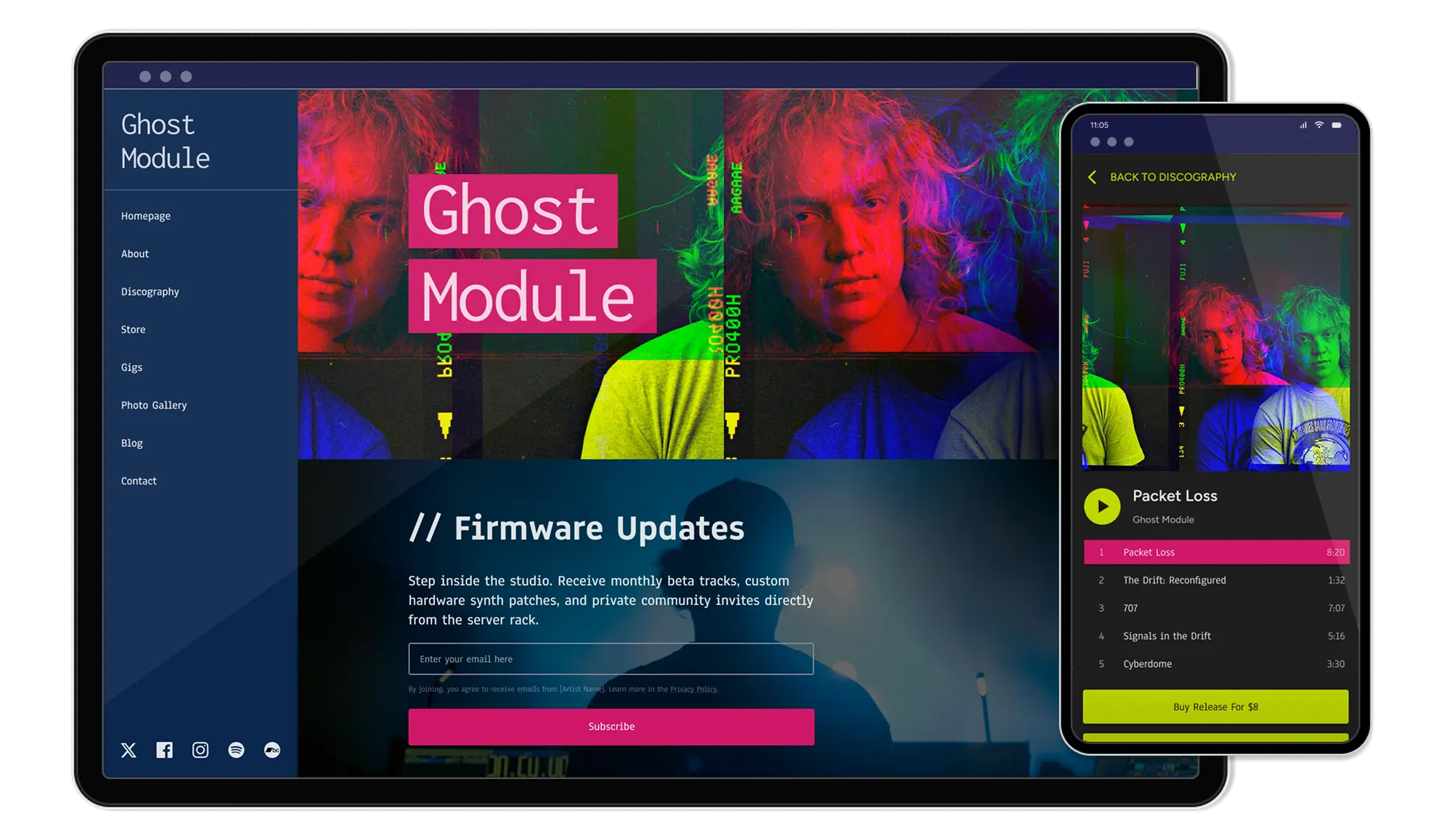
Build your own musician website
Music player, store, EPK, and mailing list, all built in. Start your 30-day free trial, cancel anytime.
Assuming credit is enough. Naming the songwriter in your description isn't a license. Credit and licensing are separate.
Using the original recording. Playing over the actual master, or lifting parts of it, is a different and more serious matter than covering the song.
Treating YouTube like streaming. Video needs sync rights, which nobody has to grant you, so it isn't the same as putting a cover on Spotify.
Rewriting the lyrics without asking. Parodies and translations are new works built on someone else's, and those need direct permission.
Getting the metadata wrong. Crediting yourself as the songwriter misdirects royalties and gets releases rejected.
No plan for the listeners it brings. Without your originals alongside it and a link to your own site, a cover is a favor to someone else's catalog.
Not from the original artist, provided the song has already been commercially released. There's a compulsory licensing route so the rightsholder can't refuse, as long as the correct licensing is arranged for the format and they get paid. Video is the exception, since sync rights can be refused.
Yes. For streaming, the platforms handle the publishing side through the mechanical licensing system, so releasing through a distributor in the usual way generally covers you. Credit the original songwriters correctly in your metadata, and check your distributor's specific cover song process.
Technically yes, and it's a different one. Video needs sync rights, which aren't compulsory, so the copyright owner can refuse. In practice YouTube often identifies the song and runs ads with revenue going to the publisher, which is why many cover videos stay up, but the rightsholder can still request a takedown.
You can earn from your recording, while the songwriting royalties go to the original writers. On video, the ad revenue frequently goes to the publisher rather than you. Treat a cover as a way to reach new listeners, and let your originals and your merch do the earning.
Not under the standard route. Changing lyrics, translating them, or reworking the melody creates a new version built on someone else's work, and that needs direct permission from the rightsholder. A faithful rendition in your own style is fine.
No. The details described here reflect the United States system, and other territories handle mechanical licensing through their own collecting societies, some without a compulsory route. Check your national society, and ask your distributor what their cover process covers if you're releasing worldwide.
Releasing a cover is more straightforward than the confusion around it suggests. For a song that's already out, you don't need to ask the artist, streaming is largely handled by the distribution chain, and the main things to watch are video, altered lyrics, and getting your metadata right.
The part worth more thought is what happens after. Choose a song with real search demand that suits your voice, make it your own, and put your originals and a link to your own site next to it. Done that way, a cover introduces you to people who were looking for someone else and leaves you with an audience of your own.
Get our new guides by email.
Practical advice on promoting your music, getting gigs and selling online. You can unsubscribe at any time.