Photo by DJ Tears PLK on Unsplash


Streaming put your music in front of the whole world, but it pays very little per play. If you're an independent musician wondering how anyone earns a living from this, the honest answer is that few people do it with a single income source. They build several smaller ones that add up.
This post is for independent artists, bands, and DJs who want the real ways musicians make money: what each one pays, how much work it takes, and how to pick the few that fit your music and your audience. Think of it as a map of the options, with links to go deeper on each.
A single income source rarely pays the rent on its own. Real income comes from stacking several.
The bigger earners are selling music and merch directly, playing live, sync licensing, direct fan support, teaching, and affiliate income. Streaming is mainly for discovery and pays little.
Sell direct through a home base you own (store, tip jar, mailing list) and keep 100%, instead of handing a platform its cut.
Pick two or three streams that fit your audience and your time. Chasing all of them at once spreads you thin.
Your website ties the paying streams together: it's the store, the tip jar, the mailing list, and the EPK you pitch for sync and gigs.
They combine several income streams: streaming, selling music and merch directly, playing live, sync licensing, direct support from fans, teaching, and affiliate income. The steady money tends to come from selling straight to fans through a home base you own, where you keep everything, while streaming mostly helps people discover you and pays little on its own.
The biggest mistake is waiting for one thing to pay off: the viral song, the label deal, the streaming numbers. For working independent artists, income is usually a handful of smaller streams layered together, so a quiet month in one is covered by another.
That also changes how you should think about your time. Some streams pay now but trade your hours for money, like teaching or session work. Others build slowly but keep paying, like a catalog of music for sale or a sync placement that reruns for years. A healthy setup usually has some of each. The rest of this post walks through the options so you can pick the ones that fit.
Streaming is where people find you, and it's worth being on every platform through a distributor. As income, though, it pays very little unless your numbers are huge. According to distributor Ditto Music, Spotify pays roughly $0.003 to $0.005 per stream, which works out to around $3,000 to $5,000 per million plays, and a track now needs 1,000 streams in a year before it earns anything at all.
Treat streaming as a way to get discovered, and expect the income to come from elsewhere. Its value is turning up in front of new listeners, who you then move toward the things that pay: a purchase, a ticket, a spot on your mailing list. There's more on that shift in growing your fanbase beyond streams.

When a fan buys your album, a download, or a vinyl record, you earn the actual sale price, which dwarfs what the same track makes in streaming royalties. The catch is where you sell it: a marketplace takes a cut of every order, while your own store on a music-focused builder takes 0% commission, so you keep the full amount minus the standard payment fee.
Sell downloads, albums, singles, and physical formats straight from your own site, and point fans there from every platform. Our guide to selling your music and merch online goes deeper on setting this up.
Merch is where a lot of independent artists make real money, especially on tour. A shirt costs you a few dollars and sells for twenty or more, so the margins are far friendlier than a stream or a download. T-shirts, hoodies, hats, posters, stickers, and vinyl all sell to fans who want something physical to show they support you.
You don't have to gamble on a garage full of stock, either. Print-on-demand merch makes each item only after someone buys it, so you can list a full store without paying for inventory up front.

Live shows still pay, through a door split, a guarantee from the venue, or a fee for a private event, and they sell more merch than almost anything else. For a lot of independent acts, a night of shows plus the merch table is the best single earner they have.
Getting the shows is its own skill. Start with how to get gigs as a musician for booking local rooms, and if you spin, how to get booked as a DJ covers clubs, residencies, and private events.
Sync is when your music is licensed for film, TV, ads, games, or online video. It's lumpy income, you might go months with nothing, then get a single placement that pays a few thousand dollars at once. Because you own your recordings as an independent artist, you can clear a track on your own, which is exactly what music supervisors want.
It rewards patience and preparation: broadcast-quality masters, instrumental versions, and a way to be found and contacted. The full walkthrough is in how to get your music in film, TV, and ads.
Your most dedicated fans will often pay to support you directly, and there are easy ways to let them. A tip jar on your site lets people pay what they want. Selling exclusives, early releases, or a small perk to your mailing list turns goodwill into income. And a crowdfunding campaign can fund a record or a tour up front.
All of this runs on a real relationship with your audience, which is why your mailing list matters so much here. The people who hand over their email are the ones who tip, pre-order, and back your campaigns.

If you can play, you can teach, and lessons are reliable income you control. Online or in person, teaching your instrument, production, or DJing pays now and fits around your own music. Session work, playing or singing on other people's records, and freelance mixing, mastering, or production are the same idea: your skills, sold as a service.
Because these are services, your website can list and sell them the same way it sells music. There's a case for putting them front and center in showcasing your music-related services.
If you use gear and services you genuinely like, some of them pay you to recommend them. This works best when part of your audience is other creators: bandmates you gig with, students you teach, or a music community you're part of. Recommend what you use, and skip anything you wouldn't.
As an example, Noiseyard's own affiliate program pays 25% of every payment your referrals make, including their renewals, so a handful of musician friends who sign up becomes steady monthly income that keeps paying for as long as they stay subscribed. For an artist whose audience is purely listeners, affiliate income is a small side stream, so weigh it against the others rather than leaning on it.
Look back at the streams that pay, direct sales, merch, tips, exclusives, teaching, and the sync and live bookings you pitch for, and they share one thing: they work best through a home base you own.
A musician website is the store that keeps 100% of sales, the tip jar, the mailing list that drives fan support, and the press-ready page you send to supervisors and promoters. Social platforms and marketplaces can vanish, change their fees, or bury your posts. A site on your own domain is the one place you control, and it's where the different income streams connect to each other instead of sitting in separate apps.
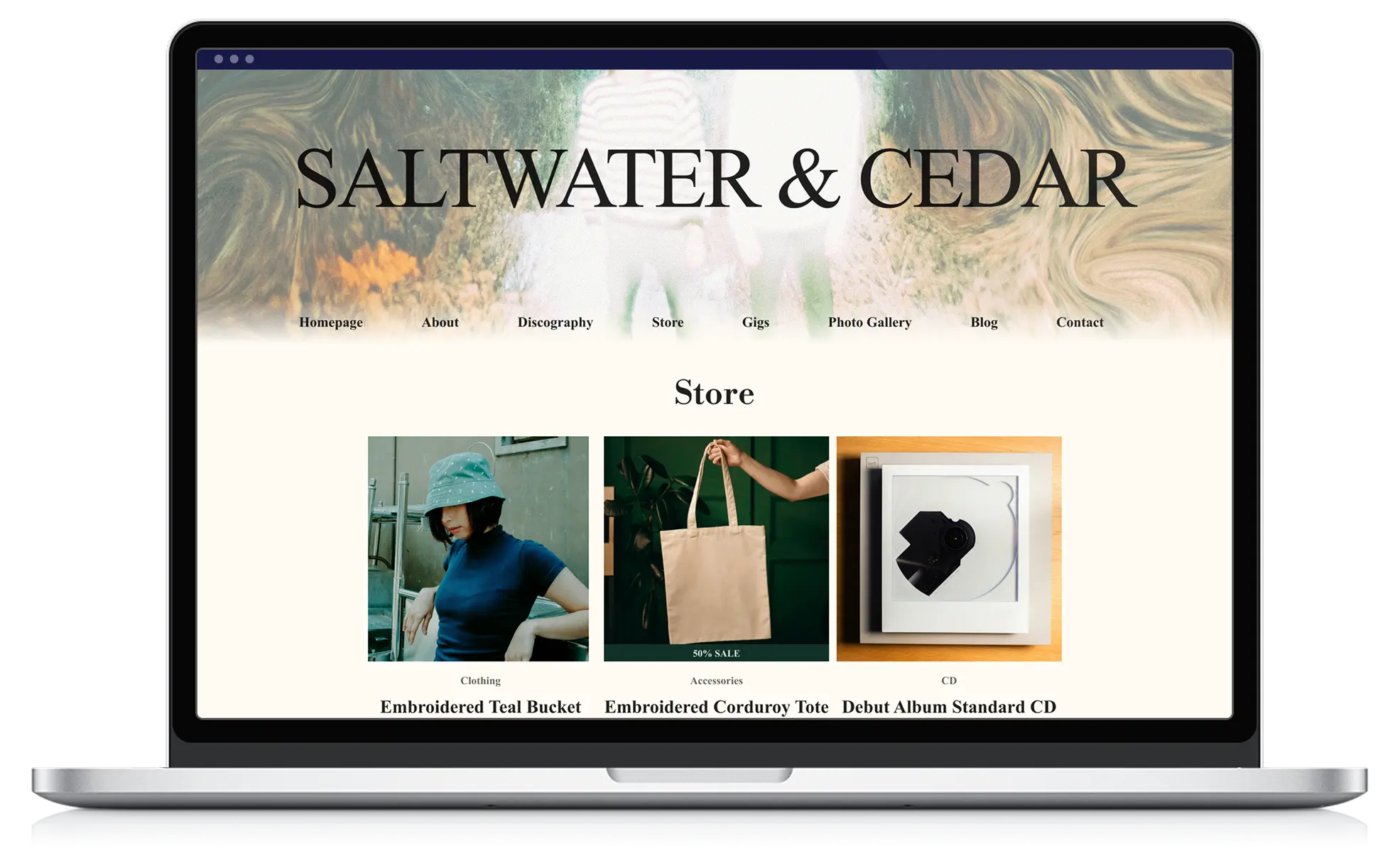
You can't build all of these at once, and you shouldn't try. Pick two or three that fit where you are now, and add more later.
A simple way to choose:
Match the stream to your audience. If your following is fans and listeners, lean on sales, merch, live, and tips. If it includes other musicians or students, teaching and affiliate income make more sense.
Weigh time against money. Teaching and session work pay quickly but cost you hours. A catalog of music and merch, or a sync placement, takes longer to build but keeps paying while you sleep.
Play to your strengths. A strong live act should tour and sell merch. A prolific producer should chase sync and sell instrumentals or services. Put your energy where you're already good.
Start with the two or three that fit, get them running through your website, and layer in the others as you grow.
Build your own musician website
Music player, store, EPK, and mailing list, all built in. Start your 30-day free trial, cancel anytime.
Waiting for one thing to pay off. The single viral moment rarely comes. Build a few steady streams instead of betting everything on one.
Leaving money on streaming platforms. Streaming is discovery. If you never move listeners toward a purchase, a ticket, or your mailing list, you never see real income.
Selling only through platforms that take a cut. Every marketplace fee is money out of your pocket. Sell direct from a site you own wherever you can.
Ignoring your mailing list. The fans who buy, tip, and back your campaigns are on your list. Without one, you're starting from zero every time.
Spreading too thin. Eight half-built income streams earn less than two or three you commit to. Focus, then expand.
By combining direct income streams they control: selling music and merch from their own site, playing live, licensing music for sync, teaching, and taking direct support from fans through tips and exclusives. Streaming adds discovery and a little income on top. The key is selling directly so you keep the full amount.
Very little per play. Spotify pays roughly $0.003 to $0.005 per stream, so a million plays brings in around $3,000 to $5,000, and a track needs 1,000 streams in a year before it earns anything. Treat streaming as a way to get found, then move listeners to the things that pay more.
There's no single best one. For many working artists, selling merch and music directly and playing live are the biggest earners, with sync and teaching adding meaningful income. The right mix depends on your audience, your time, and your strengths, so pick two or three and build from there.
You don't strictly need one, but it's the tool that makes the paying streams work together. A website is your commission-free store, your tip jar, your mailing list, and the page you pitch for sync and gigs, all under a domain you own instead of a platform that can change the rules.
Through things that keep paying after the work is done: a catalog of music and merch for sale, sync placements that rerun, and affiliate income from tools you recommend. None of it is truly hands-off, but once it's set up, it earns while you focus on the next release.
There's no secret single source that pays for a music career. The artists who make it work treat income as a stack, a few streams that each cover part of the bills, built up over time and run through a hub they own.
Start where you are. Pick the two or three streams that fit your music and your audience, set up a website to sell and collect through, and add the others as you grow. Done steadily, a handful of small sources becomes a real living you control.
Useful tips and tricks, delivered right to your inbox.
Join our newsletter to keep informed about Noiseyard updates and new blog articles. You can unsubscribe any time.