Photo by Jacob Hodgson on Unsplash


College and community stations take music straight from artists, and some publish what they want you to send. Your part is to pick stations that fit your music and send exactly what their music directors ask for.
This guide is for independent artists with a finished song or release. It walks through choosing stations, preparing your files, writing the email, tracking your plays and collecting radio royalties. If you're weighing radio against other channels, the guide to promoting your music without a label covers the rest.
Pitch non-commercial stations first: college and community radio, genre shows and internet radio.
Send a download link to mastered files, plus a clean edit of any song with explicit lyrics.
Find stations that play artists like you through Spinitron and station playlists, then email each music director.
Register for royalties before you pitch: your songs with a performing rights organization, and your recordings with SoundExchange for US satellite and internet radio.
Link your own website in every pitch, so music directors can hear more and check who you are.
Begin with stations that take music from independent artists: college, community and internet radio, and genre shows on bigger stations. Register for royalties, read each station's submission rules, and email the music director a download link, a clean edit if needed and a one-sheet. Then track your plays and thank the hosts.
Non-commercial stations, like college and community radio, are the place to start, and some list exactly what to send on their websites. The big commercial stations can wait until you have plays and press to point to.
At college and community stations, send new releases to the music director or the music department. They choose which new releases go into the station's library. Stations that report to the North American College & Community Chart (NACC) also send it a weekly airplay chart.
Some stations focus on recent releases, so pitch each release in the weeks around its release date. CJAM 99.1 FM in Windsor, Ontario, keeps a new-music library that holds only releases from the past six months. Its music director told the NACC that several of its programs rely on that library, and called the station's charts "packed with indie artists and bands."
If a station has a weekly show for your genre, pitch its host as well as the music director. For electronic artists, guest mixes on internet radio shows are another way in, as the guide to growing an electronic music fanbase explains.
WYSO, a station in Yellow Springs, Ohio, says it gets more than 100 songs a week on average, so make yours easy to play.
A clean edit. US broadcast stations can't air indecent material between 6 a.m. and 10 p.m., or obscene material at any time. If a song has explicit lyrics, send a clean radio edit, label it clearly, and say which tracks aren't edited.
Files they can download. WYSO can't play music on air from Spotify or Apple Music, so a streaming link on its own isn't enough. It asks for mixed and mastered files, WAV preferred, and says a Bandcamp download link is great.
The format each station wants. BBC Introducing in America takes WAV or MP3 files and asks for MP3s at 192 kbps or higher, ideally 320 kbps.
File details. Put the artist name, song title and release name in each file's details, so the files still make sense once they're in a station's library.
Your name, spelled out. WYSO asks for a phonetic spelling of any names that are hard to say, and for every member's pronouns. A DJ who can say your name on air makes it easier for listeners to find you afterwards.
Time to listen. Send the song a few weeks before the release date, so music directors can listen in time and add it once it's out.
Get our new guides by email
Put everything in one short email, with a download link for the music. Stations ask for slightly different things, but these cover what they usually want:
A download link to the finished files. Download codes can give each station its own way to download the release from your site.
A one-sheet: one page with your artist name, genre and similar artists, where you're from, a short bio, the track list with run times, and which tracks are clean.
The release details: the title, the release date, and the label, or "self-released".
Your local connection, if you're from the station's area, with any shows you have nearby.
Links to your website and streaming profiles, so the music director can hear more and check who you are.
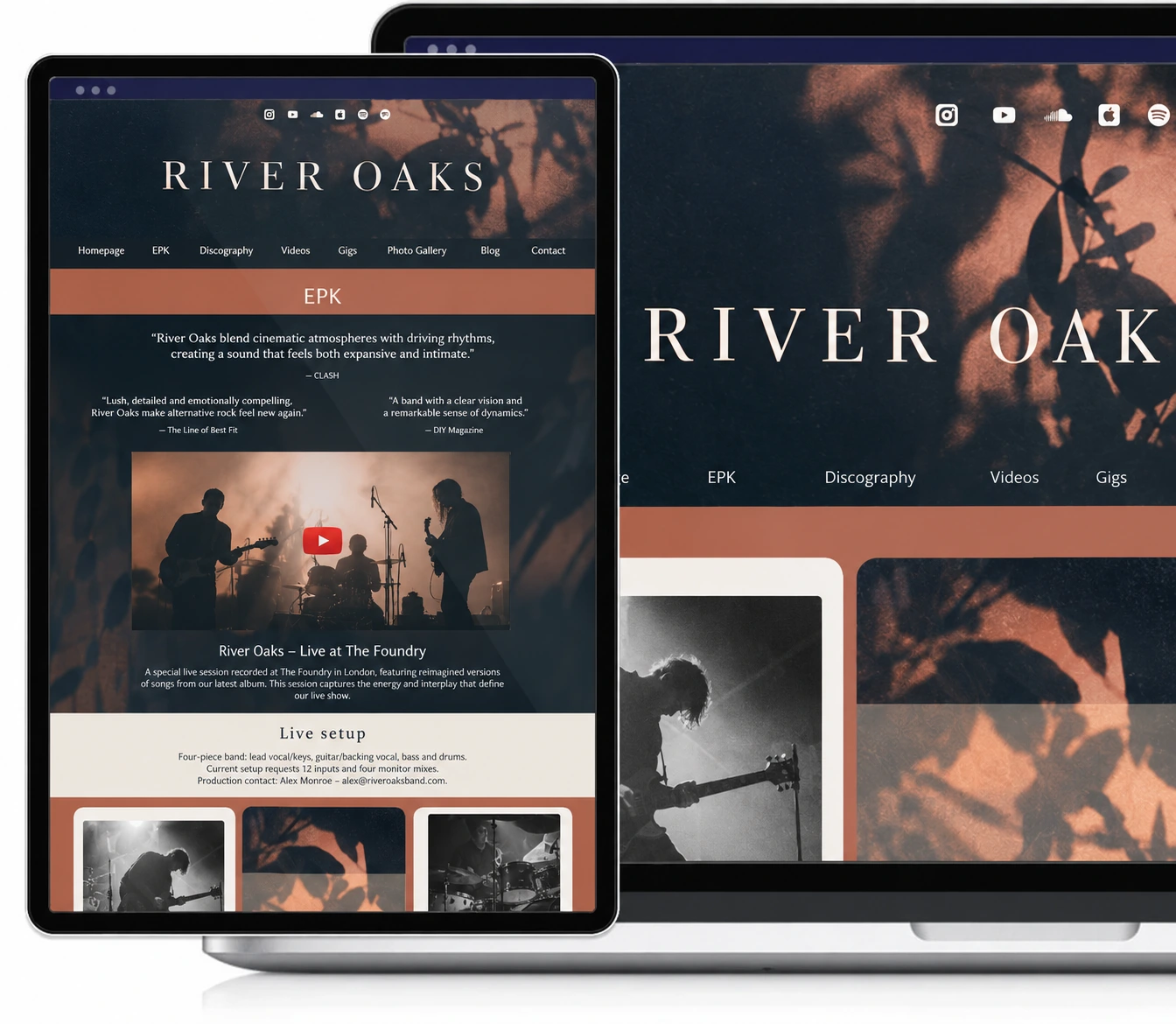
Keep the bio on the one-sheet to a few sentences, and see how to write an artist bio for a longer version. If you have an EPK, add its link to the email too, or see how to make an EPK if you don't have one yet. On Noiseyard, every plan includes an EPK page with your bio, a featured release with its player, press quotes, press photos and a contact form.
Pitch stations that already play music like yours. Many college and community stations publish their playlists through Spinitron, a playlist system for non-commercial stations. Its free search only covers the last 24 hours. Search two or three artists you sound like on a few different days, note which stations and shows played them, and start your list there. A search of the last three months costs $40 a month.
The NACC publishes weekly college and community radio charts, including genre charts. The full charts and its station contact list are for paid subscribers, but its weekly NACC 200 email is free.
Stations near you are a good first pitch. CJAM's music director says the station prioritizes local releases, from Windsor and Metro Detroit, as well as Canadian ones.
Keep a simple list as you go: the station, the contact, the date you sent the song, any reply, and any plays.
Write to the music director, or to the host of the show that fits you, and keep the email short:
A subject line with your artist name, song title, genre and release date.
Two or three sentences on who you are, where you're from, and why the song fits their station or show. Name a show or an artist they play.
The download link and the one-sheet, with your website in the signature.
The guide to pitching your EPK walks through writing an email like this and following up.
Send one email per station, and if you don't hear back, follow up once or twice, a week or more apart. CJAM's music director has this advice for independent artists: "A follow-up email or two never hurts." WYSO says it can't guarantee airplay or a reply, and asks artists not to submit or follow up through social media messages.
Never pay a station or a DJ to play your song. In the US, secretly paying someone at a station to air a song is payola, a federal crime for the person who pays too. The penalty can be a fine of up to $10,000, up to a year in prison, or both. Music you send for free doesn't count as payment.
BBC Introducing has supported unsigned artists in the UK since 2007. Artists upload songs through its Uploader, and its local radio shows listen to them.
The US version, BBC Introducing in America, started in 2025, but for now it only takes uploads from Tennessee. It allows two tracks every 30 days and says a listen can sometimes take six months or longer. It also warns that a producer may play a track before its release date, so only upload songs you're happy to hear on air right away.
In Australia, triple j Unearthed has been launching Australian musicians since 1995, and artists upload their songs to a profile there.
In the days after you send the song, search your artist name on Spinitron and check the playlists that stations publish. If stations report your release to the NACC, it can also appear on its weekly charts. When a station plays you, thank the host and tag the station when you share it.
If a host plays you more than once, ask about an interview or a live session. Some stations record in-studio sessions with local and touring acts, CJAM among them.

In the US, AM and FM broadcasts don't pay performers or record labels. SoundExchange's FAQ says there is no performance right for over-the-air broadcasts.
Satellite radio, internet radio and digital cable music channels do pay, through SoundExchange, which pays the featured artist and the owner of the recording. Registering is free, and artists from outside the US can register too. Songwriters and publishers are paid through performing rights organizations such as ASCAP, BMI and SESAC, so join one and register your songs with it.
In the UK, PPL pays performers and record companies when recordings are played on the radio, and PRS for Music pays songwriters, composers and publishers. Joining PPL is free. If you live elsewhere, look up your own country's societies.
A radio plugger, or radio promoter, pitches your song to stations for a fee and reports back on where it was played. One can be worth it when you have a release with a budget behind it and more stations to reach than you can email yourself.
Before you hire one, ask which stations and charts they work with, how they report results, what it costs, and what happens if nobody plays the song. Walk away from anyone who guarantees plays, since stations decide what goes on air. The same checks apply to any paid promotion, as should you pay to promote your music explains.
A play puts your name in front of people who didn't know it, and some of them will look you up afterwards. Your own website can give them the music, your next show dates and a mailing list signup in one place.
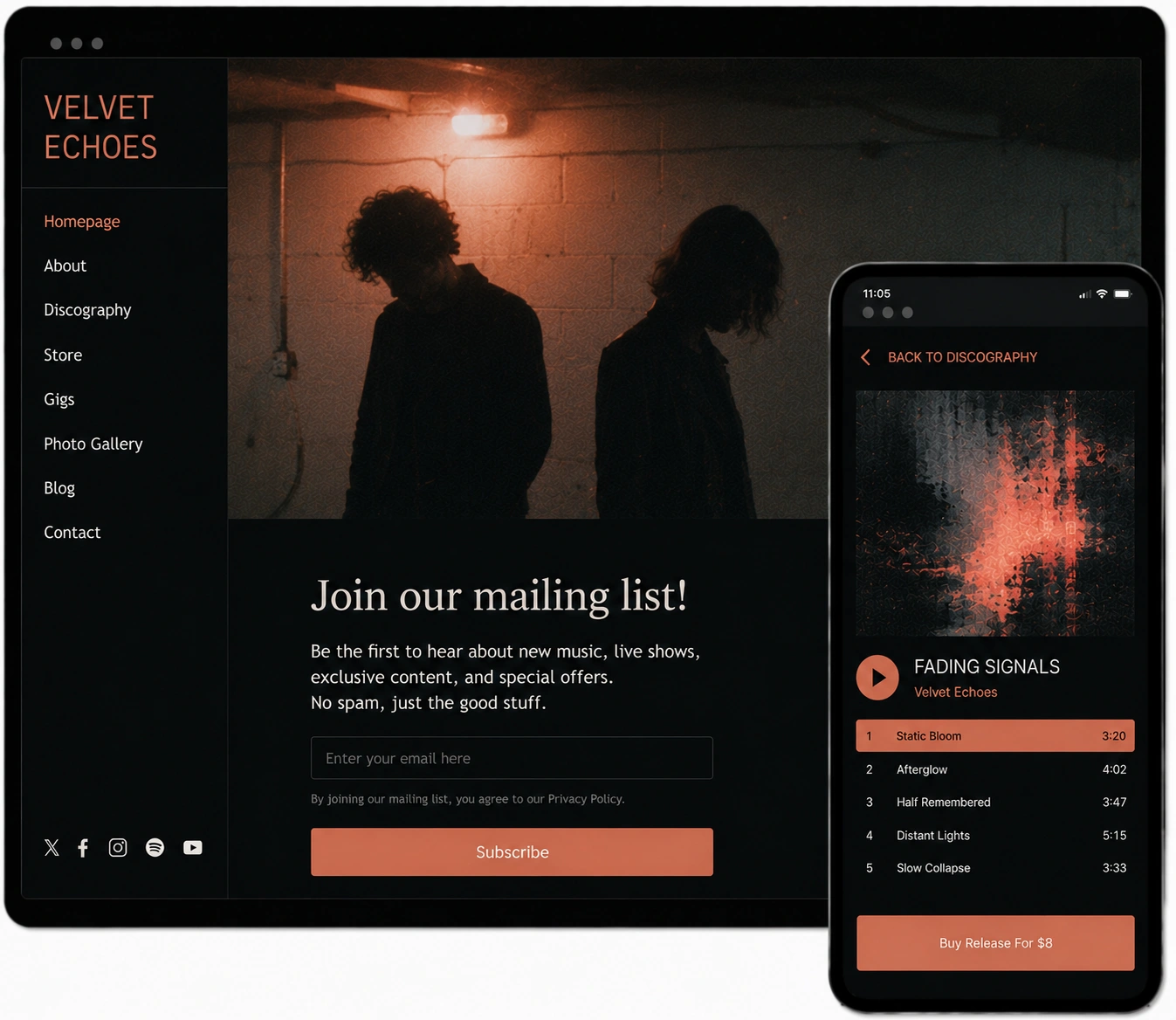
Ask the listeners who find you to join your mailing list, and your next release can reach them directly. For the signup form and what to send, see how to build an email list as a musician.
If you don't have your own website yet, set one up before you start pitching, so the link in every email goes somewhere you control.
Build your own musician website
Music player, store, EPK, and mailing list, all built in. Start your 30-day free trial, cancel anytime.
Sending only a streaming link. Stations need a file they can download.
Pitching stations that never play your genre. Check their playlists first.
The same email to every station. Name the show or the artist that makes you a fit.
Giving up after one email. A follow-up or two, a week or more apart, is fine.
Waiting too long after the release. New-music libraries and charts favor recent releases.
Skipping the royalty registrations. Do them before you start pitching.
Can I get my music on the radio for free?
Yes. Emailing your music to stations costs nothing, registering with SoundExchange or PPL is free, and a radio plugger is optional.
Do radio stations pay artists for playing their songs?
US AM and FM broadcasts pay songwriters and publishers, through ASCAP, BMI or SESAC, but not performers or labels. Satellite and internet radio pay performers and recording owners through SoundExchange. For UK plays, PPL and PRS for Music pay both sides.
How long does it take to get played on the radio?
There's no set time. BBC Introducing in America says a listen can sometimes take six months or longer, and some stations wait for the release date before adding a song. Send songs a few weeks before release.
Do I need a label or a distributor to get radio play?
No. Stations like CJAM and WYSO take submissions straight from artists. A distributor still helps, because it puts the song on streaming services where new listeners can find it after a play. How to release music independently covers distributors and release dates.
What is a radio edit?
A version of a song made for airplay, often shorter than the album version and with explicit words removed or muted. US broadcast stations need the clean version because they can't air indecent material between 6 a.m. and 10 p.m.
Do I need a website to get my music on the radio?
You can start without one and send a download link. A website helps from your first pitch, because music directors can check who you are. Listeners who look you up after a play can then find your music in one place.
Get our new guides by email.
Practical advice on promoting your music, getting gigs and selling online. You can unsubscribe at any time.