Photo by Aleksandr Popov on Unsplash


Electronic music grows differently from other genres. A folk singer builds an audience song by song, but a house or techno track usually spreads through other people's DJ sets, a label's following, and a Beatport chart, long before a casual listener ever learns your name. The gatekeepers here are DJs, labels, and radio shows.
This post is for producers and DJs making house, techno, drum & bass, trance, or anything else under the electronic umbrella, who want faster traction than a slowly climbing Spotify number. It covers the platforms that matter in this scene, how to get other DJs playing your tracks, how to approach labels, and how to turn all that into an audience you can reach directly.
In electronic music, other DJs and labels are your route to an audience. Getting a track supported in sets does more for you than a playlist add.
Put your music where this scene looks: Beatport and Bandcamp for buyers, SoundCloud for the community, alongside the usual streaming platforms.
Release a mix every month. It shows you can select and program, and it keeps you visible between tracks.
Send promos to DJs before release, and send targeted demos to labels whose roster you genuinely fit.
Remixes and collaborations put you in front of someone else's audience, which is the fastest honest way to reach new listeners.
Send everyone back to a site and mailing list you own, so a scene that moves fast doesn't take your audience with it.
Get your tracks onto the platforms DJs and electronic fans use, Beatport, SoundCloud, and Bandcamp, then build support from the people who move records in this scene: other DJs, labels, and radio or mix shows. Release consistently, put out a monthly mix, and send listeners to a site and mailing list you own.
In most genres, the path runs from release to press to playlist to fan. In electronic music, it usually runs through the floor first. A track gets picked up by a DJ, played in a club or a festival set, Shazamed by a few hundred people, charted on Beatport, and picked up by a label. Only then does the wider audience arrive.
That changes where your effort goes. Your first audience is other DJs, because they're the ones who put your music in front of thousands of people at a time. A single respected DJ playing your track in a peak-time set can do more for your name than a month of social posts.
It also means credibility travels through labels. In this scene a label is a curator, so a release on one with a good reputation tells listeners your music is worth their time before they've heard a bar of it.
Streaming platforms matter, and you should be on all of them through a distributor. But electronic fans and the DJs you want support from shop and dig in specific places:
Beatport is where DJs buy tracks, and its genre charts are a real credibility signal. Worth knowing before you plan a release: independent artists can't upload to Beatport directly unless they're with an approved label or distribution partner, so you'll need a distributor that delivers there, or a label release.
Bandcamp is the home of underground and leftfield electronic music, and it's where dedicated fans buy digital and limited vinyl.
SoundCloud is still the scene's community hub, which the next section covers.
Streaming platforms are where casual listeners end up after they hear you somewhere else.
If the distribution side is new to you, there's a full walkthrough in how to release music independently.

SoundCloud stopped being the default platform for artists in general years ago, and it stayed the center of electronic music anyway. The difference is how the scene uses it.
Post things that aren't on streaming. Unreleased edits, dubs, IDs from your sets, works in progress. Giving followers something they can't get on Spotify is the reason to follow you there.
Use private links for promos. Sending an unreleased track to DJs and labels as a secret link is the standard way this scene shares music before release.
Repost and engage with your peers. Reposts still move tracks around SoundCloud, and the artists who support others tend to get supported back.
Keep your uploads tidy, with proper titles, artwork, and genre tags, so people digging for your sound find you.
Get our new guides by email
This is the habit that separates electronic artists who grow from ones who stall. A regular mix proves you can select and program a set, which is a different skill from making tracks, and it gives people a reason to spend an hour with you between releases.
Record one a month, put it on SoundCloud or Mixcloud, and post it as a video on YouTube if you can. Add a tracklist, credit every artist in it, and let them know you played their music, since that's how you get on other producers' radars.
Mixes also get you closer to radio. Shows and mix series on internet radio stations are always looking for guests, and a strong monthly mix is what gets you invited. Those slots reach exactly the listeners you want.

DJ support is the engine of this genre, so treat it as a real part of every release rather than something you hope happens.
Send promos before release. Two to four weeks out, send a private link to DJs whose sets your track fits. Keep the message short: who you are, what the track is, when it's out, and one line on why it suits their sets.
Target realistically. DJs one or two steps ahead of you will reply. The headliner you idolize probably won't, and their inbox is full of the same email.
Make it easy to play. Have a clean master and, when relevant, an extended or DJ-friendly edit ready.
Track who supports you. When someone plays your track, note it. That support is proof you can use in your next label demo and your press materials.
Playing out yourself is part of the same loop, and the booking side is covered in how to get booked as a DJ.
A label release in electronic music brings a curated audience, distribution to Beatport, and a credibility boost you'd take years to build alone. Getting one comes down to fit and presentation.
Research labels that release music like yours, listen to their recent catalog, and shortlist ten where you'd genuinely belong. Then follow each label's stated submission process exactly, since ignoring it is the quickest way into the bin. Send one or two of your strongest tracks, never a folder of everything you've made, with a short note on who you are and any DJ support the track already has.
The broader approach to pitching, and what people check before they reply, applies here too and is covered in how to submit your music to record labels.

Remixing is one of the most reliable ways to reach a new audience in electronic music, because you borrow someone else's listeners for the length of a track. Offer remixes to artists at a similar level, take on remix competitions when a label runs one, and say yes to collaborations with producers whose crowd overlaps yours.
The same goes the other way. Getting a respected producer to remix your track brings their following to your release, and gives DJs a second version to play.
Online support and club presence feed each other. Go to the nights you'd want to play, get to know the promoters and residents, and take the early slots nobody wants. Warm-up sets are how a lot of residents started, and a resident who fills a small room gets booked again.
A local scene also gives you the thing online numbers can't: people who know your face, turn up for you, and tell others. There's more on that in building a reputation in your local music scene.
Everything above happens on platforms you don't control. Labels fold, SoundCloud changes its terms, a promoter moves on, and the fans you gathered there go with them. The point of all this exposure is to move people somewhere you keep them.
Give listeners a home base: a site with your tracks and mixes playing on the page, your dates, your releases, and a mailing list signup. A DJ or producer website that embeds your SoundCloud and Mixcloud sets does this, and it doubles as the link you send promoters and labels. Your mailing list is what lets you tell people about a release without waiting for an algorithm, and there's a full guide in how to build an email list as a musician.
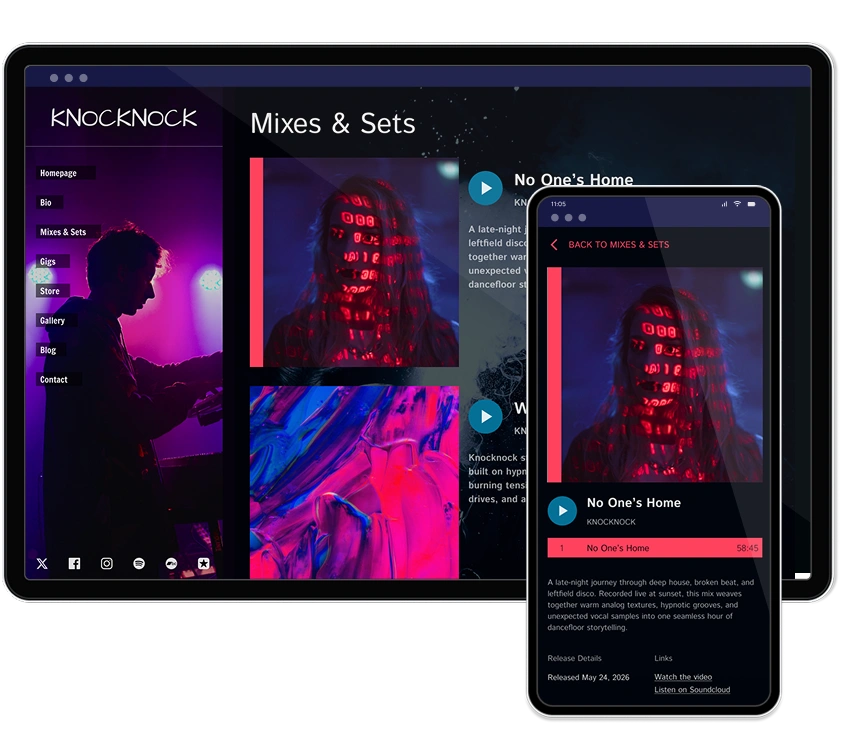
Build your own musician website
Music player, store, EPK, and mailing list, all built in. Start your 30-day free trial, cancel anytime.
Uploading only to streaming. If you're not where DJs shop and dig, the people who could break your track never hear it.
Mass-blasting labels. A generic email to fifty labels gets ignored by all fifty. Send a few targeted demos to labels you genuinely fit.
Only releasing tracks, never mixes. Without a mix, you're invisible between releases and you look like a producer rather than a DJ.
Chasing the biggest DJs first. Support from artists one step ahead of you is achievable and compounds. Start there.
Buying plays or followers. It fools nobody in this scene, and labels and promoters look at engagement rather than raw counts.
Ignoring the club on your doorstep. A local residency builds a crowd that online reach rarely does on its own.
No home base. If every link goes to a platform, you're renting your entire audience.
Through other DJs, labels, and mixes rather than press. Get your tracks to DJs as promos before release, send targeted demos to labels whose sound you fit, put out a mix every month, and be present in your local club scene. Support from people already trusted in the genre is what carries a new producer.
If you make club-oriented music, yes, because it's where DJs buy tracks and its charts carry weight. Independent artists can't upload there directly, so you'll need a distributor that delivers to Beatport, or a release through a label.
Send a private promo link two to four weeks before release to DJs whose sets your track suits, with a short, specific message. Target artists a step or two ahead of you rather than headliners, make sure the master is clean, and keep a record of everyone who supports you.
Shortlist labels whose recent releases genuinely match your sound, then follow each one's submission process exactly. Send one or two of your strongest tracks as a private link, with a couple of lines about you and any DJ support you already have. Skip the folder of everything you've made.
Yes, more than in other genres. It's where the scene shares unreleased tracks, edits, and mixes, and where private promo links get sent. Use it for the things you don't put on streaming, and keep your profile active with a regular mix.
Often enough to stay visible, without flooding people. A track or EP every couple of months, with a mix in between, keeps you in front of DJs and fans. Consistency matters more here than volume, since the scene moves quickly and quiet months are easy to disappear into.
Growing an electronic fanbase means working the channels this genre runs on: DJs who play your tracks, labels that vouch for you, mixes that keep you present, and rooms where people hear you loud. That work compounds, since each bit of support makes the next one easier to get.
Just make sure it collects somewhere. Send the people who find you through a set, a chart, or a label release back to a site and a mailing list you own, so the audience you build in a fast-moving scene stays yours when the platforms and the trends change.
Get our new guides by email.
Practical advice on promoting your music, getting gigs and selling online. You can unsubscribe at any time.