MARKETING & PROMOTION
How to Build a Website as a Singer or Songwriter (and Get Heard)

Nida

Aug 14, 2026

As a singer or songwriter, your voice and your songs are what you're offering, and people can only fall for them if they can find and hear them in one good place. A website is that place. It's where a fan, a booker, another artist hunting for a song, or a music supervisor casting for a sync goes when they want to know who you are and how to reach you.
This post is for singers and songwriters who want to get heard and turn that into something: fans, gigs, co-writes, cuts, and sync placements. It covers what your site should show, how to make your voice and your songs the first thing a visitor notices, and how to turn that visitor into a fan or a contact. The generic "how to build a website" mechanics are covered elsewhere, so this stays focused on what a singer or songwriter's site needs.
TL;DR
-
Your website is where your voice and songs live in one place you own, so fans and industry people find and hear you without a feed in the way.
-
Lead with your best: a song and a performance video up top, so a visitor hears you within seconds.
-
Make it easy to act on: a loud mailing list signup, a way to book you, and a store to buy your music.
-
Songwriters, show your songs and make it simple for artists, publishers, and supervisors to hear them and reach you.
-
Put it on your own domain so you turn up when someone searches your name, and it doesn't vanish when a platform changes its rules.
Table of contents
Do singers and songwriters need a website?
Yes. Your voice and your songs are what you're selling, and a website is the one place people can find and hear them without a feed or an algorithm in the way. It's where a fan, a booker, or another artist looking for a song goes to learn who you are, hear your best work, and reach you, all under your own name.
Why your voice and songs need a home you own
Socials are where people discover you, but they aren't yours, and they bury your posts the moment you stop feeding them. A website is the opposite: a place you control, where your music sits front and center and doesn't scroll away. When you make a website for your music, you own the content and the experience, and fans can always find you at your own domain, away from the noise of a newsfeed.
It also does something a social profile can't: it turns a casual listener into a real contact. On your site, a visitor can hear your songs, join your mailing list, buy your music, and message you about a gig or a co-write, in one place, on their own time. There's a broader case for it in why every musician needs a website.
Make your voice and songs the first thing people notice
Here's where a singer or songwriter's site is different from any other kind: the music has to be the first thing someone gets, right there on the homepage, so they can hear you within seconds of arriving.
Lead with a performance video and a couple of your strongest songs, embedded so they play right there. For a singer especially, a video of you singing carries your voice, your phrasing, and your presence in a way a still photo can't. Put your best song first, the way you would open a set, and let it carry the page.
What a singer or songwriter website needs
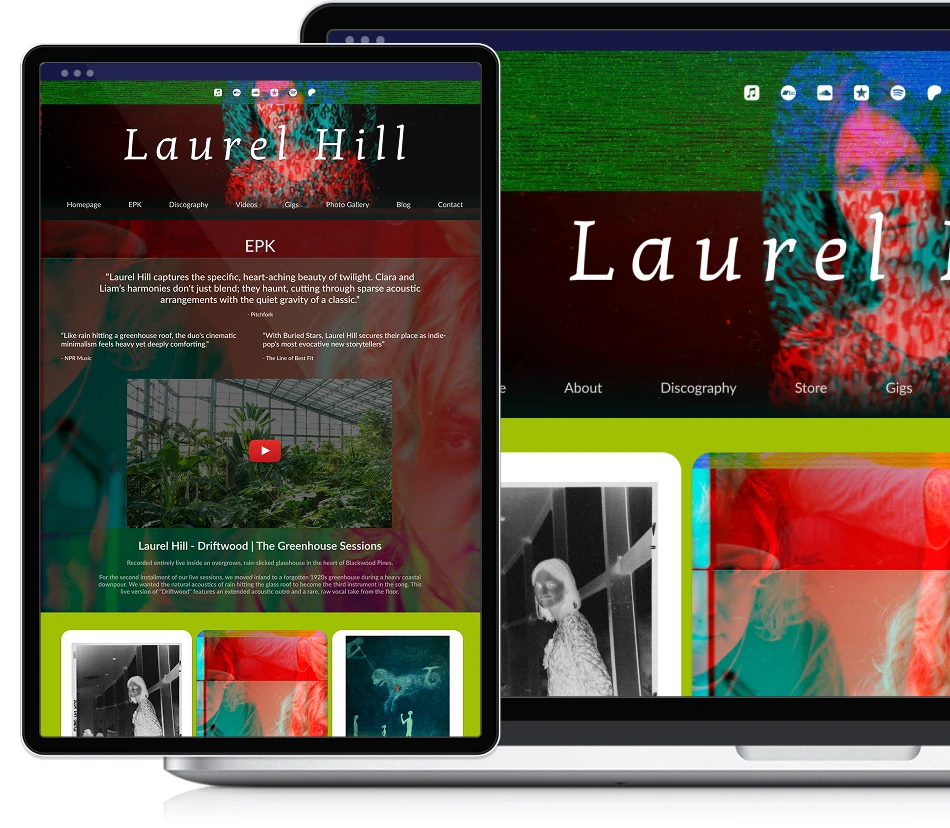
You don't need a sprawling site. A few well-chosen pages cover it:
-
A home page that plays a song or video and says who you are in a line.
-
A music page with your songs and releases, embedded and easy to hear, plus links to streaming.
-
A videos section for performances, live clips, and sessions.
-
An about page with your story, your influences, and a photo, so you feel like a person.
-
Shows or dates, if you perform live.
-
A contact route for booking, co-writes, and licensing enquiries.
-
A store and a mailing list, so people can buy your music and stay in touch.
Start with the home page, the music, and a way to reach you, then add the rest as you go.
For songwriters: make your songs easy to place
If you write songs for other artists, or want to, your website works a little differently. It becomes a catalog: a place where an artist looking for their next single, a publisher, or a sync supervisor can hear what you've written and see what you're about.
Show your best songs, and say plainly what you're after, cuts, co-writes, or sync placements, so the right person knows you're open to it. Keep a clear contact route for licensing and writing enquiries, and if your lyrics or toplines are the selling point, make them easy to read alongside the audio. When you're chasing sync specifically, the same catalog is what you point supervisors to, which is covered in how to get your music in film, TV, and ads.
Grow a fanbase from your site
Getting heard once isn't enough. The point of your site is to turn a listener into someone you can reach again, and that runs on your mailing list. Make the signup one of the loudest things on the page, and offer a reason to join, a free song, an early listen, a first look at tour dates. Email gives you a direct line to a fan that doesn't depend on an algorithm, so there's a full guide on building an email list as a musician.
Then make your website the place every channel points to. Your Instagram bio, your TikTok, your YouTube descriptions, and your streaming profiles should all send people to your site, so the attention you earn scattered across platforms ends up somewhere you own. More on that in turning social followers into long-term fans.
Book more shows
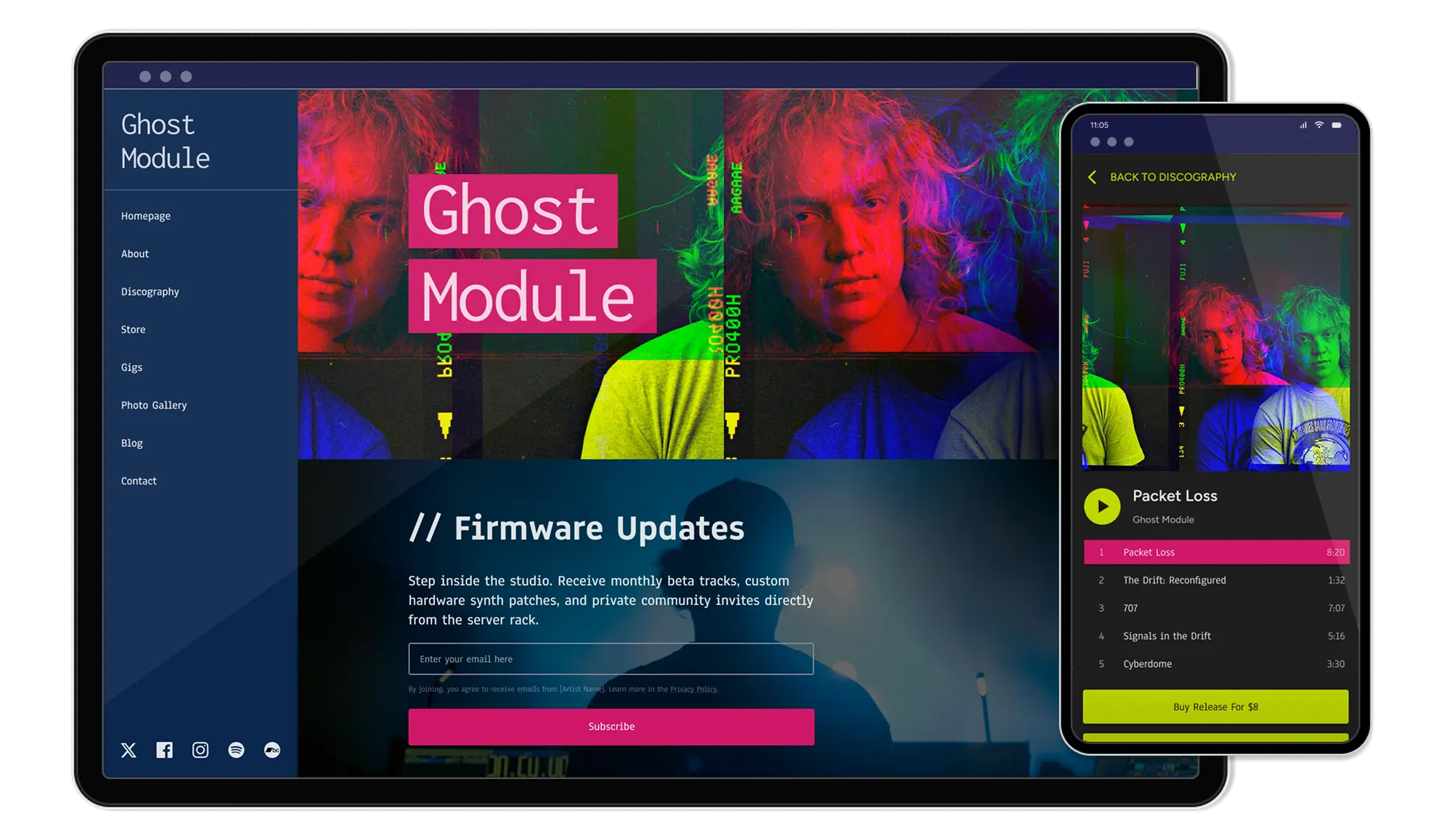
If you perform, your website is what gets you booked. A promoter or venue wants to hear you, see that you can draw a crowd, and reach you, without digging through your socials. A press-ready page with your music, a short bio, past dates, and a contact does that in one link. It's the same idea as an EPK, and there's a full walkthrough of the booking side in how to get gigs as a musician.
Keep your dates current, and put your best live footage where a booker will see it. A singer who looks active and easy to work with gets asked back.
Sell your music and take support
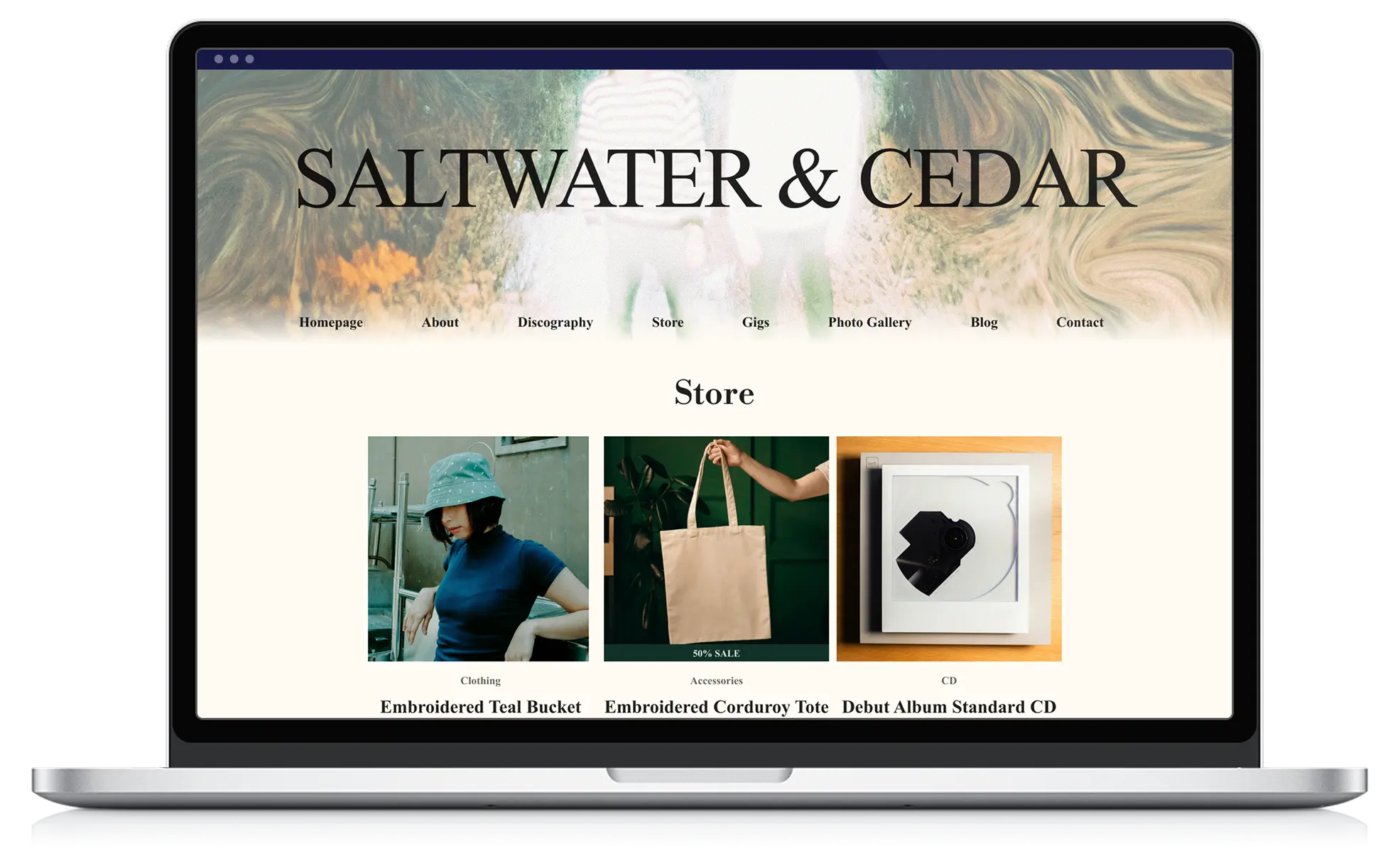
Your site is also your storefront. Sell your music as downloads, along with any merch, straight from your own store and keep the full price, minus the standard payment fee, rather than handing a marketplace a cut. A tip jar lets fans who love a song support you directly. It all sits right next to the music that won them over, so a listener who's moved by a track can act on it without leaving. For a sense of what's worth selling and where, see how to sell your music and merch online.
Get found when someone searches your name
When a fan, a booker, or an artist hears about you, the first thing they do is search your name. A website on your own domain is what makes sure they find you, and the right you, rather than a stale profile or someone else with the same name. A real site can also rank for your genre and your city, so people looking for a singer or songwriter like you can turn you up. (If your builder handles the technical side like page titles and image alt text, that mostly takes care of itself. If it doesn't, there's a musician SEO guide for the basics.)
How to build it
You don't need to code or hire a designer. A builder made for musicians gives you the pieces a singer or songwriter site needs, a music player, a video section, a store, a mailing list, and a contact form, already built, so you fill them in rather than start from a blank screen. You can have a clean version live in an afternoon.
The generic step-by-step, picking a platform, getting a domain, and setting up the core pages, is the same for any music site, and it's covered in how to make a music website. This post is about what to put on yours as a singer or songwriter, so your voice and your songs do the work.

Build your own musician website
Music player, store, EPK, and mailing list, all built in. Start your 30-day free trial, cancel anytime.
Common mistakes to avoid
-
No music on the homepage. If a visitor can't hear you without hunting, they leave. Lead with a song or a video that plays on arrival.
-
A photo instead of your voice. You're a singer or a writer, so let people hear you. Lead with a performance clip that shows what you sound like.
-
Burying your contact. A booker or an artist looking for a song won't dig. Put one clear way to reach you on every page.
-
No mailing list. Without one, every listener is a stranger again next release. Make the signup loud and give people a reason to join.
-
Sending fans to a scattered Linktree. A list of links isn't a home. Point everyone to one page you own, where the music plays.
-
Letting it go stale. Old dates and a years-old song make you look inactive. Keep your best and newest work up front.
Common questions
Do singers need a website?
Yes. Your voice is what you're selling, and a website is the one place people can hear it, learn who you are, and reach you, without a feed or an algorithm deciding what they see. It also turns up when someone searches your name, and it's a page you own rather than a profile that can change or disappear.
Do songwriters need a website?
Yes. For a songwriter, a site is your catalog and your calling card. Artists looking for songs, publishers, and sync supervisors can hear your best work in one place and reach you about a cut, a co-write, or a placement. Say clearly what you're open to, and keep your contact easy to find.
What should a singer's website include?
A home page that plays a song or video, a music page with your songs, a videos section for performances, a short about page, your live dates if you gig, a clear contact, and a store and mailing list. Lead with your voice, so a visitor hears you within seconds of arriving.
How do singers and songwriters get noticed online?
Put your best music where people can hear it in one click, send every social channel to your site, and build a mailing list so a first listen becomes a lasting connection. Keep releasing, keep your site current, and make it easy for fans and industry people to hear you and get in touch.
What's the best website for a singer-songwriter?
Look for a builder made for musicians, so the music player, video embeds, store, and mailing list come ready to fill in rather than something you piece together. That gives you a singer-songwriter-ready site you can launch quickly, on your own domain, with your songs front and center.
Final thoughts
Your voice and your songs are the whole point, so give them one home you own where anyone can hear them and reach you, rather than a handful of profiles that scatter your work and answer to someone else's rules.
Get a simple site live on your own domain, lead with your best song or performance, make it easy to join your list and get in touch, and keep it current. Do that, and the next person who hears your name finds exactly what you want them to: you, at your best, a click away.