Photo by Katarina Bubenikova on Unsplash


If you're asking a company to sponsor your music, be specific about the help you need: discounted gear, equipment for a tour or payment for promotional work. This guide explains what to send with your request and how to check the costs and commitments if the company makes an offer.
Start with brands whose products you use and can recommend from experience.
Check what support is available. A gear discount, a loan and a paid campaign have different terms.
Include recent shows, teaching or videos that show how you use the product. Put dates beside any audience figures.
Use your existing EPK to support the application.
Ask for specific support and explain what you could offer in return. Agree on the work, costs and permissions before accepting.
Make paid or gifted brand relationships clear when you promote the product.
Check the brand's endorsement page and apply through the contact or form it lists. Explain which products you use, what you need and how the company would benefit. Include the music, dates, videos or audience figures it requests. If it offers support, agree on the work and terms before accepting.
Companies use terms such as sponsorship, artist endorsement and ambassador programme differently. Ask what the arrangement includes before treating it as a source of income.
| Arrangement | Possible support | What to clarify |
|---|---|---|
| Gear endorsement | Discounts, products or loans | Usage and promotional commitments |
| Paid brand campaign | A fee for agreed work | Content, deadlines and usage rights |
| Affiliate arrangement | Commission on qualifying sales | Tracking, payment and disclosure |
These can overlap. A brand might offer discounted equipment alongside an affiliate code, or pay for a video while lending you the product to film it.
A discount saves you money when you buy gear you need. Loaned gear has to be returned under the agreed terms. An affiliate offer may pay commission on sales tracked through your link or code. Check which sales qualify and when you'd be paid.
If you need money to cover next month's bills, consider the other ways musicians earn income alongside any sponsorship application.
Start with the equipment and services you already use. Write down the product, how long you have used it and where it appears in your work. That could be a microphone on your live recordings, strings you take on tour or software you use while teaching production.
Then look for the company's artist relations, endorsement or partnership guidance. Check whether it accepts applications from your country and whether it names a regional distributor. Read who the programme is for, such as touring musicians, teachers or recording artists, before preparing a message.
If you want to approach a clothing brand or another company outside music, explain the connection just as clearly. Perhaps you already wear its clothes onstage and your audience regularly asks about them. Mention those questions if they help explain why the company might be interested.
Skip companies whose products you wouldn't recommend or whose requirements you don't meet. There's no need to buy unfamiliar gear just to make an application.
Get our new guides by email
Explain who sees you using the product. That might be people at your shows, students in your lessons or viewers watching your videos.
For example, Vater's artist endorsement guidance invites enquiries from professional players and teachers. It asks for a brief biography, links, tour dates, the sticks you use and the quantities you need, among other details. Its page also gives a separate contact route for musicians outside the US.
Choose examples that match the company's requirements:
Live work: recent performances, confirmed upcoming dates and a clip that shows your playing. Keep tentative bookings separate.
Teaching: the type of lessons or workshops you run, how regularly you teach and a relevant demonstration.
Online work: a few recent videos using the product, their views over a stated period and audience details you can check, such as viewers' countries.

Label venue capacity and attendance separately. A room that holds 300 people might have had 80 at your set. For videos, give results from a few recent uploads and say when you checked them. Our guide to music marketing metrics explains common figures and what they can tell you about your audience.
You can explain why your audience might be interested in the product, but avoid promising sales you cannot back up. A guitar tutorial and a concert clip may reach different viewers, even when they come from the same musician.
Use your existing electronic press kit (EPK). Add the products you use and your recent work, with dates beside audience figures. Keep customer and student details private.
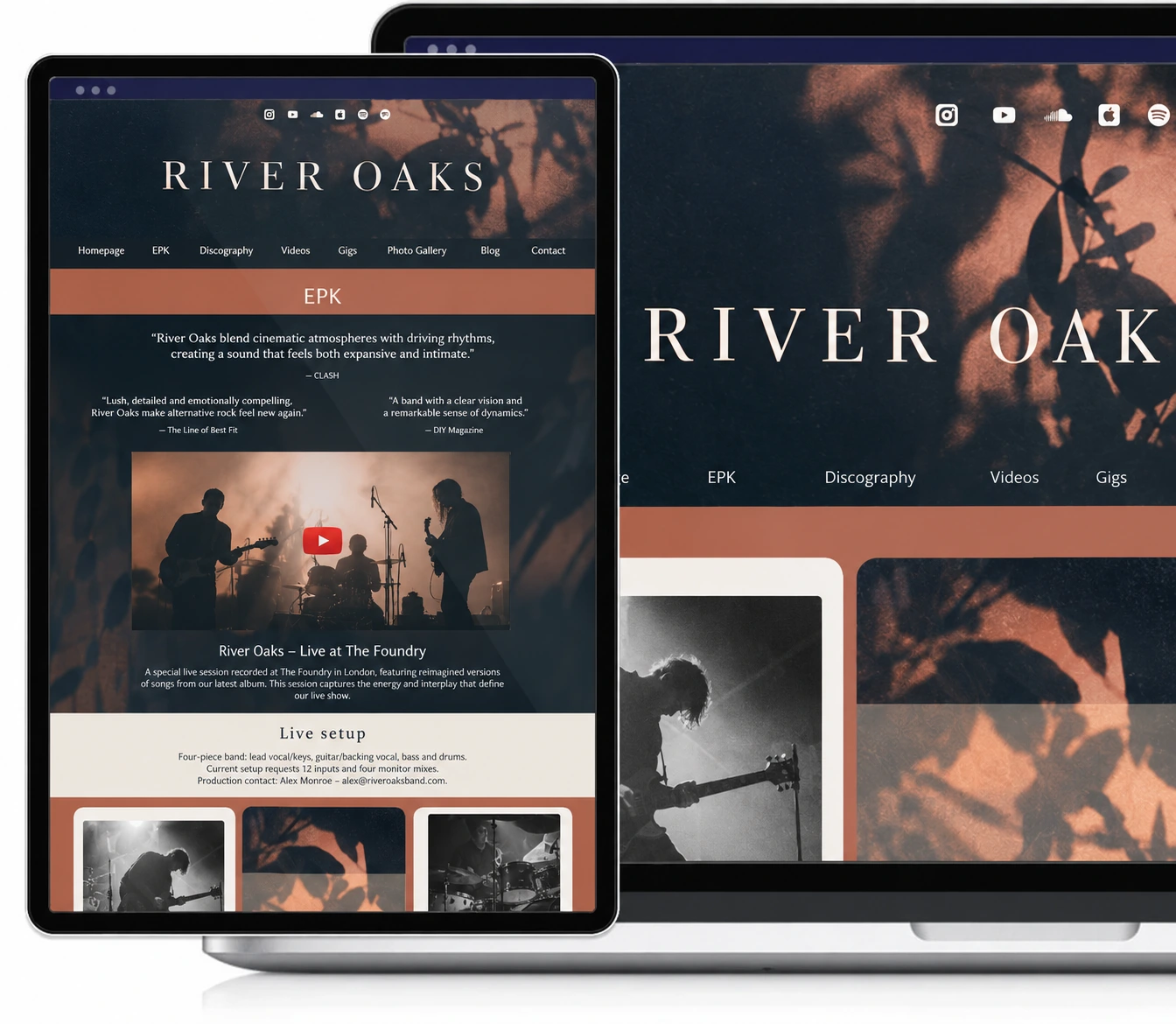
Noiseyard's EPK page supports text, video and an event calendar alongside your bio, music and contact details.
Enter audience figures in a text section and embed a live clip in a video section. The EPK contents checklist covers the rest. Test the page on your phone.
Use the company's application form or the email address it gives for enquiries. Explain what you're asking for, why you need it and how you could help promote the product.
Here is a fictional example for a drummer approaching a stick manufacturer they already use. It assumes the company accepts email applications from musicians in the UK.
Subject: Artist endorsement enquiry for a six-date UK tour
Hi Artist Relations team,
I'm an independent drummer based in Leeds. I've used your maple 5A sticks for the past two years at shows and in lessons.
I have six confirmed UK dates in February and teach twelve weekly students. My EPK includes the dates and a recent live video: [insert your EPK link].
Would you consider artist pricing on twelve pairs for the tour? I'm also open to discussing a short lesson video using the sticks.
I can send more details about the tour or my teaching if you need them.
Thanks,
[Your name]
The company can see which sticks the drummer uses, how many pairs they need and where they'll use them. If it wants the lesson video, they would still need to agree on the length, where it will be published and what the company will provide for it.
For a paid campaign, describe what you want to make, where you'd post it and the fee you're asking for. Agree on a specific number of posts or videos so you can plan the work.
Check what the company says about replies. If it only contacts successful applicants, leave the request with them.
If a company asks for videos or photos, allow time for planning, recording, editing and any revisions it requests. Check whether you're expected to post the finished work on your own channels, supply it to the company or both.

Consider this hypothetical offer: you expect to spend $240 on gear you need, and the artist price would save you $48. In return, the company wants two edited videos. If making those takes you five hours, you need to decide whether that saving justifies the work.
Include your time and expenses when deciding what to ask for. You can propose a fee or fewer videos if the offer would leave you doing more work than you're happy with. Check the price you would otherwise pay for the gear, including shipping and any minimum order.
Suggest a video you already know how to make. A product demonstration during a lesson may suit you better than a scripted advert. For other formats, see our content ideas for musicians.
Get the offer in writing, including what the company will provide and what you'll do in return. Check:
What you receive: the fee and payment date, product models and quantities, discount terms, or loan period and return arrangements.
What you provide: the number and type of posts, appearances or demonstrations, deadlines, approval process and included revisions.
Where the work can appear: your channels, the brand's own posts, paid advertisements or other uses, and for how long.
Exclusivity: which competing products or companies are covered and for what period.
Changes and ending the arrangement: what happens if a tour is cancelled, a product is unavailable or either side wants to stop.
For example, ask whether permission to repost your video also includes using it in paid ads. Agree on that use and any associated fee before you send the finished work.
If the proposal includes using your music in an advert, check who can authorise both the song and the recording. Our sync licensing guide explains that separate process. Have a music lawyer review terms you do not understand, particularly broad exclusivity or rights to your work.
You can decline an offer that would cost too much time, restrict equipment you need or require recommendations you would not make honestly.
If a brand pays you or gives you free or discounted products, make that relationship clear when you recommend them.
For recommendations that affect US consumers, follow the FTC's endorsement guidance. Explain the relationship in the post. If your video both shows and talks about the product, disclose the relationship on screen and out loud. A note only on your profile or in the video description can be missed.
Check the advertising rules that apply to you and your audience before publishing. Discuss the disclosure with the brand, and make sure the finished post clearly explains the relationship. Your comments about the product should reflect your own experience.
Build your own musician website
Music player, store, EPK, and mailing list, all built in. Start your 30-day free trial, cancel anytime.
How many followers do you need to get sponsored as a musician?
There is no single number that applies to every brand. Check the programme's criteria and include the teaching, performing or recording work it asks about. If a form asks for follower numbers, name the platform and say when you checked them.
Can an unsigned musician get a gear endorsement?
Being unsigned needn't stop you applying. Vater's guidance invites professional players and teachers to enquire and doesn't list a record deal as a requirement. Each company sets its own criteria.
Does an endorsement mean free equipment?
It may offer discounted gear, a limited quantity of products or a loan. Ask what you would receive, what you would still pay and what you would have to do in return before accepting.
Do I need a website to apply for sponsorship?
Give the company the links or files it asks for. A website can bring your music, videos and dates together, but requirements vary.
Can I use the same pitch for brands, venues and press?
For a brand, explain why you use its products, what support you want and what you'd do in return. Our guide to pitching your EPK covers requests for bookings and press coverage.
Get our new guides by email.
Practical advice on promoting your music, getting gigs and selling online. You can unsubscribe at any time.

Music Career Advice
How to release music independently: A complete guide for DIY musicians