Photo by René Ranisch on Unsplash


You've finished a single and want to give a music writer the details: when it's out, what it sounds like and why you made it. A press release puts that information together so they can check the facts, quote you and decide whether to cover the music.
Below is a template you can copy, followed by a completed example for a fictional independent artist. The notes explain how to fill it in and adapt it for an EP or album, including a debut with no previous press coverage.
Put your artist name, release title and music release date near the top.
Describe the sound and give a specific detail about the writing or recording.
Include a quote you've approved, if it adds something useful, and credit the people involved.
Link to playable music and publicity assets on your musician website or EPK.
Check the dates, names and links before sending, and follow the recipient's submission requirements.
A music press release should include a headline, your artist name, the release title and date, a description of the music, relevant recording or songwriting details, an approved quote where useful, and a short artist background. Add a listening link, access to artwork and press photos, and a media contact.
The announcement gives a journalist the facts about one project. Your pitch email explains why you're sending it to that particular person, while your EPK holds supporting material. If you're writing an announcement directly to fans, our band newsletter examples cover that format.
Replace the brackets with your own information. Remove optional material that doesn't apply, including the quote if you have nothing useful to add. Keep the finished text selectable so a writer can copy names and credits accurately.
For immediate release
[Artist name] announces [single / EP / album title], out [music release date]
[City, announcement date]. [Artist name], a [brief musical description] from [location], will release [title] on [date]. [Name the label or say the release is self-released, if relevant.] [One sentence describing the sound and a specific detail about this release.]
[Explain the song or record in a short paragraph. Describe what prompted it, how it was made, or a musical choice a listener can hear. Include relevant collaborators and their roles.]
“[An approved quote about the writing, recording or subject of the music],” says [name].
[Release title] will be available [where people can hear or buy it]. [Add confirmed information about a related video or release show if relevant.]
About [artist name]
[Two or three sentences of background relevant to this release. Include your location, musical work and any useful previous activity.]
Listen: [playable track or album preview link]
Artwork, press photos and biography: [EPK or media-assets link]
Media contact: [name, role and email address]
“For immediate release” means the announcement can be reported now. The music itself can have a later release date. Use the announcement date in the opening line, and state the music's release date explicitly in the headline and opening paragraph.
Fictional example: the artist, collaborators, recording details and quote were created to demonstrate the format. Use your own facts and links when adapting it.
For immediate release
Nora Pell announces debut single “Last Bus Home”, out 6 November
Sheffield, 12 October 2026. Sheffield singer-songwriter Nora Pell will release her debut single, “Last Bus Home”, on 6 November 2026. The self-released track pairs electric piano and brushed drums with a vocal recorded in her spare room.
Pell wrote the song after her regular bus route changed, leaving her with a longer walk home after work. She started noting down details of the journey, including the shops closing and conversations she overheard at the stop. Those notes became the setting for a song about wanting a familiar routine back.
The recording keeps the piano and voice exposed in the opening verse, with drums entering halfway through. Pell wrote and recorded the piano and vocal parts; Sam Fenner played drums and mixed the track.
“I recorded the piano with the window open,” Pell says. “You can hear the road just before the first verse. I kept that take because it sounded like the room where I wrote the song.”
“Last Bus Home” will be available to stream and buy as a digital download on 6 November. A preview of the finished recording is available through the listening link below.
About Nora Pell
Nora Pell is a Sheffield-based songwriter who writes on electric piano. She has been performing her songs at local open-mic nights while recording her first releases at home.
Listen: [private preview link]
Artwork, press photos and biography: [EPK link]
Media contact: Nora Pell, artist, [press email address]
Get our new guides by email
Use artist name, release title and the news. In the example, the news is a debut single with a confirmed date. A returning artist could name a new album, a collaboration or the first release from an upcoming project.
Check the opening paragraph on its own. Can someone identify the artist, the release and when they'll be able to hear it? Spell out the month and include the year in the text. “Out next Friday” becomes ambiguous when an email is forwarded or opened later.
Name the instruments, production choices or arrangement that help a writer understand the recording. The example mentions electric piano, brushed drums and where the vocal was recorded. These are details the artist can verify and the listener can recognise.
Choose one piece of background that explains the song. You might describe a change in the arrangement, a collaboration or an experience that shaped the lyrics. Share personal details you're comfortable seeing in an article, and check with collaborators before including their stories.
Listen to the finished master while editing this paragraph. A description written during the demo stage may refer to instruments or sections you've since removed.
A quote gives the writer your voice as well as the factual description. In the example, Nora explains why she kept a particular piano take. It adds a decision behind the recording that the surrounding paragraphs haven't explained.
If you get stuck, record a short voice note about one choice you made while writing or recording. Transcribe the useful part, trim the repetition and read it back. Keep the language you would use in a conversation about the song.
Get the speaker's approval for the final wording, including changes made during editing. A collaborator's quote should reflect something they've agreed to say publicly. You can leave a quote out when it repeats facts already covered in the announcement.
The short “About” paragraph gives context for someone encountering your name for the first time. Use your current location, the kind of music you make and relevant previous work. Our artist bio guide covers writing that background in more detail.
Name collaborators with their specific contribution. Writing, performing, producing, mixing and mastering are separate credits, so check which description each person has agreed to. When you mention a previous review or award, verify its wording and attribution before including it.
For an EP or album press release, give the project title, release date and track count in the opening paragraph. Explain what connects the songs, then choose one or two tracks to describe. A writer should understand the record's direction without reading a separate paragraph about every song.
If a single is already available, identify it by name and explain where it sits in the project. Label the links so the recipient can tell whether they're opening that single or a preview of the complete record. Include the track list in the accompanying release information and check its order against the final artwork.
Be precise about different format dates. If streaming and downloads arrive in November and vinyl ships in January, state both. Check any preorder or physical-release dates against the information people will see when they follow your links.
Keep wider campaign planning in your release schedule. Our music release checklist covers the tasks around the announcement, including distribution and release-day preparation.
Put the public announcement on your musician website where a writer can read the release details, hear the music and find publicity material. A link to the relevant page saves them from searching your full catalogue for the track you've just described.
A complete page may also be enough for some writers to work from. Drawing on her work in music publicity, Talia Smith-Muller explains in Berklee Online's advice on press releases that a brief email and a website link can sometimes provide what a writer needs.
An EPK gives the announcement a place beside your music and publicity assets. Our guide to what to include in an EPK covers the supporting material, so you can keep the release announcement focused on the new project.
In Noiseyard, you can add a Text Section to your EPK for a release announcement alongside your music, press photos and contact information.
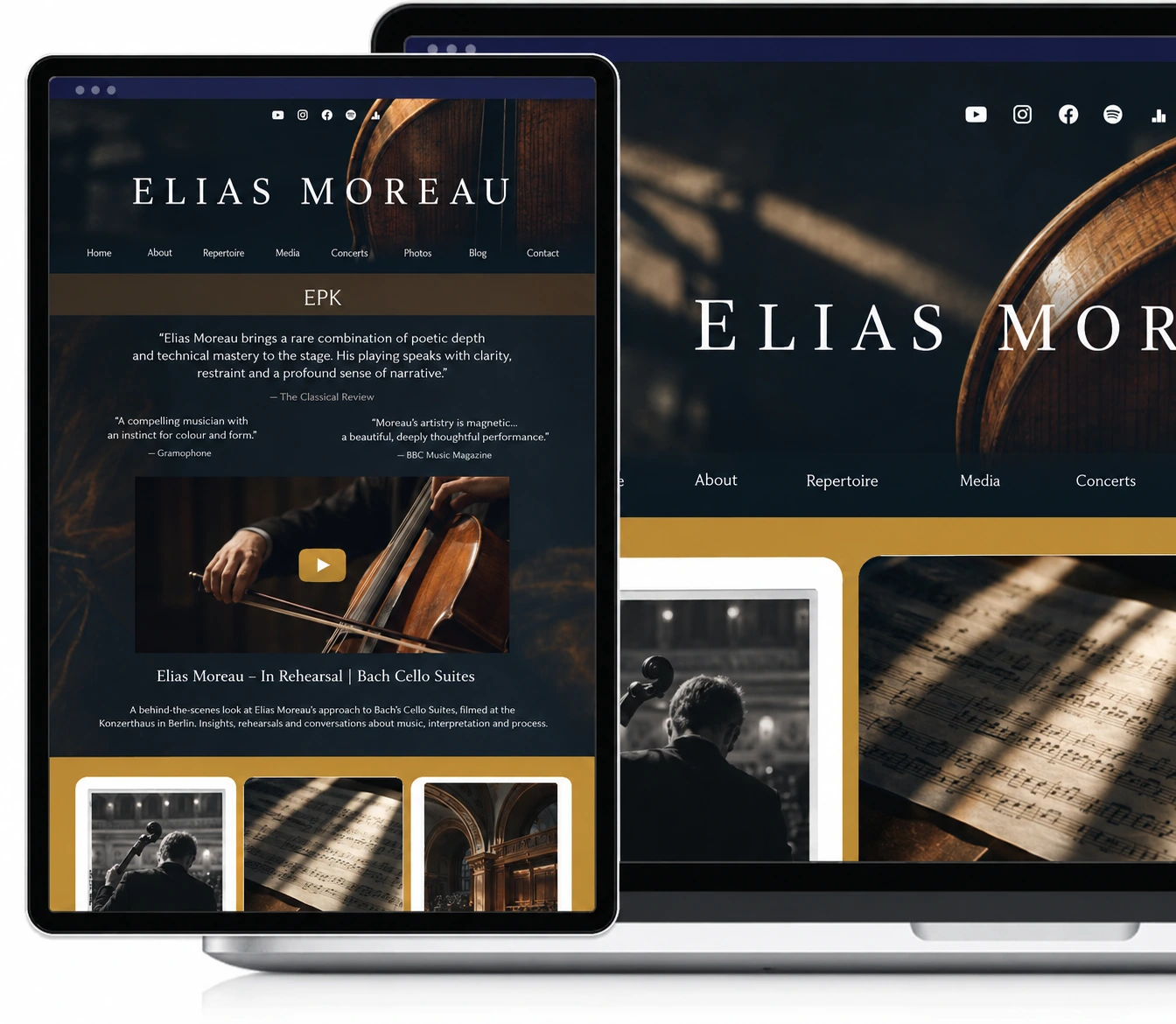
If you're building that page for the first time, the EPK setup guide covers the process. Keep the announcement as ordinary text that a writer can select and copy, and include photographer credits beside the publicity images.
For unreleased audio, use a preview link with the access settings you intend on its hosting service. Check that it opens playable audio for the recipient. A page that only asks someone to pre-save the song leaves them without a recording to review.
Before sharing your musician website or EPK, check which material is public. Publish the announcement there when you're ready for anyone to read it, and replace preview links with public listening links when the music comes out.
Build your own musician website
Music player, store, EPK, and mailing list, all built in. Start your 30-day free trial, cancel anytime.
Read the announcement beside the final release information and check:
Names and titles: artist spelling, capitalisation, song or album title and collaborator credits.
Dates: announcement date, music release date and any separate physical-release or shipping date.
Claims and quotes: accurate attribution, approved wording and support for any achievements mentioned.
Links: the correct recording plays, photos are accessible, and no preview requires an unexpected login or access request.
Contact: the named person has agreed to handle enquiries and the address is correct.
Remove every unused bracket and optional instruction. Open the links while logged out of your own accounts, and ask someone else to read the opening paragraph for any missing facts.
When the document is ready, our guide to getting press coverage for your music covers choosing recipients, writing the accompanying pitch and following up.
How long should a music press release be?
Aim for about a page. Around 250–400 words is a useful editing target for a single announcement, including the short background and contact details. An album may need extra context. Let the information determine the length, and cut descriptions that repeat a point you've already made.
Can I write a press release with no previous coverage?
Yes. Use the release itself: what you're putting out, how it sounds and the circumstances behind it. Briefly introduce yourself and credit the people involved. A debut announcement can give a writer enough to assess the music without testimonials, awards or previous reviews.
Do I need a website to use this template?
You can use it in an email or document and follow the recipient's preferred format. A musician website becomes useful when you want a maintained page for the announcement, listening links and publicity assets that people can return to throughout the release.
Can I use the template after the music is already out?
Yes. Change the opening to say the release is available, keep its original release date and replace previews with public listening links. If there's a new reason for the announcement, such as a video or physical edition, state that clearly. Check the text for any remaining promises about what is coming soon.
Get our new guides by email.
Practical advice on promoting your music, getting gigs and selling online. You can unsubscribe at any time.