Photo by Tien Vu Ngoc on Unsplash


If you are an independent artist getting ready to pitch labels, this guide is for you. Sending your music to a record label is not hard. Getting someone to write back is the hard part, and most submissions get passed over in the first minute.
Here is the part that surprises people: it is usually not the song. It is everything around the song. Before anyone presses play, they look you up, and what they find decides whether they keep listening. This guide walks through what A&R teams check, what to send, and how to set yourself up so a label sees a working artist instead of a hobby.
Labels Google you before they listen, so your online presence does more of the work than the demo.
Send three things: the track, a short pitch email, and one link to a press-ready page (an EPK).
Your EPK should have a tight bio, a featured track they can play, press photos, and a way to contact you.
Research labels that actually release your style. A perfect fit at a small label will get you further than a long shot at a big one.
You do not need a label to build any of this, and you keep it whether a deal happens or not.
A&R stands for Artists and Repertoire, the people at a label who find new acts and decide who gets signed. They get a lot of submissions, so they move fast and look for reasons to say no before they look for reasons to say yes.
A&R teams scan a lot of submissions, so the first thing they see matters most.
When they open your email, their first move is almost always a search. They look at your streaming numbers, your social pages, your photos, and whether you look like someone with a plan. If that search turns up a half-finished profile, no photos, and no central place to learn about you, the song rarely gets a fair listen.
So the real work happens before you hit send. You are not just sending a track. You are giving someone a quick way to understand who you are and decide you are worth a reply.
A&R teams want a finished track, proof that real people are listening, and a single link where they can see your bio, photos, and contact details without digging. They are checking whether you are organized and active, not only whether the song is good. Make that easy to find and you clear the first filter most artists fail.

Here is the short checklist they run, whether they say it out loud or not:
A finished, mastered track. Send your strongest song, not five at once. One great song says more than a full demo folder.
Some sign of traction. Streaming counts, a growing mailing list, sold-out local shows, steady social engagement. Pick the number that looks best and lead with it.
A short, scannable bio. Who you are, what you sound like, and one or two real highlights. Press skim, they do not read. If you need help here, see how to write an artist bio.
High-resolution photos. A couple of live shots and one posed image, ready to download.
Easy contact. Your email, front and center. If they have to hunt for it, they move on.
The most common mistake is pitching big labels at random. Aim for labels that already release music like yours. Look at artists one or two steps ahead of you, find out who put their records out, and start there.
A genuine fit at a small or mid-size label will almost always do more for you than a cold shot at a major. Smaller labels also reply more often, and the relationship tends to be closer.

Make a short list of ten labels, note one real reason each fits you, and find the correct submission method for each. Many labels list a demo email or a submission form on their site. Use it. Sending to the wrong address is an easy way to get ignored.
This is where a lot of independent artists lose the pitch before it starts. If the link you send is a raw file folder or a page of scattered buttons, you look like a hobby. A press-ready page, often called an EPK (electronic press kit), fixes that. It is one URL with your bio, a featured track someone can play right there, a few press quotes, downloadable photos, and a contact form.
The format matters too. The cleanest EPK is a web page on your own site, not a PDF attachment or a wall of links, because a label can open it on any device and see everything in one place.
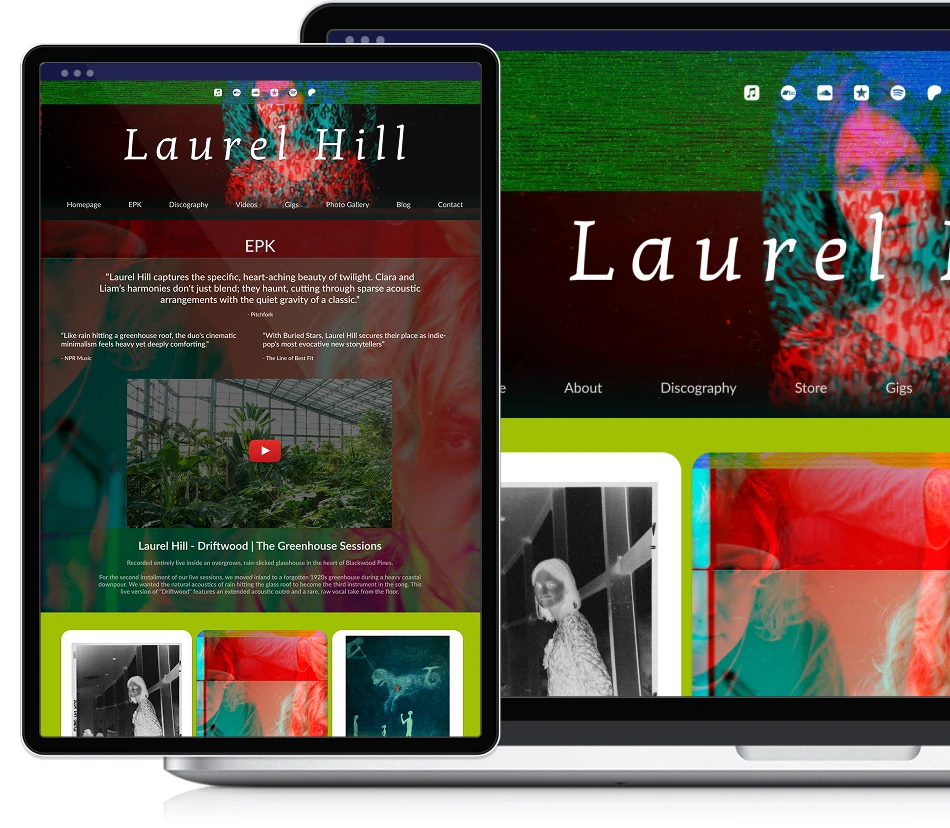
On Noiseyard, an EPK page is included on every plan and sits on your own music website, so a label sees your bio, music, store, and tour dates together instead of in five separate tabs. It pulls a featured release straight from your discography so they can press play without leaving the page, and your press photos are downloadable right there. You can build it on a 30-day free trial, so your pitch link is ready before you email anyone. Build your EPK on Noiseyard.
If you want a deeper walkthrough of the page itself, read what to include in an EPK.
Keep it tight. A&R teams read the first two lines and decide whether to continue. Lead with who you are and why you fit that specific label, link the track and your EPK, and stop.
A simple structure that works:
Line 1: Your name, where you are based, and your genre.
Line 2: One reason you fit this label, naming an artist or release of theirs.
Line 3: Your strongest track link and your EPK link.
Line 4: One standout number or highlight, then a short sign-off.
You are not writing your life story. You are giving them a reason to click and an easy way to reply.
Send each pitch one label at a time, addressed to the right person or inbox. Never CC twenty labels on one email.

If you do not hear back in a week or two, one polite follow-up is fine. After that, move on. Keep a simple list of who you pitched, when, and what they said, so you do not repeat yourself or chase the same label twice. Treat it like the long game it is, because most signings come from a relationship, not a single cold email.
Sending an unfinished track. If it is not mastered and ready to release, wait.
Pitching every label the same way. Generic blasts read as generic. Name the label and mean it.
No central link. Scattered streaming and social links with no home base make you look unproven.
Hard-to-find contact details. If they cannot reply in one click, they will not.
A dead or messy online presence. An old photo, a broken link, or an empty profile undoes a great song.
Following up too much. One reminder is professional. Five is a reason to block you.

Worth asking before you spend months pitching. A label can bring money, reach, and connections, but it also takes a cut and some control. Plenty of artists now build sustainable careers without one, keeping their rights and a bigger share of the income.
The good news is that everything in this guide helps you either way. A strong EPK, a real mailing list, and a website you own work just as well for booking shows, getting on playlists, and pitching sync as they do for getting signed. If you want to weigh the independent path, read how to release music independently. Either way, you are building assets that stay yours.
Build your own musician website
Music player, store, EPK, and mailing list, all built in. Start your 30-day free trial, cancel anytime.
Most labels accept submissions for free through a demo email or a form on their website. Find the right contact, send your strongest track with a short pitch and one link to your press kit. Be wary of services that charge high fees to forward your music with no guarantee.
A finished song, signs that people are already listening, and an artist who looks organized and active. They also look for a clear identity and a fanbase they can help grow, which is why your bio, photos, and numbers matter as much as the track.
You are not always required to attach one, but a press-ready page makes you far easier to take seriously. It gives A&R your music, bio, photos, and contact in a single link, which is exactly what they want when they are moving quickly.
Short. A few lines is plenty. Say who you are, why you fit that label, and link your track and EPK. Long emails get skimmed or skipped, so put the important things first.
It is normal, especially early on. Refine your list, improve your track and your press kit, and keep building your audience. A bigger, more engaged fanbase makes labels come to you, and it raises your income whether a deal ever happens.
Submitting music to labels rewards preparation more than luck. The artists who get replies are usually the ones who made it easy to say yes: a strong song, a clear pitch, and one link that shows a working career.
Build that link first. An EPK and a website you own give you a professional home base for every label, booker, and curator you reach out to, and they stay yours no matter who signs you. You can set yours up on Noiseyard with a 30-day free trial, Start your music website.
Useful tips and tricks, delivered right to your inbox.
Join our newsletter to keep informed about Noiseyard updates and new blog articles. You can unsubscribe any time.