Photo by Wes Hicks on Unsplash


You spent months on a song, put it out, and the numbers barely moved. A couple of hundred streams, mostly from people who already knew you, and then it went quiet. That's a deflating way to end a release, and it's rarely a verdict on the music.
This is for independent musicians, bands, and DJs who have released something and got very little back. It covers where to look first, the reasons a release usually stalls, and what to change before the next one.
A quiet release usually traces back to how it was launched: who knew it was coming, where you sent them, and how long you kept talking about it.
Look at your own numbers before you draw conclusions. Streaming dashboards and your website stats answer different questions.
Pitch through Spotify for Artists at least seven days before release. That alone puts the track in your followers' Release Radar.
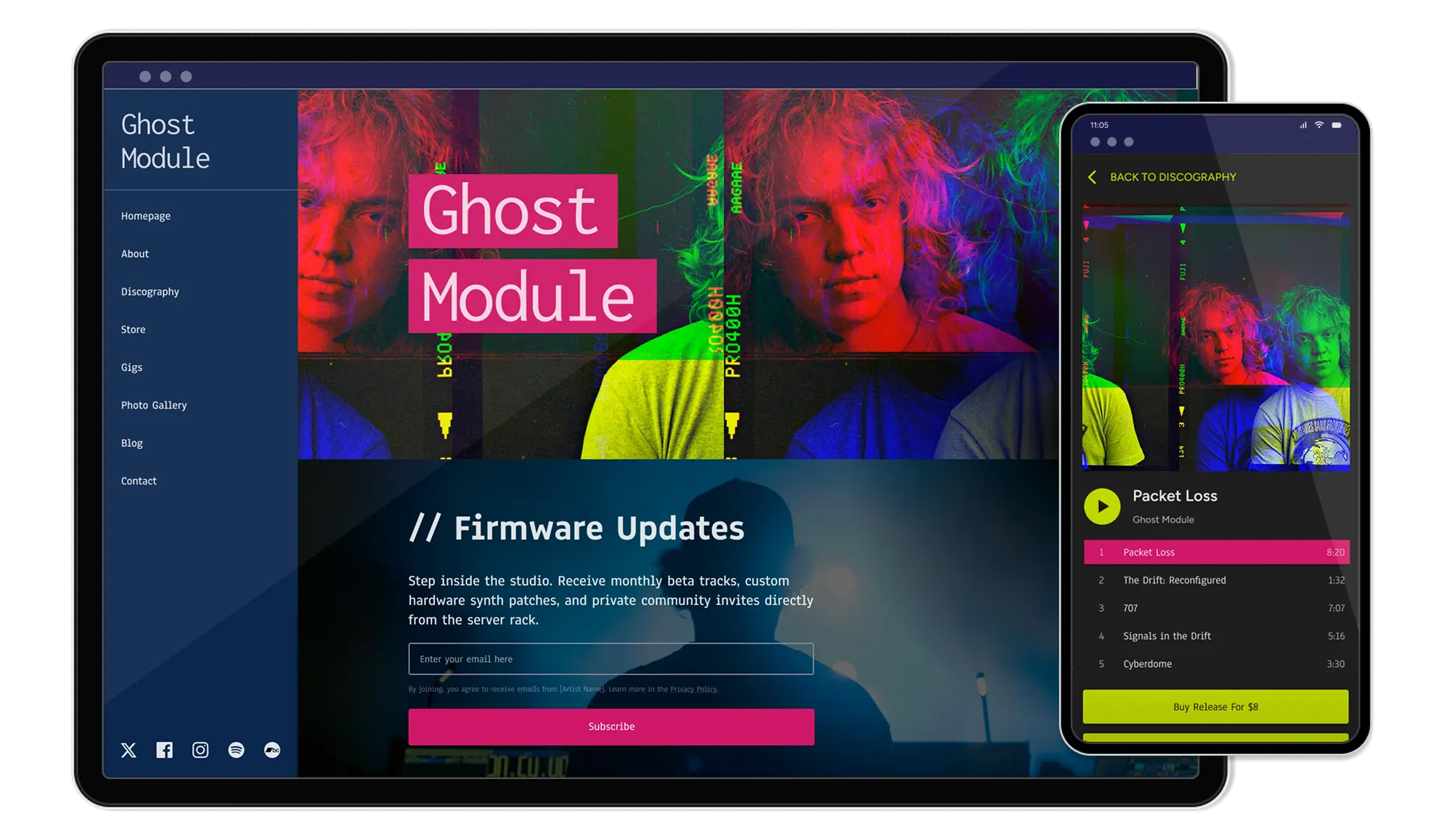
Have one page of your own that plays the music, sells it, and collects emails, so the attention you earn has somewhere to go.
Announce it more than once, over several weeks. A single post on release day reaches a small slice of the people who would care.
Give it six to eight weeks before you judge it.
Usually because too few people knew it was coming, and the ones who did had nowhere to go afterwards. A release needs a run-up before the date, a page of your own to send people to, and several weeks of reminders after it. Sort those three out and the same song performs differently.
Before you change anything, work out which problem you have. There are two, and they need opposite fixes. Either almost nobody heard the track, or people heard it and didn't come back.
Your streaming dashboard answers the first one. Look at how many listeners you had, how many saved the track, and where the plays came from: your own profile, a playlist, search, or someone else's page. A low play count with a decent save rate means your reach was small and the song was fine. A high play count with almost no saves means the opposite, and that's a much rarer problem than artists assume.
Your own website answers the second one. It shows visits, how many people played your music on the page, and which site they arrived from, which connects a specific post or email to a real visit. If you sent people somewhere and they arrived and left, you'll see it there and nowhere else. There's a fuller breakdown of which numbers earn attention in how to tell if your music marketing is working.
This is the most common cause, and the least visible one. If the first time anyone hears about a song is the day it comes out, you're starting from zero on the one day the platforms are paying attention.
Two things matter in the weeks before the date. The first is pitching the track through Spotify for Artists. Spotify's guidance is to deliver your music at least seven days before release so its editors have time to listen, and it confirms that a song pitched at least seven days ahead is added to your followers' Release Radar playlists. Editorial placement is a long shot, so treat Release Radar as the reason to do it. Skipping the pitch means giving up a guaranteed spot in front of people who already followed you.
The second is telling your own people. Your mailing list, your group chats, the artists you've played with. Those messages cost nothing and they're the ones that produce first-day plays and saves, which is exactly what the platforms read as early interest. The full timeline is laid out in the music release checklist.
Say the run-up went well and someone hears about you. They tap a link, land on a streaming page, play the song once, and leave. You have no idea who they were and no way to reach them for the next release, so you start from zero again.
That's what a release into a vacuum looks like. Every bit of attention you earn drains away because there's no place for it to collect.
The fix is one page you control that does three jobs: it plays your music, it sells whatever you have to sell, and it collects email addresses. A music-focused website builder handles that in one place, so a visitor can listen, buy, and join your list without leaving. On Noiseyard every plan includes a free custom domain, which matters here because the link you put in every bio should stay yours no matter what happens to any platform.
An email address is the one way to reach the same person again without depending on a platform. How to build an email list as a musician covers what to offer people so they hand it over.
Build your own musician website
Music player, store, EPK, and mailing list, all built in. Start your 30-day free trial, cancel anytime.
A single post on release day reaches a fraction of your followers, because feeds move fast and people open their phones at different hours. Post once and you've reached whoever happened to be looking that afternoon.
Plan six to eight touches spread over the weeks around the release, each with a different angle. The story behind the song, a clip of you playing it, the artwork, a line from the lyrics, a thank you to whoever helped, a live version a month later. Same song, different reasons to look.
Do it across the places you already have rather than adding new ones. One post, one email, one story, one pinned comment, then repeat in two weeks. How to make a music marketing plan turns that into a routine you can keep up between releases.

Someone hears your track at a friend's place, remembers roughly what you're called, and types it into their phone in the taxi home. If page one is full of a footballer, a clothing brand, or three other artists with the same name, you've lost them there.
Check it yourself. Search your artist name and your song title the way a stranger would, on Google and on a streaming app, and see what comes up. Then check that your name is written identically everywhere, down to capitalisation and spacing, because inconsistent spellings split you across several search results.
If your name is the problem, that's worth facing early rather than after another three releases. How to choose an artist or band name covers the searchability test and what to do when the name you want is taken.
Get our new guides by email
There's a belief that a good song gets picked up on its own. What the algorithms do is amplify a signal that already exists. Release Radar goes to people who already follow you. Discover Weekly needs saves, repeat listens, and playlist adds to work with before it shows your track to strangers.
So the early plays from your list and your friends are the input those systems work from. A release that gets a few hundred engaged listeners in week one has something to grow from, and a release that gets forty passive plays doesn't. Real ways to trigger the Spotify algorithm goes through which signals carry weight.
Scroll your own feed and count how many posts say some version of this. It asks for a favour and gives no reason to act, so people scroll past without feeling like they've turned anyone down.
Say something specific instead. What the song is about, what happened while you were making it, who played the solo, why you nearly scrapped it, what it sounds like if someone has never heard you. Say one concrete thing about the song and people have a reason to listen. There are practical examples in how to promote your music without being annoying or cringe.
Streaming numbers in week one are a weak signal. Playlist adds, radio, and word of mouth build over weeks, and songs sometimes pick up months later when someone finds them through a cover, a sync, or a friend.
Give a release six to eight weeks before deciding anything, and compare it with your own last release rather than with an artist whose audience you can't see. If three releases in a row all go quiet despite consistent work, that's a pattern worth acting on. One quiet release is normal.
Here's the short version, in order:
Set the date six weeks out and deliver your track to your distributor early enough to pitch it.
Pitch through Spotify for Artists at least seven days before release so it reaches your followers' Release Radar.
Get your own page ready: the song playing, a signup, and anything you're selling, all on one link.
Warm up your list and your people in the fortnight before, so day one has real listeners on it.
Plan six to eight posts across six weeks, each with a different angle, and write them before release week.
Check your numbers at week eight, then decide.

Releasing on a date you picked last week. Without a run-up there's no pitch window, no pre-save, and nobody expecting it.
Sending everyone to a streaming link only. You get a play and no way to contact that person again.
Judging the song by week-one numbers. Give it six to eight weeks and compare it with your own last release.
Posting on release day and going quiet. The people who missed that one post never find out it exists.
Changing everything at once after a quiet release. Change one thing next time so you can tell what made the difference.
Assuming the music is the problem. Check reach and saves first, because those separate a small audience from a weak song.
Usually because too few people knew it was coming. A release needs several weeks of run-up, a pitch through Spotify for Artists at least seven days ahead, and messages to your own list and friends around the date. Without those, day one has almost nobody on it for the platforms to react to.
There's no useful benchmark, since it depends entirely on how many people already follow you. Compare a release with your own previous one instead. Growth against your last release tells you whether your promotion is working; someone else's numbers tell you nothing about yours.
Six to eight weeks. Playlist adds, word of mouth, and search traffic all build slowly, and tracks sometimes pick up months after release. One quiet release is normal. Three quiet releases in a row despite consistent effort is worth treating as a pattern.
Yes, and that's the main reason to do it. Spotify says a song pitched at least seven days before release goes into your followers' Release Radar playlists, so you get in front of people who already follow you whether or not an editor picks it up.
Keep releasing, and change one thing each time. Stopping removes the only regular reason you have to contact people. Pick the weakest part of your last launch, whether that's the run-up, the page you send people to, or how often you posted, and fix that one before the next release.
Liking a song and remembering to play it are different things, so people need reminding more than once. Give them something concrete to do at a specific moment, like a link in a message on release morning, and make sure the link goes to a page where playing the track takes one tap.
A quiet release usually comes down to how it was launched, and that part is fixable. Work out first whether people heard it, then look at the run-up, the page you sent them to, and how many times you mentioned it.
Then pick one thing to do differently on the next release. Give yourself six weeks, tell your own people before the date, pitch it a week ahead, and send everyone to a page you own. Do that a few times and each release starts with more people than the one before it.
Get our new guides by email.
Practical advice on promoting your music, getting gigs and selling online. You can unsubscribe at any time.
Marketing & Promotion
How to Promote Your Music Without a Label (10 Ways)