Photo by Clem Onojeghuo on Unsplash


Bandcamp still sells a lot of music for independent artists, and for plenty of them it does the job. What has changed is how many people are asking what else exists. The company has been sold twice since 2022, around half the staff went when the second sale closed, and in January 2026 it banned AI-generated music and gave itself the right to take down releases it suspects.
This post is for artists, producers, and small labels who sell downloads and want to know their options. It covers what Bandcamp takes per sale, three platforms worth knowing about, what selling from your own site involves, and how to move without losing the fans you already have.
Bandcamp takes 15% of digital sales, dropping to 10% once you pass $5,000 in sales, and 10% on physical items, with payment processing on top.
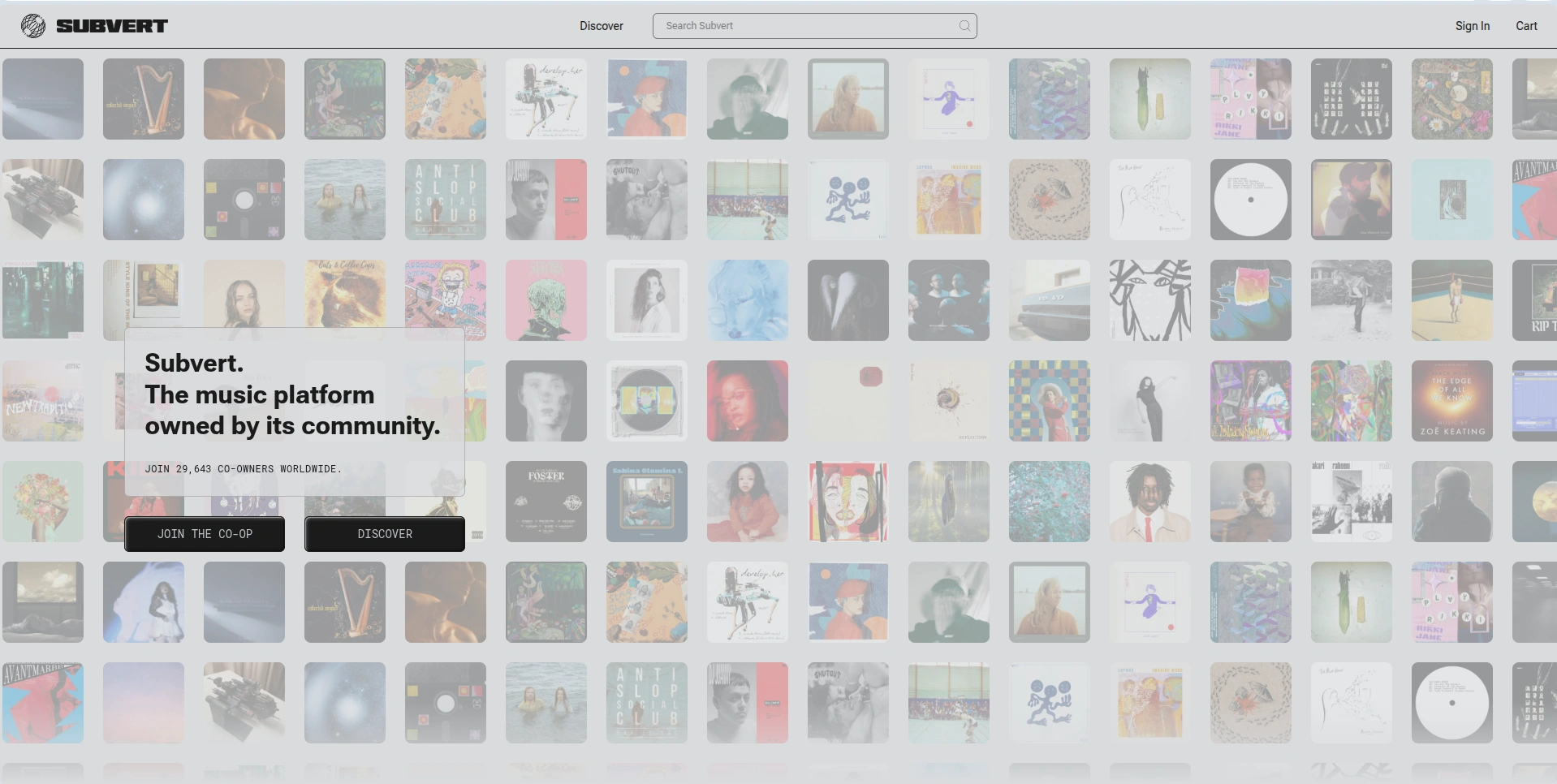
Subvert is a marketplace owned by its members. It takes no cut and asks the buyer for an optional contribution at checkout.
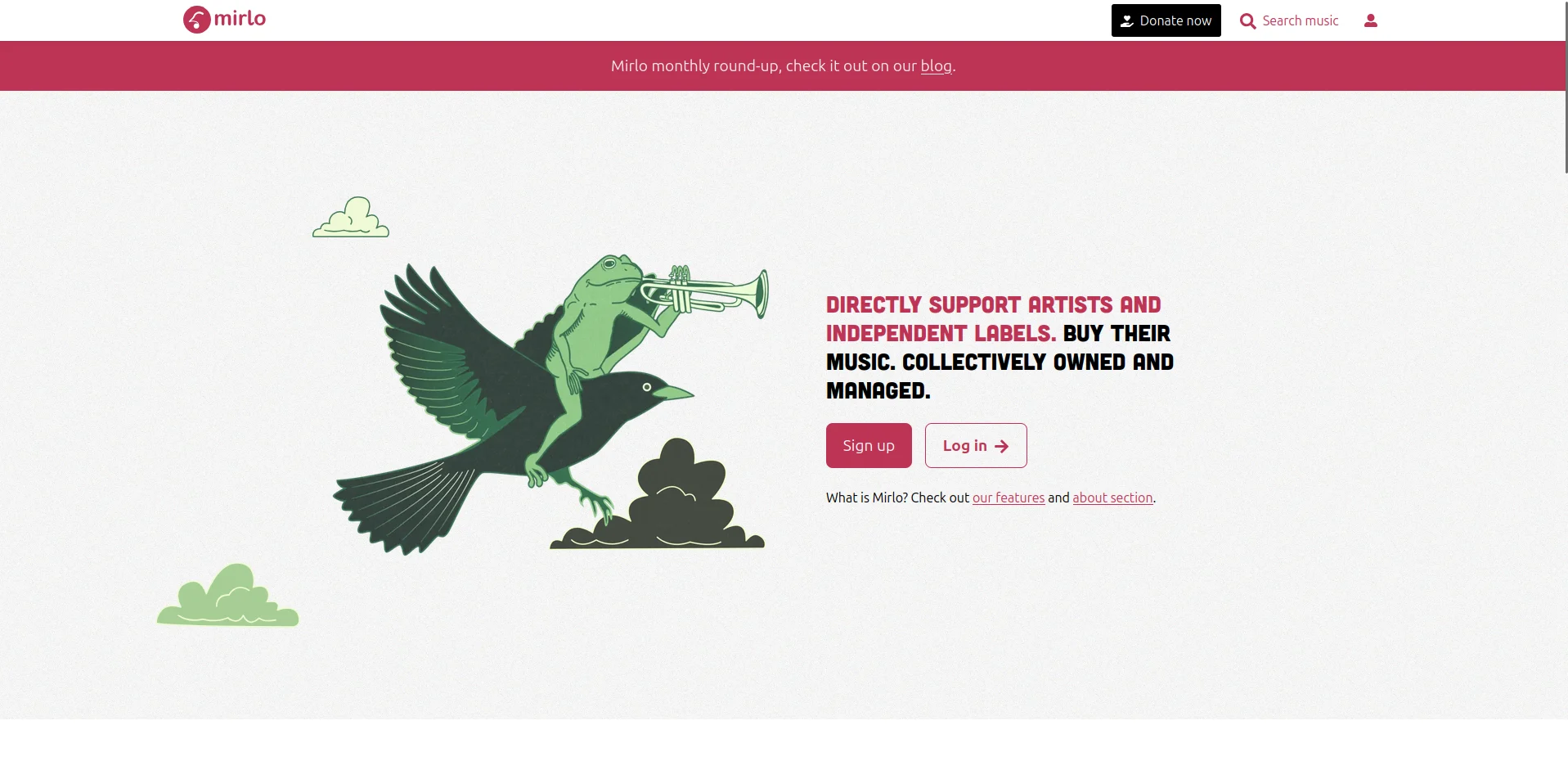
Mirlo is open source and lets you set what share it takes, including nothing at all.
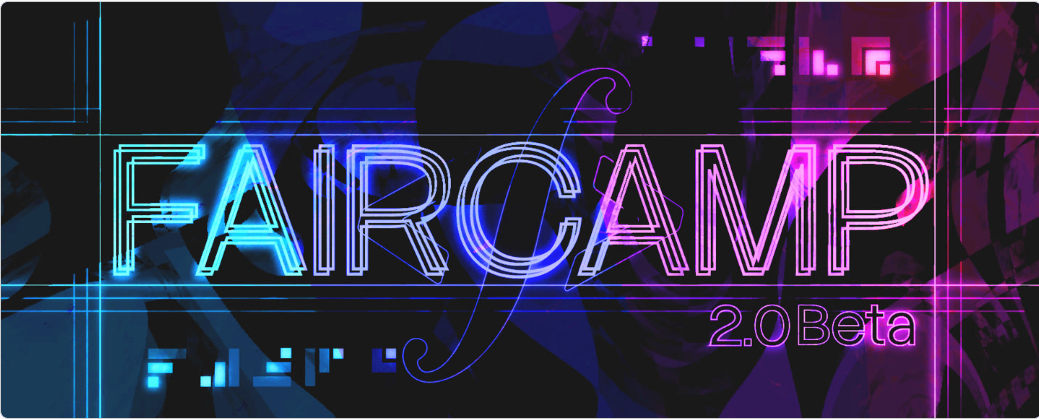
Faircamp is free software that turns a folder of audio files into a music store you host yourself.
Selling from your own website keeps 100% of the price minus card fees, and the buyer's email goes onto a mailing list you control.
Nina Protocol closed in July 2026 after five years, so keep a copy of your fan emails wherever you end up selling.
Three are worth a serious look: Subvert, a member-owned marketplace that takes no cut of sales, Mirlo, an open source store where you decide the platform's share, and Faircamp, free software you host yourself. The fourth option is your own website with a store built in, which keeps the full sale price minus card fees.
Bandcamp changed hands twice in two years. Epic Games bought it in 2022 and sold it to Songtradr in 2023. About half the staff were let go when that deal closed, including the bargaining team of the staff union. The service kept running and Bandcamp Fridays came back with eight dates in 2026, so nothing fell over. What changed is that artists stopped assuming Bandcamp would stay the same under the next owner.
Then in January 2026 the company published a policy called Keeping Bandcamp Human. Music generated wholly or in substantial part by AI is no longer allowed, using AI tools to imitate another artist or style is banned, and Bandcamp says it may remove a release it suspects. Reports of the process describe community flagging followed by a human review. If generative tools touch any part of how you work, read that policy before your next upload.
Money is the other reason people look around, and that one is easy to put a number on.
Bandcamp's fee page puts the revenue share on digital items at 15%. That drops to 10% once you have made $5,000 in sales, and it stays there as long as you keep clearing $5,000 in a rolling twelve months. Physical items are 10%, worked out before shipping and tax. Payment processing sits on top of all of that and typically runs 4 to 6%.
On a $10 album download, that adds up to roughly $2 before anything reaches you. Bandcamp Fridays waive the revenue share for the day, which is why so many releases get timed around them, and there are eight of those days in 2026. Every other day of the year runs at the normal rate.
Fees are the quickest thing to compare, and these are the questions that matter more a year from now.
Who gets the buyer's email. On a marketplace, the customer relationship sits with the platform. Some let you export buyer emails, some show you very little. Ask this first, because it is what you keep when a platform changes.
Whether the platform sells physical. Several of the newer options handle digital downloads only. If vinyl, tapes, or shirts are a real part of your income, that rules a few out straight away.
How people find you there. Bandcamp has a browsing audience and editorial coverage. A brand new marketplace does not yet, so you will be sending your own traffic for a while.
What happens to your links. Every post, bio, and press mention pointing at your store is worth something. Moving means either updating them or accepting that some of that traffic goes nowhere.
Whether you can leave. Look for an export of your catalogue, your sales history, and your buyer list before you commit to anything.
Subvert is a music marketplace owned by the people who use it. Artists, labels, workers, and supporters are all members of a co-operative that governs the platform, one member one vote, and the co-op wholly owns the company underneath it. It ran a members-only alpha through late 2025 and opened to the public on 12 May 2026.
The co-op voted for 0% platform fees, so the sale price goes to the artist, and buyers are shown an optional contribution at checkout instead. Joining as an artist or a label is free, and there is a one-time $100 buy-in for supporters who want a vote without releasing music. More than 14,000 artists and 2,200 labels had joined by launch, including Warp and Polyvinyl.
Two things to know before you plan around it. It launched with digital downloads only, and streaming and physical media are still on the roadmap. Its membership rules also require human authorship, so its position on AI music is close to Bandcamp's.
Mirlo is an open source store and patronage platform built by a worker co-op with help from volunteers. You upload releases, set prices, sell downloads, and can run a monthly subscription for fans who want to support you between records.
You choose what share of each sale goes to Mirlo, and zero is one of the options. You can set it per release too, so a charity single and your back catalogue do not have to be treated the same. Payment processing still applies, as it does everywhere.
Mirlo is small. Development is steady and the people running it are reachable, but there is no browsing audience of any size, and the feature list is shorter than what you are used to. It suits artists whose fans already come from a mailing list or a local scene.
Faircamp is a free program you run on your own computer. You point it at a folder of audio files, and it builds a complete music site out of them, which you then upload to any web host. There is no database, no account to create, and no company sitting in the middle of the sale.
Because there is no company, nobody takes a percentage of anything. Visitors can stream your music, and you can switch on downloads, embeds, unlock codes, an RSS feed, and a soft pay curtain, which sets a suggested price and trusts people to pay it through whatever payment link you provide.
You pay for that in time: you need somewhere to host the files, you edit settings in text files instead of a control panel, and there is no checkout, no order management, and no fan emails collected for you. It suits someone comfortable with hosting who wants a permanent archive of their catalogue, and it will be a frustrating weekend for anyone who is not.
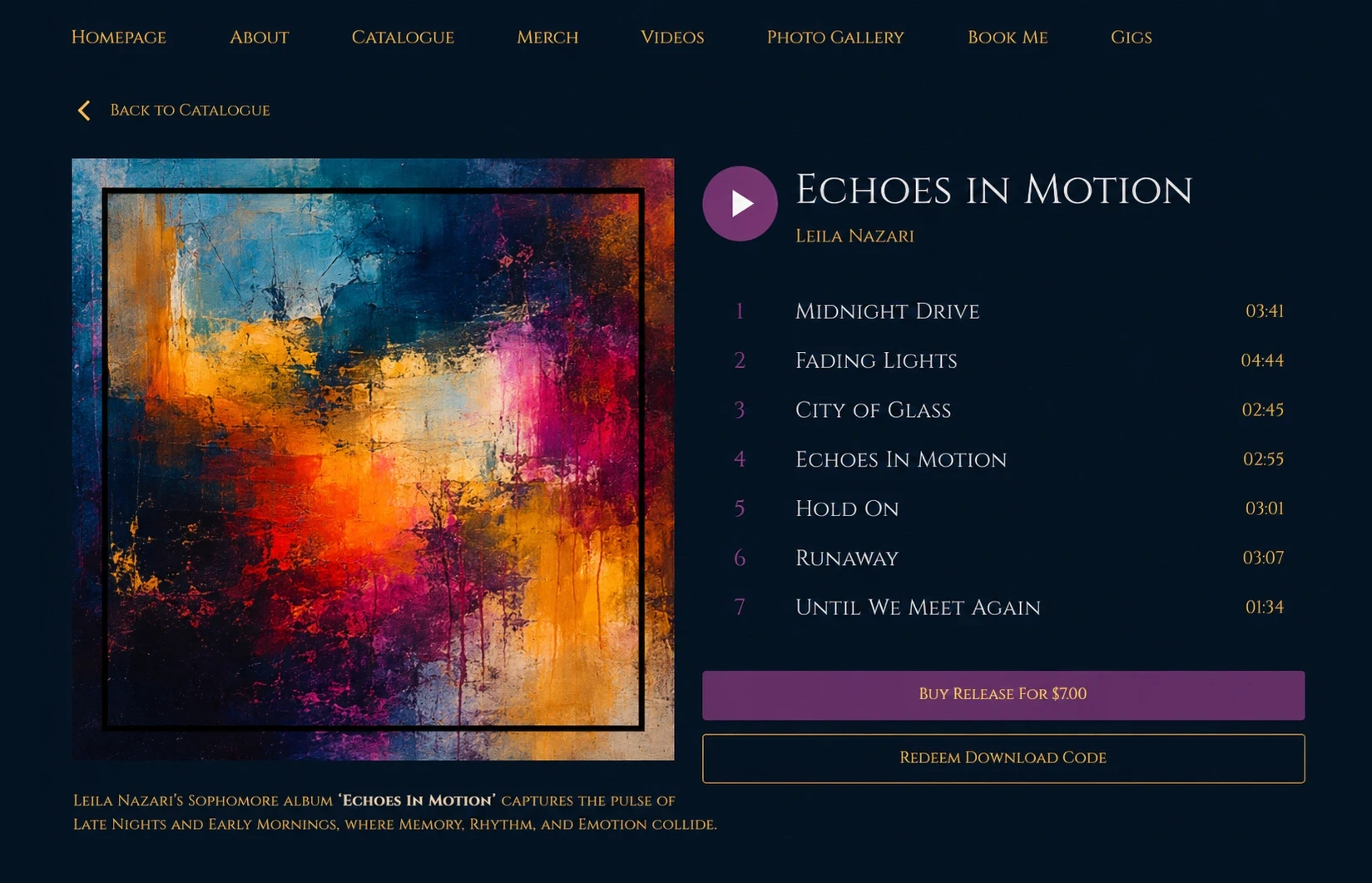
You can also sell the same downloads from your own site. A website with a store built in handles tracks, albums, and merch, and the checkout happens on your own domain.
You keep 100% of what fans pay, minus the standard Stripe fee that any checkout has. With a store built into your music website, the money goes straight to your own Stripe account and no platform holds it first. You can sell tracks and albums as downloads, add CDs, vinyl, tapes, and shirts, run pre-orders on an unreleased record, and generate download codes to hand out to press or give away at a show.
Two details make it behave the way Bandcamp buyers expect. The checkout has a "Your price" box, so a fan who wants to pay more than your asking price can, and the same checkout has a tick box for joining your mailing list. The person who just bought your record ends up on a mailing list you can email whenever you want. The comparison of Bandcamp and your own website goes through that decision in more detail.
You do give up browsing traffic here. Nobody stumbles onto your website the way they stumble onto a marketplace page, so the audience has to come from your releases, your shows, your list, and search.
| Where you sell | Platform's share | Sells physical | Collects fan emails for you |
|---|---|---|---|
| Bandcamp | 15% digital, 10% after $5,000 in sales, 10% physical | Yes | Buyer emails, exportable |
| Subvert | 0%, optional buyer contribution | Not yet | Limited at launch |
| Mirlo | You set it, 0% allowed | Limited | Basic |
| Faircamp | 0%, you pay for hosting | No checkout | No |
| Your own website | 0% | Yes | Yes, on your own list |
Payment processing applies in every row, because every checkout has card fees, so the platform's share is the column worth comparing.
Nina Protocol ran for five years, hosted releases from Warp, Hyperdub, and artists like ML Buch and Surgeon, and announced in May 2026 that it could not find a way to pay for itself. Uploads and purchases were switched off at the end of that month and the site went dark on 15 July. Ampled, the artist-owned co-op that came before Subvert, closed at the end of 2023 for similar reasons.
The newer platforms are still worth trying, and the thing to protect is what you would take with you if one of them stopped. You can re-upload a catalogue in an afternoon, but the fan emails took years to gather, and if they only exist inside a platform's admin panel, they go when it does. Whatever you decide about stores, build an email list and keep it somewhere you can export from.
A rushed move loses sales and confuses people who already follow you. This order keeps that to a minimum.
Export everything from Bandcamp first. Both exports sit on your Tools page: the mailing list section gives you your collected emails, and the raw data sales report gives you every sale as a CSV, buyer details included. Grab your master audio files while you are there.
Set the new store up and test a real purchase. Buy something from yourself with a card, check the download arrives, and check the receipt looks like it came from you.
Import your buyer list into your mailing list. Noiseyard takes a CSV and has Bandcamp in its list of sources, so the export drops straight in. Match the email column, and you keep the audience you built.
Update your links in the order that matters. Your link in bio first, then your streaming profiles, then pinned posts, then your press kit. Old links keep working while you work through them.
Tell your list what happened, once. A short email saying where to buy now, with the link in it, reaches the people who have already paid you before.
Decide what to do with the Bandcamp page. Leaving it up costs nothing and keeps the sales you would otherwise lose. There is a longer guide to running a store alongside other channels in the selling music and merch guide.

If you are choosing where to put your catalogue for the next few years, think about which address you want fans to learn. A marketplace page can move, close, or change its rules, and then you are teaching everyone a new one. Your own website and your mailing list stay where you put them, and you can still sell on any of these platforms alongside them.
Build your own musician website
Music player, store, EPK, and mailing list, all built in. Start your 30-day free trial, cancel anytime.
Is Bandcamp shutting down?
No. It has had layoffs and two changes of owner since 2022, and it published a stricter content policy in January 2026, but the platform is trading normally and ran Bandcamp Fridays across 2026. The reasons people look at alternatives are fees, control, and policy.
Which Bandcamp alternative is free?
Faircamp costs nothing to use, though you pay for hosting somewhere. Subvert charges no platform fee and is free for artists and labels to join. Mirlo lets you set its share to zero. Card processing costs money on all of them, so free means no cut taken by a platform.
Can I sell in more than one place at once?
Yes, and a lot of artists do. Keep the store you control as the address you promote, and treat a marketplace as an extra shelf your music sits on. The only thing to watch is pricing, since selling the same record at two different prices confuses people who follow you closely.
Will fans discover my music on these platforms?
Not in any volume yet. Bandcamp has a browsing audience and an editorial team behind it, and the newer platforms have neither at that scale. Plan to bring your own traffic from releases, shows, your mailing list, and search, and treat any discovery you get on top of that as a bonus.
Do I need my own website to sell music?
You can start without one, and many artists sell their first few hundred records on a marketplace alone. A website becomes worth it once you want the buyer's email, the full sale price, and an address that does not change when a platform does.
There is no single replacement for Bandcamp right now. Subvert is the closest thing to it in spirit, Mirlo suits artists who already have their own audience, and Faircamp is for people happy to run their own hosting. Each of them asks you to bring your own traffic, so plan for that before you move.
The same is true of your own store, so if you are going to do the work of sending fans somewhere, send them to an address you keep. Sell where your fans already are, keep the emails, and you can change your mind later without starting over.
Useful tips and tricks, delivered right to your inbox.
Join our newsletter to keep informed about Noiseyard updates and new blog articles. You can unsubscribe any time.
Music Career Advice
How to release music independently: A complete guide for DIY musicians