Photo by A.Rahmat MN on Unsplash


The link in your bio is the one clickable link you get on Instagram, TikTok, and most other socials. It's where every new listener goes when they want more, so it's some of the most valuable space you have. Most musicians point it at a Linktree, a plain list of links. It does the basic job, but it sends the fans you worked to earn straight off to somewhere else, and you don't own any of it.
This post is for solo artists, bands, DJs, and producers deciding what to put behind their link in bio. It covers what Linktree does well, where it quietly costs you, the alternatives worth knowing, and how to set that one link up so it turns attention into plays, sales, and emails.
Your link in bio is the one link that carries across all your socials, so it's worth more than a plain list of other links.
Linktree is free and quick, but the page is a dead end: fans can't hear your music on it, can't buy anything, and you get no email or data back.
For most musicians the better option is their own website homepage. Same single link, but your music plays right there, your store is one tap away, and every visit can turn into an email.
Point that link at something you own, so the traffic you earn on socials stays yours.
Not ready for a full site? At least send your bio link to pages you control, like your store and your mailing list signup.
No. Your website homepage already does what a Linktree does, one link that leads to your music, store, socials, and shows, and it does more on top: your songs play right there, fans can buy without leaving, and you can collect their email. If you have a site, put it in your bio and skip the extra step. A short case for why the site matters at all is in why every musician needs a website.
On most social platforms you get exactly one clickable link, usually in your bio. Everyone who wants to hear more, buy something, or find your shows taps that one link. Its whole job is to catch the attention you earn from a post and send it somewhere useful. The real question is where that somewhere is, and how much of it you keep.
Linktree got popular for good reasons, and it's worth being fair about them.
It's free to start and quick to set up. You can have one live in a few minutes.
It's familiar. Fans have tapped hundreds of them, so nobody's confused by the layout.
It works fine on a phone. Big tappable buttons, built for mobile.
It's easy to update. Add or reorder links in seconds.
It's low commitment. No domain, no hosting, nothing much to think about.
For someone who just needs a tidy list of links today, that's a fair trade. The problem shows up once you want that link to do more than point elsewhere.
Here's what a plain link list can't do, and what it costs you over time.
Nobody can hear you on it. Your music sits one more tap away, on Spotify or Youtube. Every extra tap loses people.
You can't sell from it. There's no store, so a fan who would have bought a track or a shirt has nowhere to do it.
You get nothing back. No email capture and no way to reach that fan again. They tap through and they're gone.
It isn't yours. The page sits on a linktr.ee address, uses a template thousands of others use, and carries the company's own branding.
It doesn't help you get found. A link list won't rank in search for your name or your music the way a real site can.
You don't control it. Pricing, features, and limits are set by someone else, and can change whenever they decide.

If you search for a Linktree alternative, you'll find two very different kinds of answer.
Other link-in-bio tools. Beacons, Koji, Campsite, and similar apps do the same thing with different styling and pricing. Some add nice extras like a tip jar or a small media kit. They're worth a look if you want a tidier list, but they solve the same narrow problem, and most still keep you on their domain and their platform.
Smart links for releases. Tools like Linkfire and ToneDen make one link that points to your song on every streaming service. These are genuinely useful on release day, and worth using for that. They don't replace a home for everything else you do, though.
Your own website. This is the one worth switching to for most musicians. Rather than a list that points at other places, your homepage is the place: music playing, store, shows, socials, and contact, all behind one link you own. It does the link-in-bio job and drops the extra hops at the same time.
Point your bio link at your own site and the same tap does a lot more.
Your music plays right there. No second hop to hear a track. The player sits on the page.
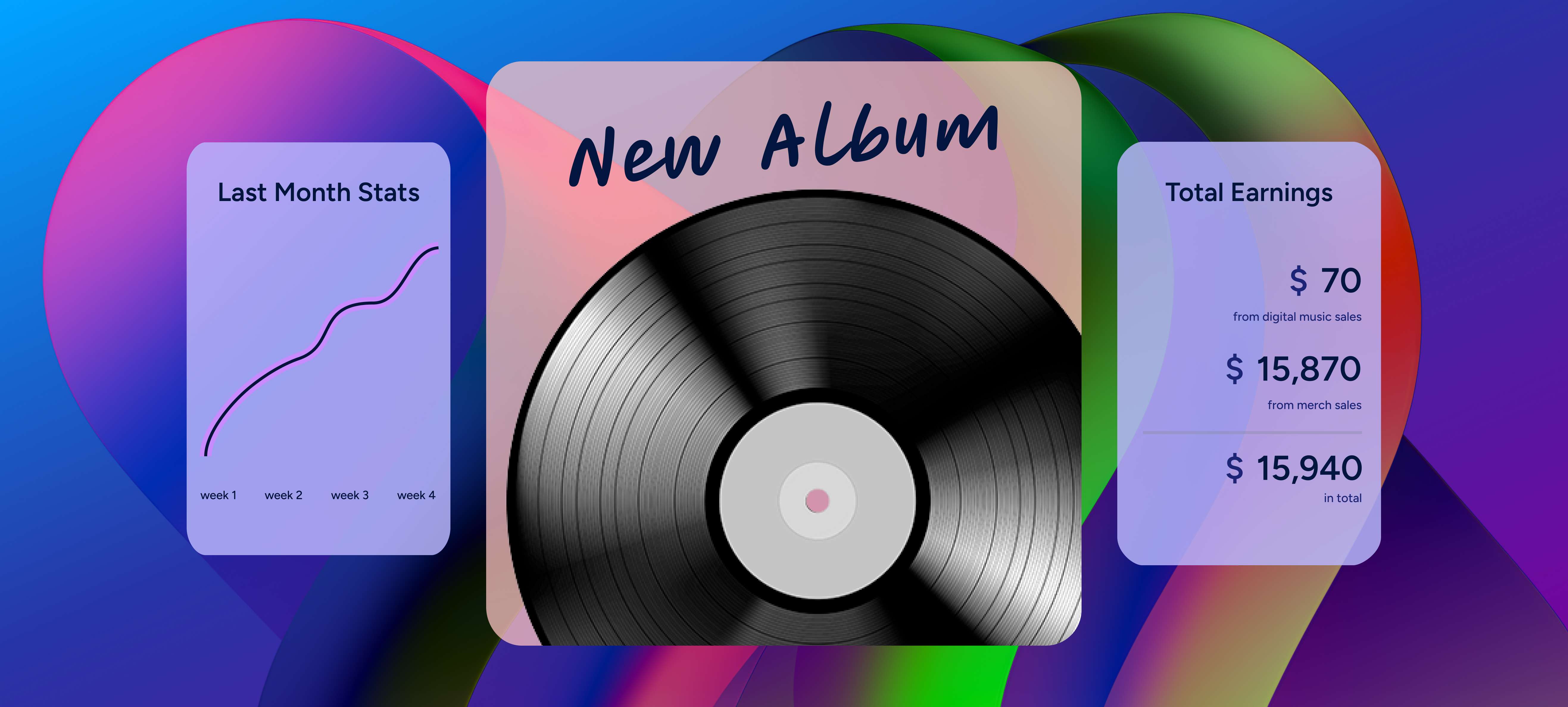
Fans can buy without leaving. Downloads, merch, and tickets in a store you keep 100% of, minus the standard payment fee any checkout has. A breakdown of those tools lives on the online selling for musicians page.
You collect emails. A signup form on the page and an opt-in at checkout, so a one-time visitor becomes someone you can reach for the next release. Email is the one audience you keep no matter what an algorithm does.
It's your brand and your domain. yourname.com on every flyer and profile, looking like you rather than a directory entry.
It helps fans find you. A real site can rank in search for your name, your songs, and your city, which brings in people you didn't have to chase. (If your builder handles the technical side like page titles and image alt text for you, this mostly takes care of itself. If it doesn't, you'll want to cover those basics.)
Nobody can take it away. No platform setting your limits or changing the deal.
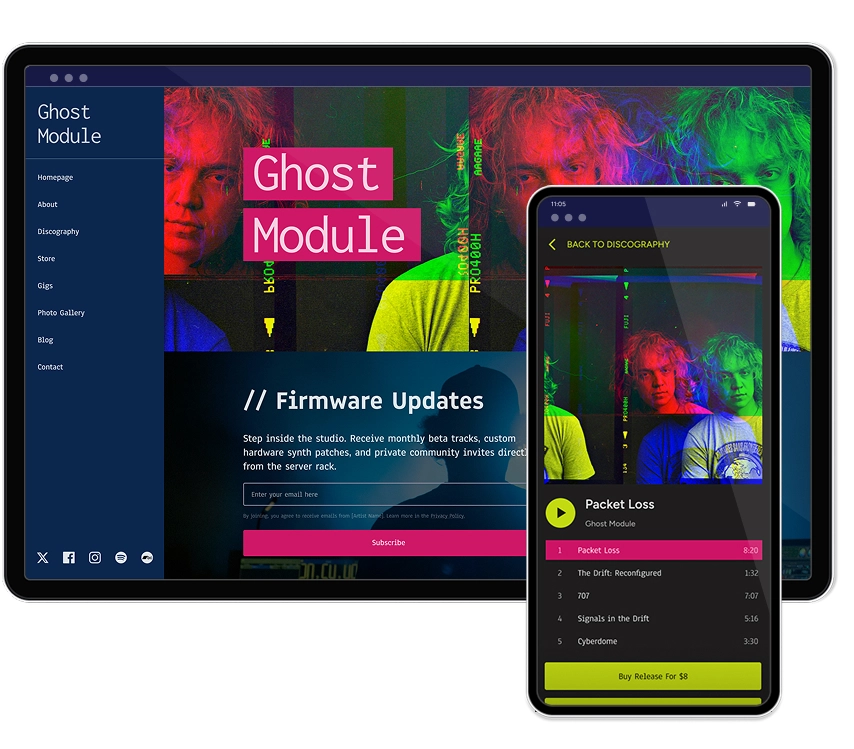
The old reason people reached for a Linktree instead was that a website felt like a big project. With a builder made for musicians, it isn't. The music page, store, and mailing list are pre-built, so you fill in your details and point your bio at it. There's a full walkthrough in this guide to making a music website. The same own-versus-rent logic applies to where you sell, which we covered in Bandcamp vs your own website.
A link in bio only helps if you send people to it. Treat every platform as a way in, and your site as the place they end up.
Instagram: put your domain as the bio link, and use the link sticker in stories to send people to your latest release page.
TikTok: the same bio link, and mention it in videos when a track or a drop is coming.
YouTube: add your site to the channel links and drop it in your video descriptions.
Spotify and Apple Music: add your site to your artist profile, so listeners who like a song can find everything else.
Flyers, posters, and live shows: a QR code to your site is easier to scan than a typed-out URL, and you can call it out from the stage.

The pattern is the same everywhere: the post or the show catches attention, and the link sends it to a place you keep. For more on turning that attention into people who stick around, see how to turn social followers into fans.
A Linktree or a similar app is a reasonable stopgap in a couple of cases:
You don't have a site yet and need something today. Use one, but point its links at things you own where you can, like your store or your mailing list signup, so you're still capturing fans.
You want a quick throwaway page for one campaign. A short-term promo with a few links can live on a free tool without much thought.
Once your own site is live, move your bio link over to your domain and let the tool go. There's little reason to keep sending your best traffic through a middle step.
Sending all your traffic somewhere you don't own. Every tap that ends on a rented page is a fan you can't reach again.
Piling up a dozen links with no priority. Faced with twelve buttons, most people tap nothing. Lead with the one thing you want them to do right now.
No email capture anywhere in the chain. If a fan can't join your list, you meet them once and lose them.
Making people hop three times to hear a song. Bio, to list, to Spotify is two taps too many. Let the music play on the page they open.
A different link on every profile. Point every profile at the same domain. When it's always the same place, people remember it.

Your own website homepage. Other link-in-bio apps (Beacons, Koji, Campsite) tidy up the list, but your site does the link-in-bio job and adds music playback, a store, and email capture, all on a domain you own. If you only want a better-looking list, an app is fine. If you want the link to earn you something, use a site.
No. Put your website in your bio and you've covered everything a Linktree does, with more behind it. Keep a Linktree only as a stopgap while your site is still being built.
The basic plan is free, and the more useful extras (deeper customization, analytics, certain link types) sit on paid plans. The bigger cost isn't the fee, it's what a plain list can't do: no selling, no email capture, and no music on the page itself.
Yes, and it's the setup most working musicians end up with. Your homepage is one link that leads to your music, store, shows, and contact, so it slots straight into your bio in place of a Linktree.
A Linktree does very little for search. Your own site can rank for your name, your song titles, and your city over time, which brings in fans you didn't have to chase. There's more on this in the SEO guide for musicians.
Not from a plain Linktree. If your bio link goes to your own site, you can put a signup form on the page and an opt-in at checkout, so visits turn into a mailing list you keep. Here's how to grow that list and what to send it.
A link in bio is a small thing that carries a lot of weight. It's the one door from every post, every video, and every show into your world, so it's worth pointing at a place that's yours.
A Linktree is a fine way to start, and there's no shame in using one for a while. The version that pays you back is a home base you own, where the music plays, the store is open, and every visitor can become someone you reach again. Set that up once, put it in every bio, and the attention you earn stops leaking away to a page with someone else's name on it.
Get our new guides by email.
Practical advice on promoting your music, getting gigs and selling online. You can unsubscribe at any time.