MARKETING & PROMOTION
Best Website Builders for Musicians and Bands in 2026

Nida

Aug 12, 2026
If you're an independent musician, band, or DJ shopping for a website builder, here is where things stand in 2026. The music-focused builders have kept pulling ahead of the generalist platforms on selling music and growing a mailing list. The other change this year is that Supertape, the music-and-newsletter platform, shut down on July 1, 2026, which pushed a wave of artists into finding a new home.
Below is a breakdown of each builder, what it does well, where it falls short, and how to pick.
TL;DR
-
A music-focused builder is usually the better fit for an independent artist. The player, store, and mailing list come built in, so you are not assembling them from separate apps.
-
Noiseyard is the fastest setup if you want a site live today, with a mailing list, store, and 0% commission on sales.
-
Bandzoogle is the established alternative. Deeper design control, longer setup time.
-
Squarespace, Wix, and WordPress all work. Each one needs extra time to wire up a music player, a store, and email tools.
-
Music Glue is a store, not a full website, and it suits artists whose main job is selling merch and tickets.
-
Supertape shut down on July 1, 2026. If you still have an export of your mailing list, bring it to your new platform first.
Table of contents
Which website builder is best for musicians?
For an independent artist in 2026, a music-focused builder is the cleanest choice. Noiseyard is the fastest path to a live site with a built-in store, mailing list, and 0% commission on sales. Bandzoogle suits artists who want deeper design control. Squarespace, Wix, and WordPress all work, and each one needs extra setup to handle music-specific features.
What to look for in a music website builder
For an independent artist, the feature list worth checking is short. If a builder ships these by default, the setup stays quick and the maintenance stays light.
-
A native music player. Embedded tracks with no third-party plugin to maintain.
-
A store with low or no commission. Selling tracks, merch, and tickets directly is where the bulk of your direct-to-fan revenue comes from.
-
A built-in mailing list and newsletter tool. Your list stays with you when a platform changes its algorithm, so it carries the most long-term weight. Some builders allow unlimited subscribers, others cap the list by plan tier.
-
A custom domain bundled with the plan, or easy to attach. Some builders include the domain and its renewals in the price. Others have you register one separately.
-
Mobile-first templates. Fans will usually open your site on a phone.
-
A free trial that's long enough to build the whole site before paying. Bonus points if the trial site is public, so you can share the work in progress.
-
Automatic SEO basics. Sitemaps, alt text, HTTPS, fast mobile loads, and clean metadata should be on by default. Some builders leave meta descriptions and alt text for you to write by hand, which adds up across a site.
The best music website builders in 2026
Here is how the five builders compare at a glance. The write-ups below cover what each one is like to use.
| Builder | Best for | Music features built in | Setup effort |
|---|---|---|---|
| Noiseyard | A complete artist site, fast | Player, store, mailing list, EPK | Low |
| Bandzoogle | Hands-on design control | Player, store, mailing list | Medium |
| Squarespace | Design-led sites | Audio blocks, general store, no EPK | Medium |
| Wix | One app you can't get elsewhere | Third-party apps | High |
| WordPress | Full control you manage yourself | Plugins you choose | Highest |
1. Noiseyard
Music-focused, fast setup, designed around an independent artist's workflow. You answer a short series of questions and get a complete site structure with the standard musician pages already in place, so there is no blank canvas to fill.
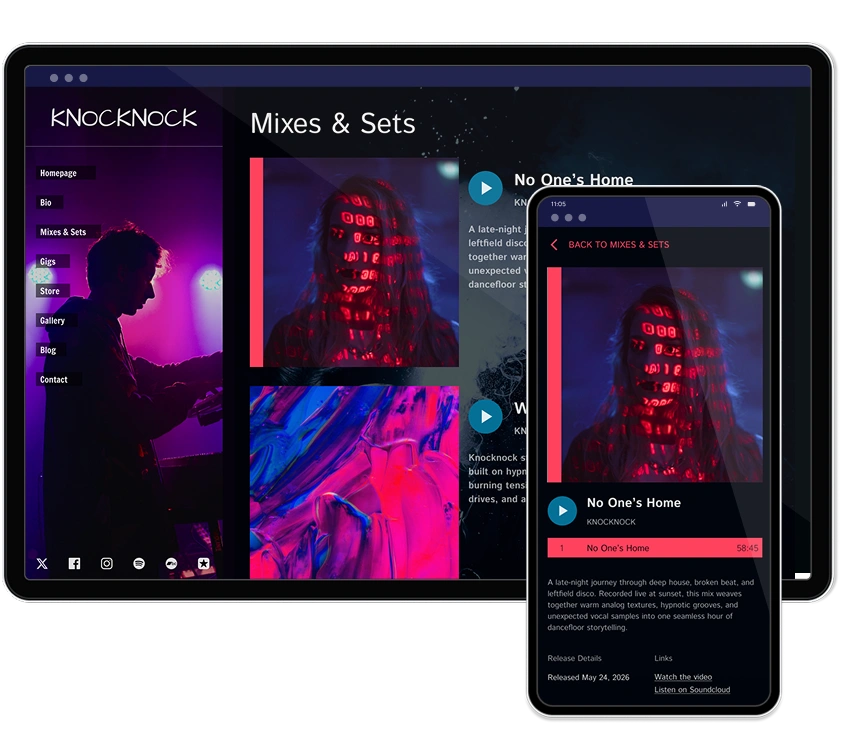
What's included by default:
-
Music player and discography pages.
-
Store with 0% platform commission (only standard payment-processor fees apply).
-
Mailing list with unlimited subscribers, signup forms on every page, and an opt-in at checkout, so buyers default into your list.
-
Free custom domain bundled with every plan, with HTTPS and renewals handled automatically.
-
Mobile-first templates and automatic SEO (sitemaps, alt text, schema markup, fast loading).
-
Print-on-demand merch via the Printful integration on mid and highest tiers, so you can sell shirts and posters without holding inventory. The full setup is in this print-on-demand guide.
-
Coupon codes and download codes on mid and highest tiers, useful for release campaigns and fan rewards.
Where it's a fit:
-
Solo artists, bands, DJs, and producers who want a site live in a weekend without hiring a designer.
-
Former Supertape users who want the same "newsletter + website under one roof" workflow.
Where it's not:
- If you want pixel-perfect control over every layout decision, the structured templates may feel limiting.
The trial site is public from the start, so you can share the link with bandmates or a label while you build. Plan details are on the pricing page.
2. Bandzoogle
The longest-running music-focused builder. Drag-and-drop layout, deeper design control, and a feature set that's grown over many years.
Strengths:
-
0% commission on music, merch, and ticket sales (standard payment-processor fees apply).
-
Lots of design flexibility for artists who want their site to feel handcrafted.
-
Solid music player and integrated streaming.
Photo by Mick Haupt on Unsplash
Drawbacks worth knowing:
-
Setup takes longer than builders that ship pre-built page structures.
-
Some advanced selling and promotion tools, along with unlimited mailing list subscribers, are reserved for the top plan.
-
Trial sites require a password, which makes sharing a work in progress with bandmates or a label awkward.
A reasonable choice for artists who want creative control over every detail and aren't in a hurry. If you're weighing it against a faster alternative, this Bandzoogle comparison walks through the differences, including a current pricing table.
3. Squarespace
A general-purpose website builder known for its design polish. Popular with photographers, restaurants, and plenty of musicians who like the aesthetic.
Strengths:
-
Clean, magazine-style templates.
-
Solid e-commerce engine for selling digital and physical goods.
-
Audio blocks for embedding tracks, one track per block.
Drawbacks for musicians specifically:
-
Not built around the way artists work, so you adapt a generalist platform to a musician's needs, and that takes setup time.
-
Squarespace adds a 2% transaction fee on its cheapest selling plan, on top of payment-processor fees. The higher plans drop it. Squarespace also raised its prices in 2026.
-
Fan-engagement tools (mailing list, fan-only content, gigs page, presale codes) often need extra apps or workarounds, and email marketing is a separate paid subscription. There's no built-in EPK page.
If you've already settled on Squarespace for design reasons, it works. If you're starting from scratch and care about music-specific features, this Squarespace alternative comparison walks through the gaps.

Photo by The Retro Store on Unsplash
4. Wix
The biggest generalist builder. Massive feature set, huge template library, an app marketplace for almost anything.
Strengths:
-
Extreme flexibility. There's a Wix app for nearly any feature you'd want.
-
Custom audio players via Wix's media tools.
-
Event tools for selling tickets.
-
No added Wix commission on store sales, so you pay the payment processor and nothing more.
Drawbacks for musicians specifically:
-
Music-specific features come from third-party apps, which adds plugins to maintain and often subscription fees on top of the Wix plan.
-
Templates aren't designed for an artist's workflow. Expect more setup time to make a site feel like a music site.
-
The flexibility also means a lot of decisions to make before anything goes live.
Best for artists who already know they want Wix's ecosystem or need a feature only Wix's marketplace has.
5. WordPress
The most flexible option here, and the one that asks the most from you. WordPress powers a huge share of the web, and with the right plugins it does anything the other builders do.
Strengths:
-
Complete control over how the site is built and what it can do.
-
A plugin for nearly every feature, including stores, players, and mailing lists.
-
You can move the whole site to another host without rebuilding it.
Drawbacks for musicians specifically:
-
You arrange your own hosting, and you keep WordPress, its theme, and every plugin updated.
-
Music features come from plugins you research, install, and maintain yourself.
-
Security and backups are your job. A neglected WordPress site is the one most likely to break.
Worth it if you know WordPress already or have someone looking after it. If you want a music site live this month, the other options get you there with far less work.

Photo by Techivation on Unsplash
What about Music Glue?
Music Glue comes up often in this comparison, and it belongs in a different category. It's a direct-to-fan store, built around selling music, merch, and tickets to your own audience. It doesn't set out to be a full website builder.
What it does well:
-
Strong commerce tools: pre-orders, bundles, voucher codes, and ticketing.
-
Customer data from every sale belongs to you, which makes it easy to keep building a fan list.
Worth knowing before you commit:
-
It takes a percentage commission on sales, so the cost scales with how much you sell.
-
There's no built-in newsletter tool. You connect an outside email service.
-
You get a branded store, so you'll still want somewhere for your bio, press material, and gig listings.
Plenty of artists run a Music Glue store alongside a full site. To have both in one place, this Music Glue comparison covers what moves across.
What about Supertape?
Supertape shut down on July 1, 2026. If you were a user and haven't finished moving, two things still matter:
-
Your mailing list export. If you exported your contacts before the shutdown, import them into your new platform first. The list is the hardest thing to rebuild.
-
Your custom domain. If you registered a domain through Supertape, make sure it's re-pointed or transferred so it doesn't lapse while you're between platforms.
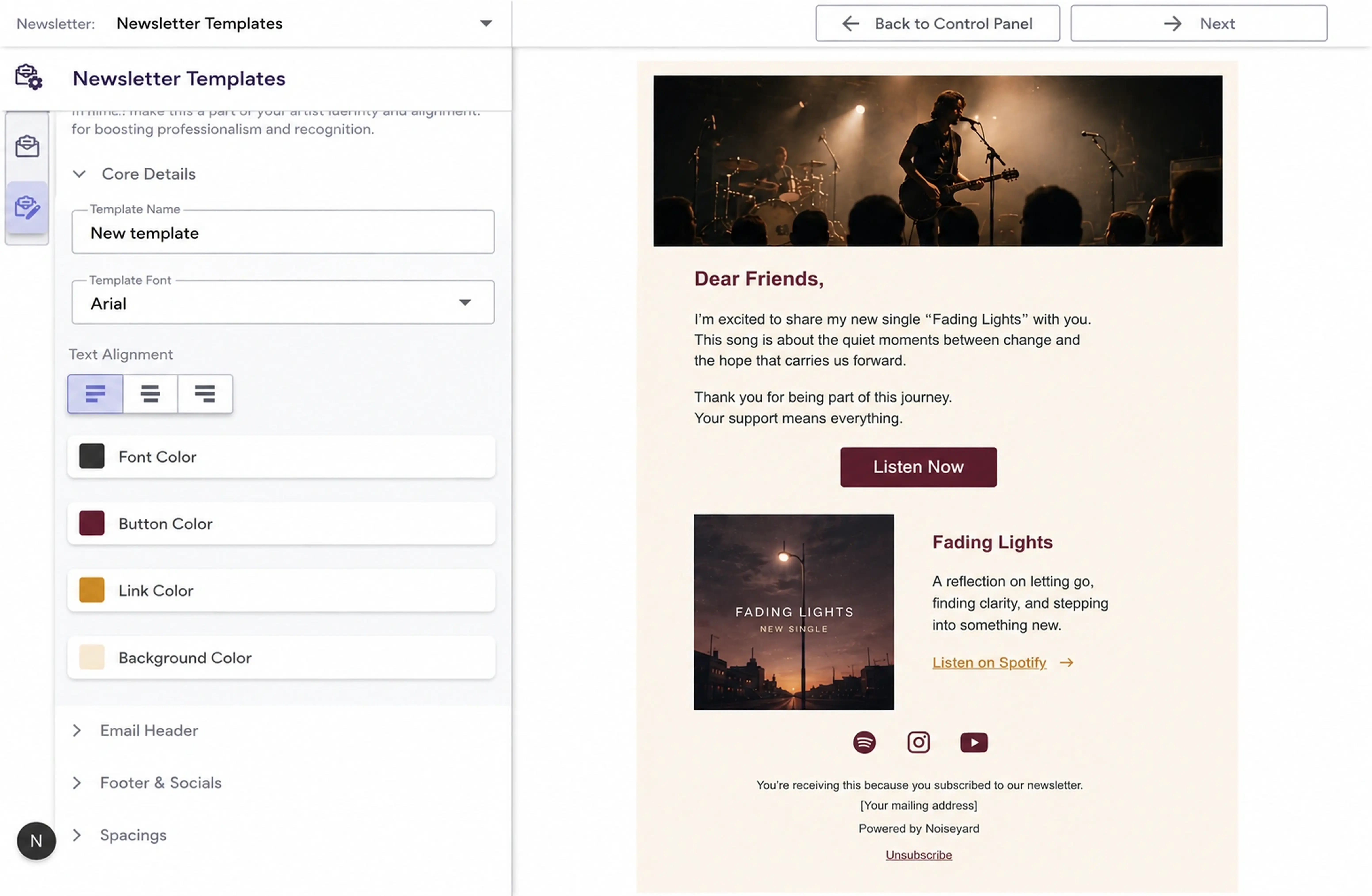
For artists who liked Supertape's "newsletter + website in one place" workflow, the closest match is a music-focused builder that combines those two pieces. Noiseyard's Supertape migration page covers the import flow, including how to send your contacts file to support so the team imports it for you.
How to pick: a quick decision guide
Match your situation to one of these:
-
Want a site live this weekend with the smallest amount of decision-making. Noiseyard. Templates and page structures are pre-built, and you fill them in.
-
Want maximum design flexibility, willing to spend a couple of weeks setting up. Bandzoogle.
-
Already love a Squarespace template and don't sell music directly. Squarespace.
-
Already own a Wix subscription, or you need an app only Wix's marketplace has. Wix.
-
Know WordPress already, or have someone maintaining it for you. WordPress.
-
Selling merch and tickets is the main job, and you have a site already. Music Glue.
-
Migrating from Supertape and want the same workflow on the other side. Noiseyard.
When you compare builders, weigh how fast each one gets you to a live, working site. That setup time comes straight out of the hours you have for music.
Build your own musician website
Music player, store, EPK, and mailing list, all built in. Start your 30-day free trial, cancel anytime.
Common questions
Do I really need a website if I'm already on Spotify and Instagram?
Yes. Streaming and social get you discovered, and your website is where fans buy from you, join your mailing list, and where bookers find your press material. Platform reach moves with the algorithm, and your site and mailing list stay under your control.
Can I move my domain and mailing list if I outgrow a builder later?
Yes for both. Custom domains can be transferred or re-pointed. Mailing list contacts export as a CSV and re-import into another platform. Site design and layout don't usually transfer between builders, so picking a long-term home up front saves a future weekend rebuild.
Are music-focused builders more expensive than generalists?
Roughly comparable on monthly price. The hidden cost on generalists is the third-party apps and add-ons you'll pay for to get music-specific features. Music-focused builders bundle those into the plan. This breakdown of what a musician website costs shows how to work out your real yearly total.
What about Bandcamp?
Bandcamp is excellent as a marketplace and discovery surface, and it isn't a website builder. The page Bandcamp gives you lives on bandcamp.com and is shaped by their template, not yours. Artists usually run Bandcamp alongside their main website. Here is a closer look at that setup.
How do I pick between Noiseyard and Bandzoogle?
If getting a site online this weekend is the priority, Noiseyard's pre-built page structures are faster, and every feature arrives by its mid tier. Bandzoogle keeps some advanced selling and promotion tools on its top plan. If you want pixel-level design control and don't mind a longer setup, Bandzoogle's editor gives you more room. Both take 0% commission on direct sales. This side-by-side comparison goes through them feature by feature.
Final thoughts
The shopping list hasn't changed much this year. The same music-focused builders compete for the same job: getting an artist online without making them learn a CMS. The one real shake-up was Supertape's closure. If that was you, import your mailing list somewhere it can keep growing and pick a home that won't make you redo this in two years.
For everyone else, pick the builder that gets your site live fastest with the store, mailing list, and domain bundled in. A quick setup means the site stops being a project on your list and starts collecting fans and email signups.